
Flag Hoisting, 2014 Arunachala Karthigai Festival
Early in the morning of Wednesday, 26 November, 2014 the Flag Hoisting
ceremony at Arunachaleswarar Temple took place, marking the first day of
the 2014 Deepam Festival at Arunachala.
A permanent Dhvaja Stambha (flagstaff) is believed to be a later
addition to the Hindu Temple. Initially, it was temporary and was
primarily used to indicate the beginning of a Festival or other
auspicious days and occasions. Whatever its history may be, the
Pancharatra scripture states that a Temple without a Dhvaja cannot be
said to be a Temple!
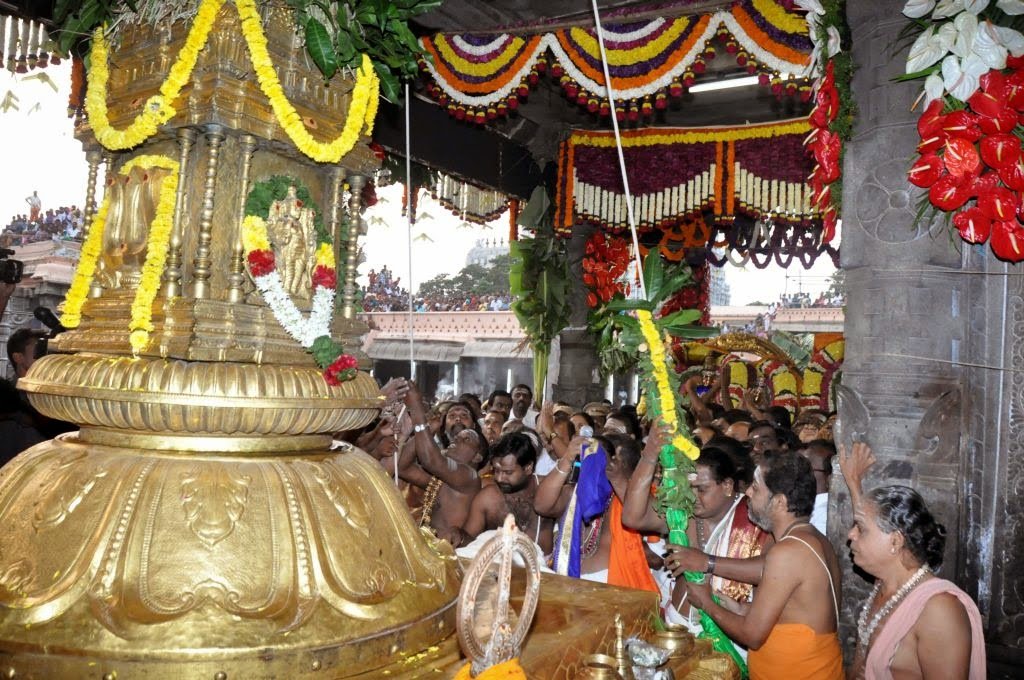
Temple priests in charge of the elaborate ceremony
|
|
The Dhvaja Stambha, or Flag Staff, is located in
front of the Siva Sannidhi. A Dhvaja Stambha usually represents the
prosperity and pride of a Temple. But some texts suggest that the bottom
of a flag post symbolises Shiva, middle portion Brahma and the top
portion Vishnu.
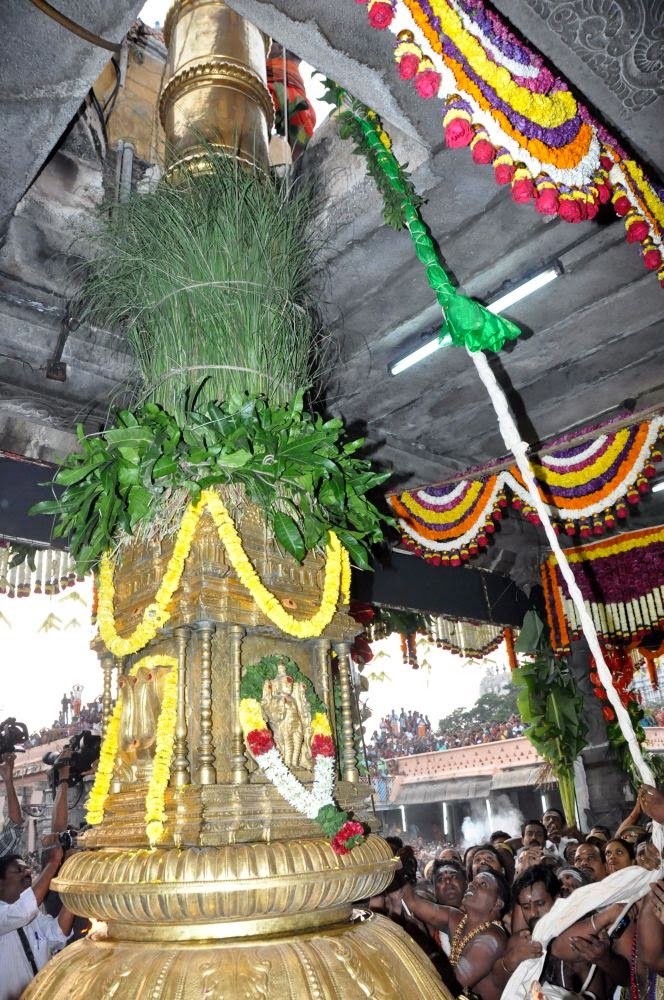
Hoisting the Flag at Arunachaleswarar Temple
Nowadays Dhvaja Stambhas are permanent and in the case of
Arunachaleswarar Temple is plated with precious metal. The top portion
of the flag staff has three horizontal perches or three branches
pointing towards the Sanctum Sanctorum. It symbolizes righteousness,
reputation and propriety; or the Trimurtis - Vishnu, Brahma and Shiva. At
the base of the Flag Staff is located the Bali Pitha (sacrificial altar
for one's malas, sins). One who hoists the Dhvaja (flag) aloft a Hindu
Temple attains a divine body and enjoys the company of gods." So
declares the treatise Deeparnava.
There is a widespread belief that the Dhvaja Stambha gives an idea to a
devotee from a long distance about the idol installed in the Temple and
about the Vahana or Vehicle used by the deity. It is hoisted when there
is an auspicious ceremony or Festival in the Temple.
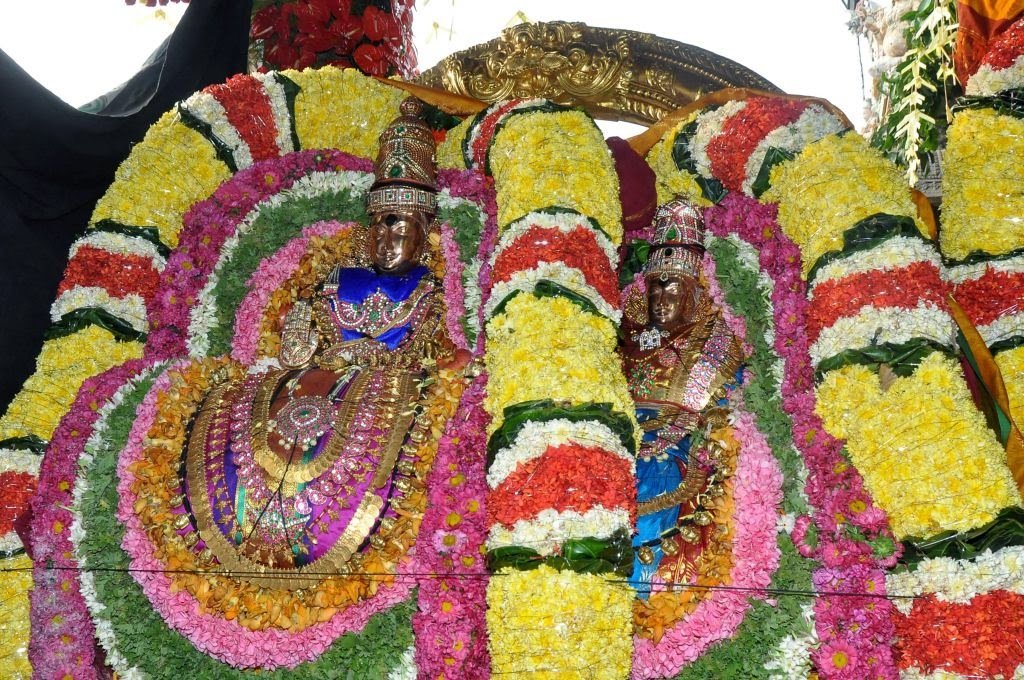
Lord Annamalaiyar and Goddess Unnamulaiyar
Symbolically, hoisting the flag suggests setting out to conquer, and a
devotee comes to the Temple to conquer his ego and gain control over the
baser nature with the help of the Supreme Being. The Sanskrit word for
the flag is 'Dhvaja' and it means whatever is raised. In the religious
sense, whatever raises man to a higher level of understanding and
activity is a 'Dhvaja.' The flag also suggests hope and desire to
overcome ignorance. The Temple visit invigorates the devotee, recharging
him with strength and bravery to face the hardships of daily life
knowing full well that in the ultimate those who have surrendered to the
will of God find victory.
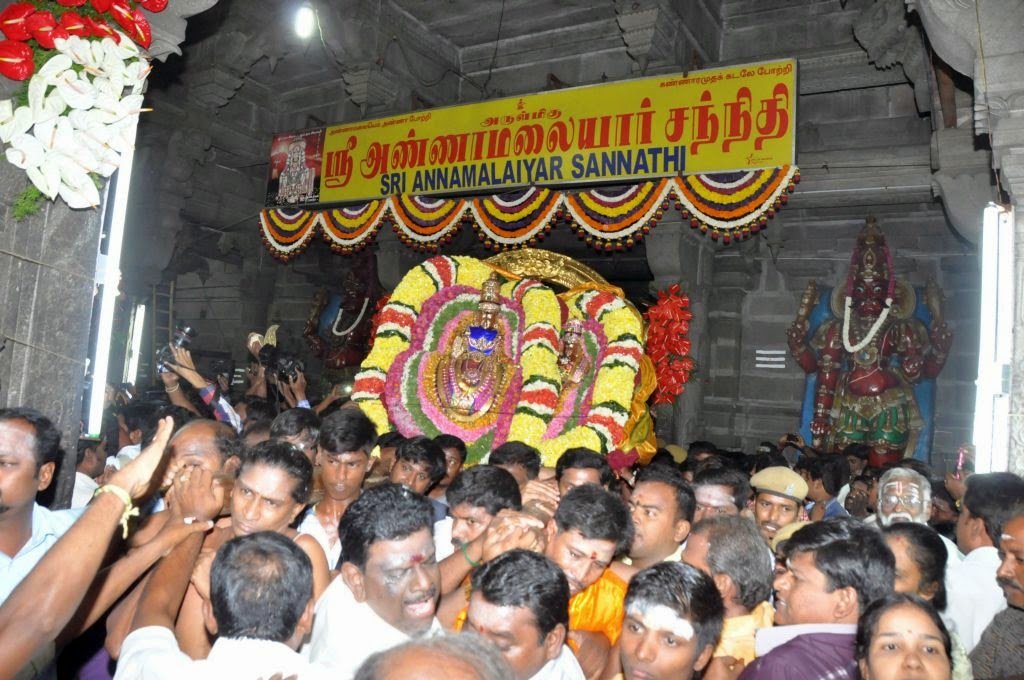
The God and Goddess being carried out
The Dhvaja which suggests the victory of good over evil is a symbol of
victory and superior wealth. It signifies commanding respect, patriotism
and kingship. The Kings of old in order to exhibit their Lordship over
their kingdom and proclaim their continuing rulership would hoist a flag
above their battlements or palace.
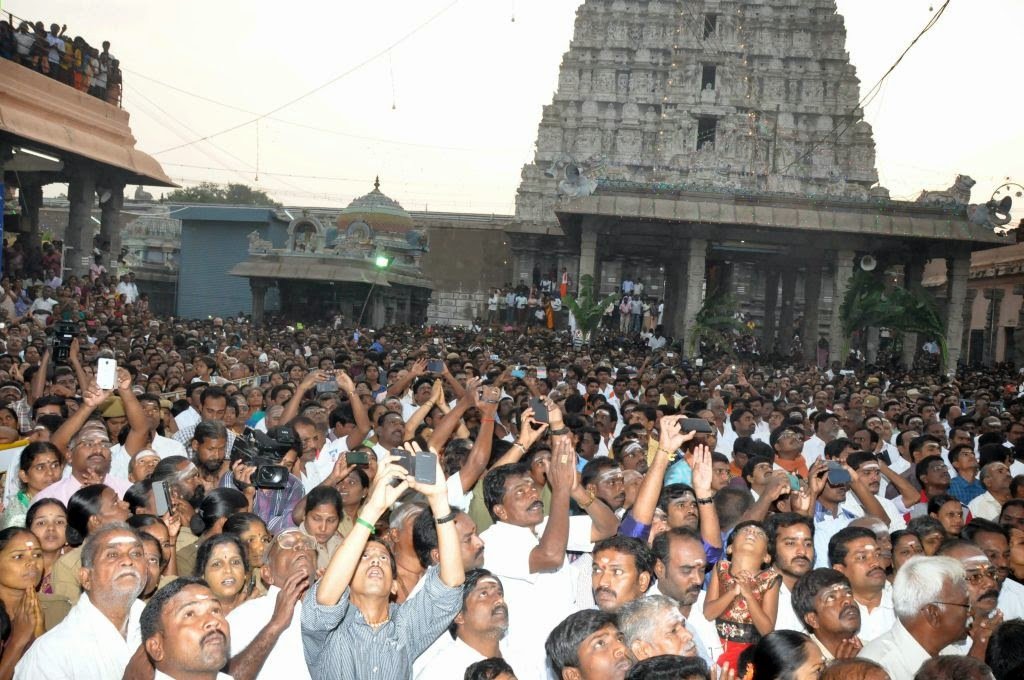
Large crowd gathered for official beginning of the 2014 Deepam Festival
God is seen as the King of Kings, an Emperor above all emperors. He is
the Supreme Power, not just on earth but in the entire
Universe - thus it is only befitting that tribute be paid to this
all-powerful Master - the Dhvaja is thus sent aloft.
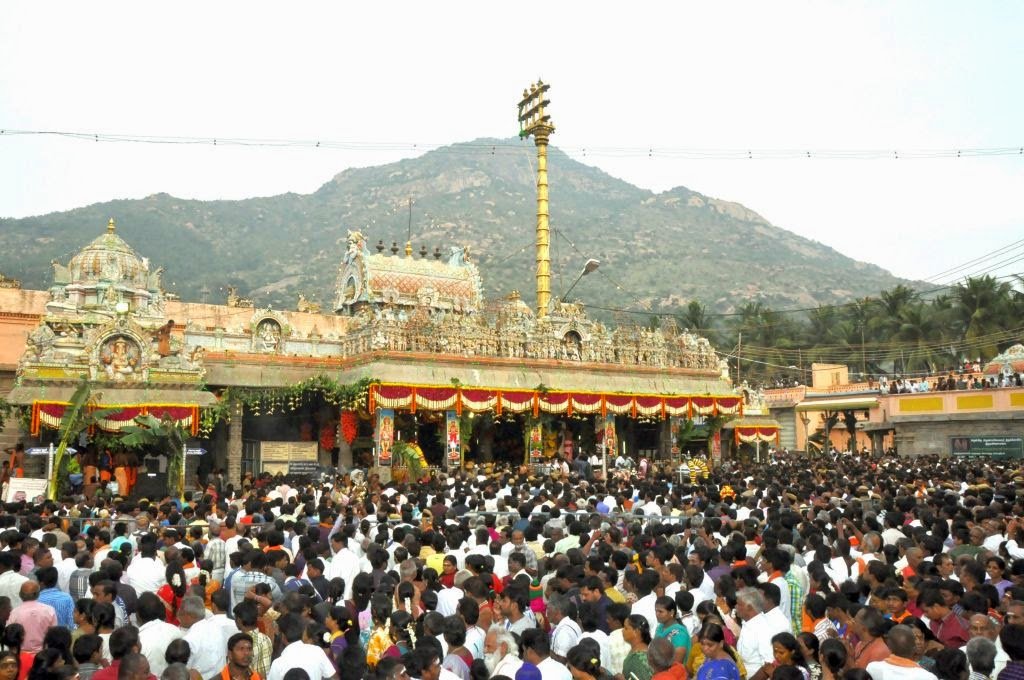
Flagstaff with Arunachala in background
Sometimes the flag or banner hoisted in the Temple acts as a message
board and gives an idea about the deity worshipped in the Temple. It
also suggests which particular incarnation or manifestation of the God
is given importance in the Temple. An interesting minor function of the
Dhvaja is its use as a warning. Just as a city without the king's flag
is a city 'without an owner', a mandir without a Dhvaja is open to
harassment by evil elements. The Dhvaja warns, "Beware, your entry is
prohibited!"
[Reference: Indian Temple Traditions - Kalpatharu Research Academy]
|
|
|
|



