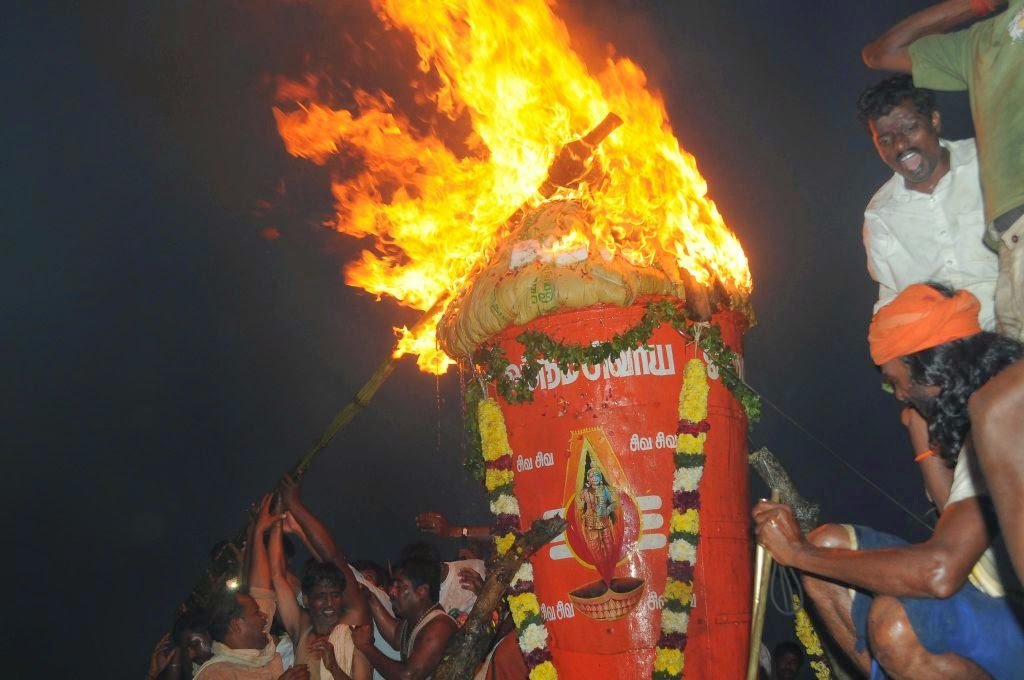
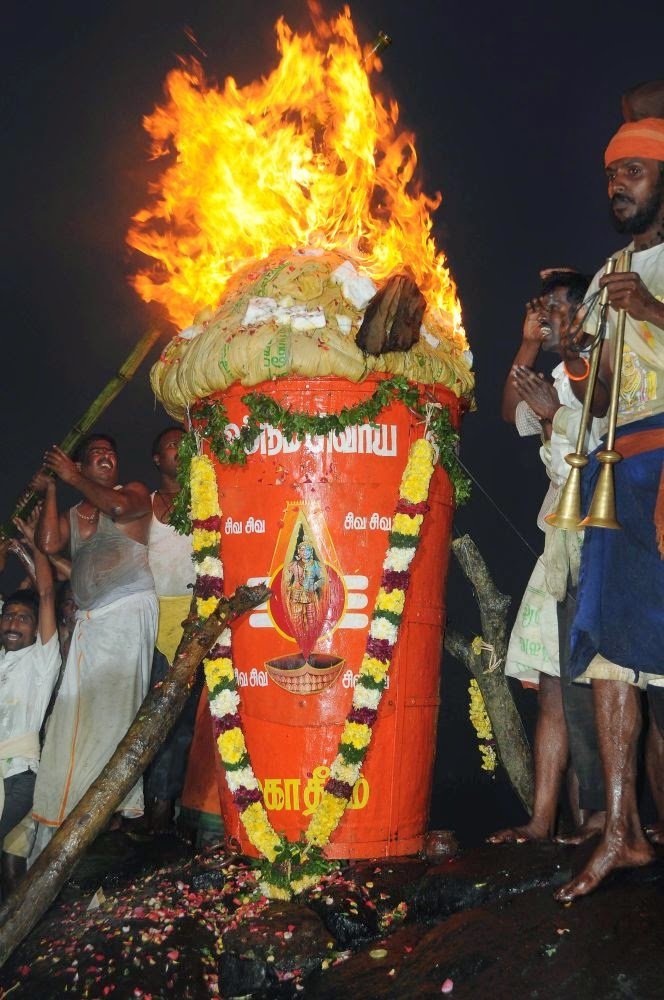
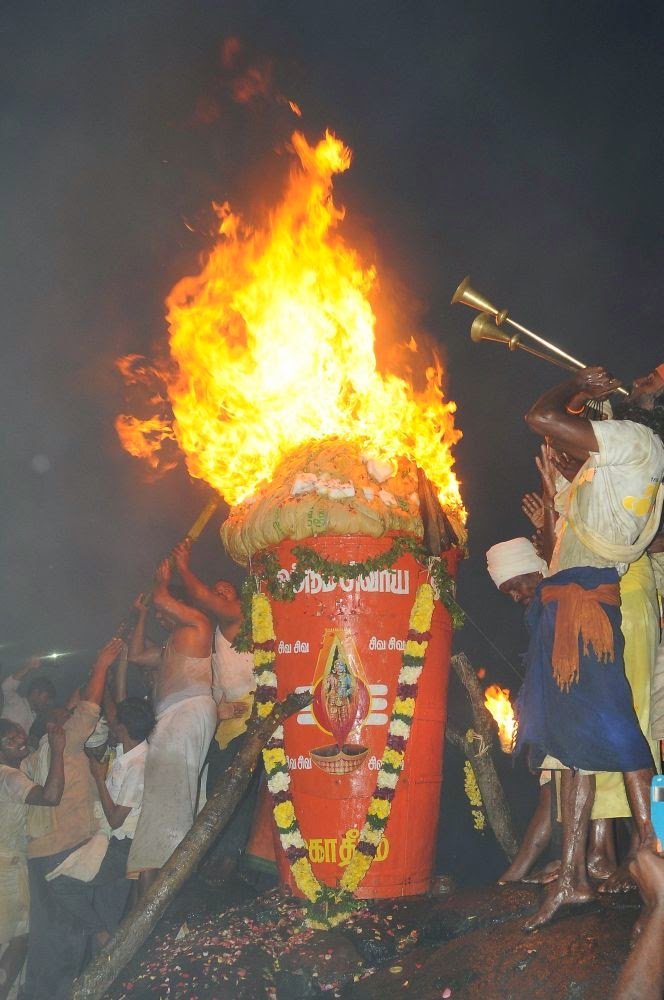
Arunachala Karthigai - Bharani Deepam
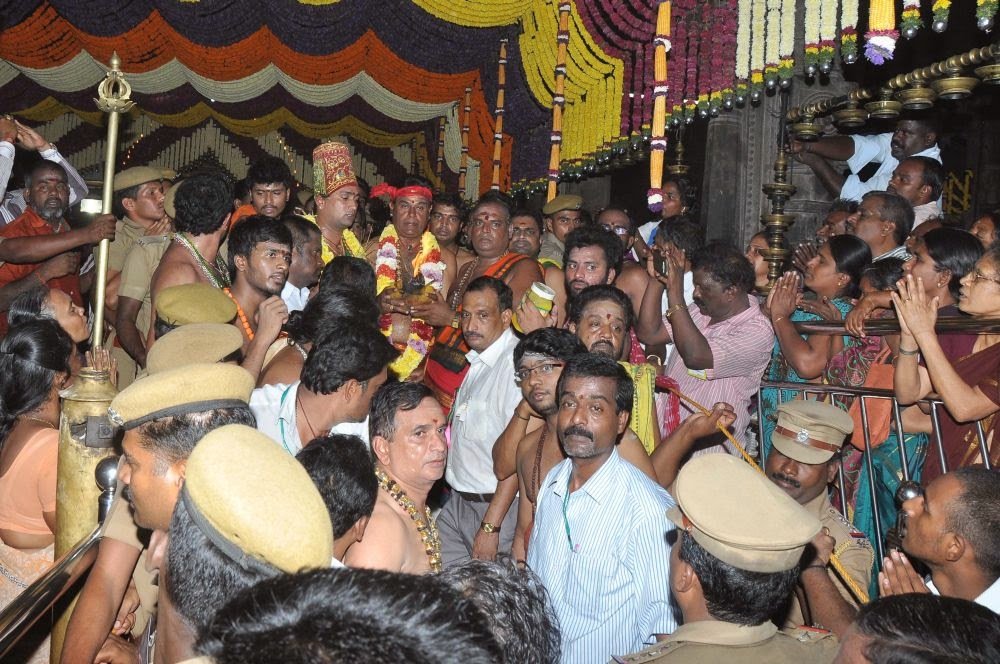
"The all-pervading quiet of early morning is suddenly disrupted by a mad
clamor of thunderous sound. Ringing bells, pounding drums and piercing
nagaswarams (temple horns) almost overpower the belting voices of
hundreds of devotees who are singing songs in praise of Siva, the Lord
of Arunachala. It is 4:30 am on the 5th December, 2014, and the main
sanctum sanctorum of the massive Tiruvannamalai Arunachaleswarar Temple
is packed with souls who have been waiting all night for this moment.
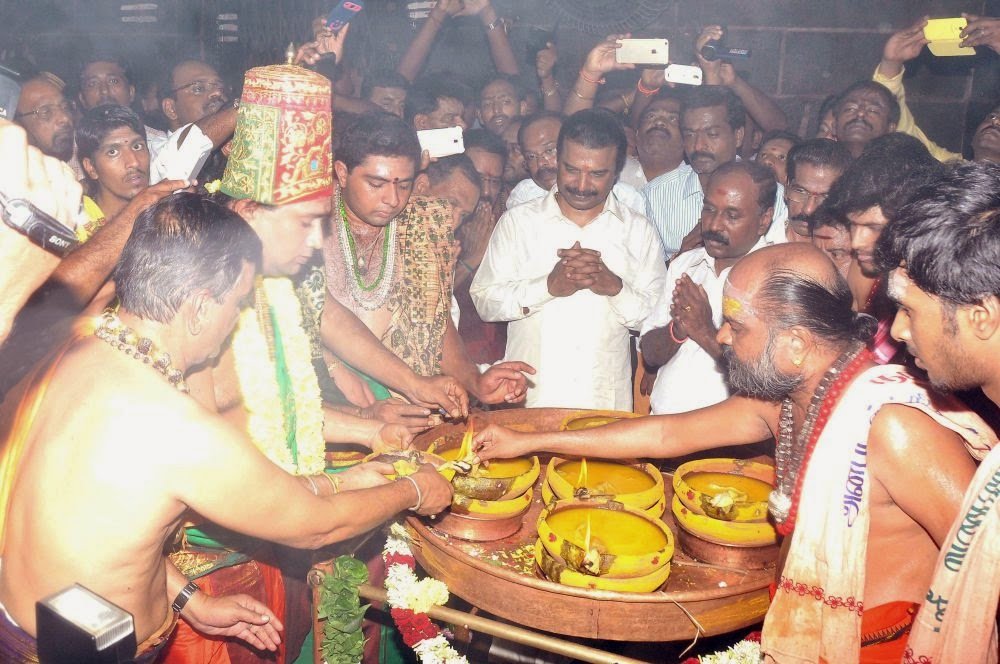
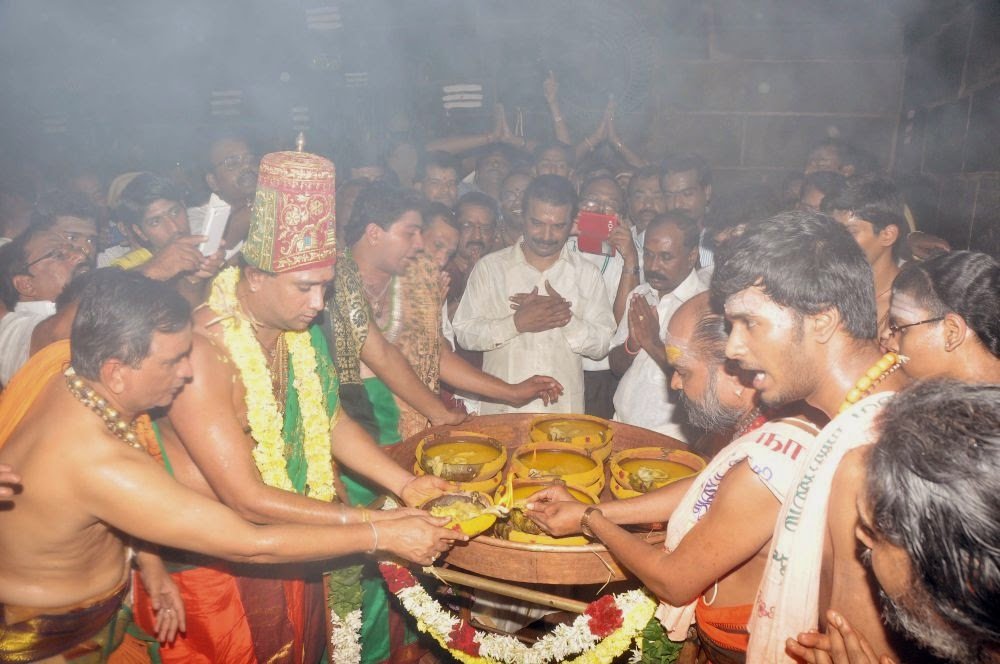
The chief priest has just finished a simple ritual called Bharani Deepam
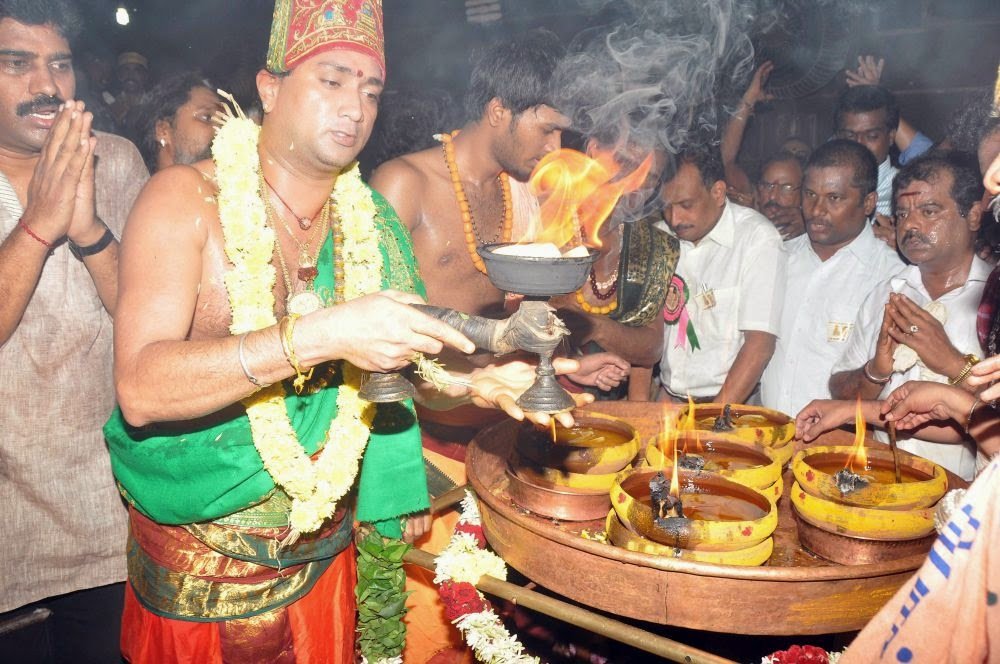
and now ceremoniously waves a huge camphor flame in the direction of
nearby Arunachala mountain. Although he is chanting Sanskrit slokas, he
cannot be heard amidst the deafening furor of devotion that surrounds
him. Finally, he touches the flame he is holding to the wicks of five
huge, earthen, ghee-filled pots, representing the sacred elements;
earth, air, fire, water and ether.
|
|
As these
five flames loom up with red-yellow light, the famous South Indian
festival of Karthigai Deepam officially begins. A single flame is then
taken from the pots and kept burning in the Temple throughout the day as
a symbol of the merging of manifestation back into God, the one source
of all. This single flame is referred to as the Bharani Deepam.
Significance "There is immense significance in this ceremony called
Bharani Deepam. At this time, the universal Lord manifests as the five
elements, which will later fully merge to become one when the Krittika
Deepam flame is lit in the evening. From one to many and many to one.
This is the whole essence of Saivism and the meaning of Krittika
Deepam."
Town's people and pilgrims from far afield, are climbing Arunachala some
in order to secure a good viewing point for the evening's lighting of
the 2014 Deepam cauldron, others so that they can personally deliver
their ghee offerings to the top of Arunachala and some to just touch the
cauldron that will hold the flame that will be lit that evening. From
the town, the stream of people climbing up the slopes of Arunachala look
like a line of tiny ants.
Around 10:00 a.m. this Bharani morning, a group of fishermen will be
blessed by a priest in a ceremony at the Temple. Amidst ringing bells
and temple music, the priest will give the fishermen a lamp in a
protected container that has been lit from the Bharani Deepam in the
Temple. After the consecration ritual, the fishermen take off up the
mountain. It will take them about four hours to carry the flame to the
top of Arunachala.
This lamp, also called Bharani Deepam, will be taken to the top of the
Hill by fishermen from hereditary fishing families. Others of the same
hereditary fishing family will remain at the Temple and in the evening
light the Deepam flame outside the Arunachaleswarar Siva Sannidhi."
Arunachala Karthigai Mahadeepam - December 5, 2014
Ardhanarishvara
There are many subtleties and esoteric meanings connected with the
mythology and legends of Arunachala. One of the most famous being that
of Ardhanarishvara - a form of the Divine which is particularly celebrated
at Arunachala and not more so than during the festival of Deepam.
"At the mystic hour of dusk when thousands have gathered in the
courtyards and roofs of the Temple, waiting since early morning, the
panchamoorthies, are carried out into the courtyard in a fast running
motion, sitting in their golden palanquins covered with festoons. The
deities are placed in a Mandapam (ceremonial pavilion) opposite the
entrance of the Shiva Sannidhi and facing the holy mountain.
At that time also the deity Ardhanarishvara is brought out and placed on
the stairs of the Temple close to the big Deepam. This is the only day
of the year that this particular Deity is ever moved. It is most
auspicious.
In the Deepam Festival the union of Shiva and Parvati in the deity
Ardhanarishvara is also reflected. Once the Goddess in play covered the
eyes of her Lord Shiva with her hands, and thus the whole world was
plunged into darkness. However, Shiva opened his third eye on the
request of the Gods, and light was restored.
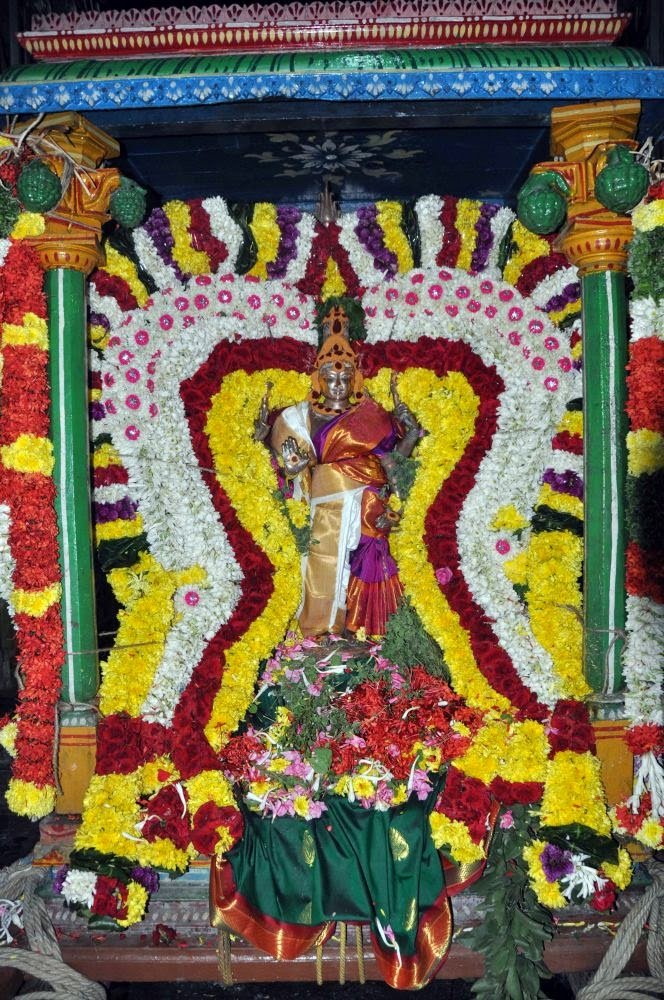
Ardhanarishvara
The Goddess Parvati was ashamed of her behaviour, and she retired from
Mount Kailasa to Kanchipuram to do penance and purge herself of her sin.
Shiva then directed her to go to Tiruvannamalai to worship him there.
Parvati became an anchorite and did severe penance and performed
girivalam around Arunachala with deep concentration on the holy name of
the Lord.
Shiva was pleased and told Her that she was now relieved of the sin
which was causing the untimely pralaya (destruction of the world). He
blessed Her saying, 'Come and unite with me,' and disappeared into the
Hill.
On Kartikeya day the Lord appeared as a blazing light, a jyoti on the
top of Arunachala and asked Parvati to circumambulate the hill. She did
so, and when she rounded the western side of the hill, Shiva appeared on
his white bull and blessed her. When she rounded the hill on the
north-western side he absorbed her into the left half of his body. Thus
came into being the form of Ardhanarishvara, the deity that is
represented as half male and half female."
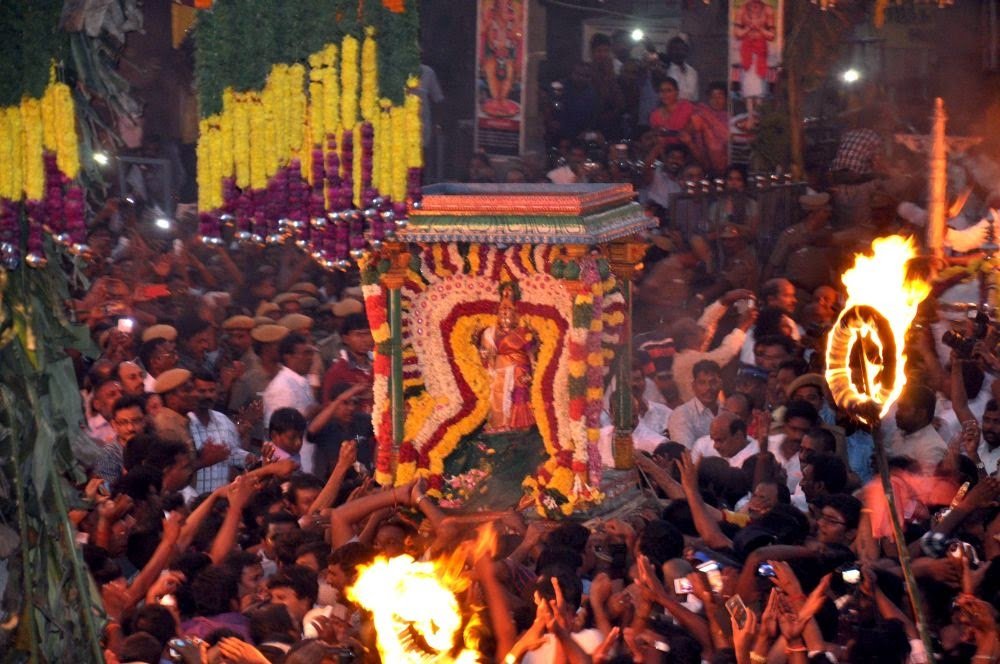
Ardhanarishvara darshan Temple Compound
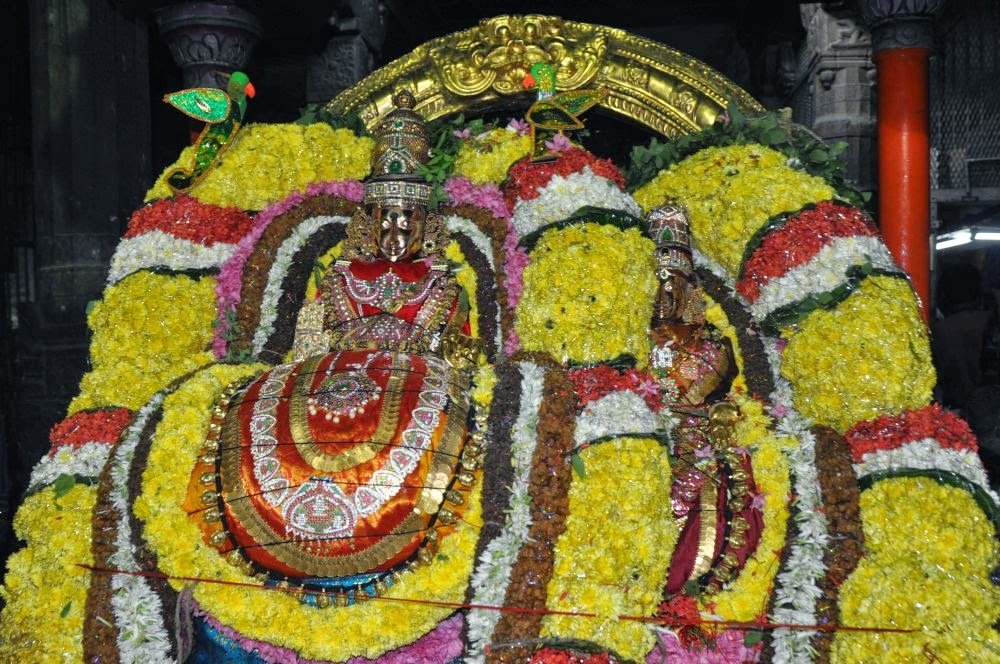
Lord Arunachaleswarar
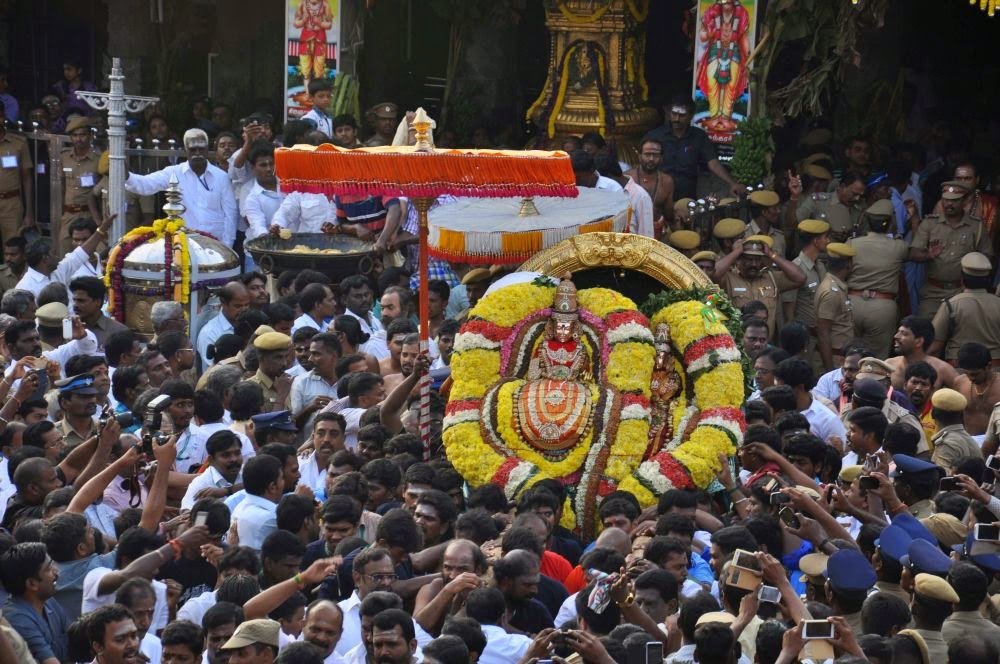
Lord Arunachaleswarar Darshan Temple Compound
Mahadeepam
". . . However all this was only preparatory for the last and principal
day of the Festival, on which the darshan of the Light is given. This
day is also a day of fasting, as the spirit must be pure and completely
unencumbered in order to receive the grace of this darshan. On this day
one refrains from all food, or at least from taking the normal heavy
meal of rice, until the evening after sunset, when one has actually seen
the light on the crest of Arunachala.
I spent this day at the Esanya Madan . . . and arrived around two
o'clock, at the inner courtyard of the Temple which was already more
than half full. However with the help of friends I managed to insinuate
myself onto a balcony from which I could get an excellent view of the
whole ceremony. By four o'clock it looked as if not a single square foot
in front of the sanctuary remained unoccupied, and yet the crowds
continued to arrive. From my balcony I looked down on a sea of heads,
all exposed without protection to the fiery rays of the sun.
In order to divert the crowd, as they awaited the great moment, a
succession of speakers came to the microphone which was placed quite
near me on the balcony. They had only a limited success, however; and
even when Murugan Das took the microphone, began to sing and invited the
crowd to join in the refrain he carried scarcely half of them with him.
Then he chanted the great mantra "Glory to Shiva!" and at once every
tongue took up the cry, which was bellowed from the loud-speakers and
echoed back from the enclosure walls. Soon there was only the cry of "Om
Namah Shivaya! Om Namah Shivaya!" coming in great waves of sound
endlessly repeated from all sides and uttered in fervent supplication.
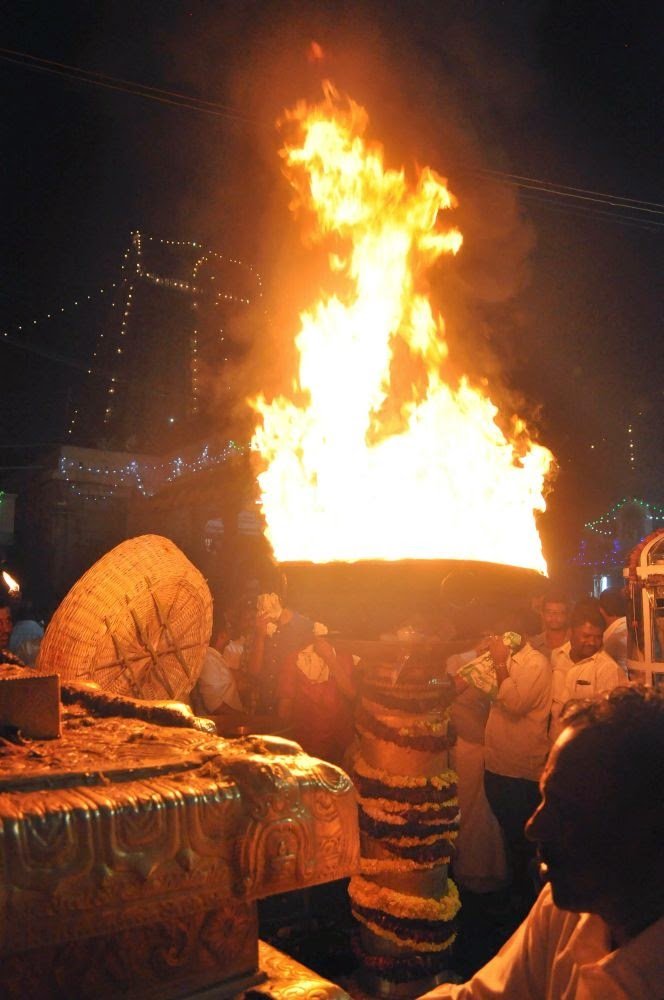
Deepam inside Arunachaleswarar Temple
Towards five the singing stopped, as a procession emerged from the
Kalyana Mandapam. It was the five murtis (Ganapati and Subramaniyar, the
two sons of Shiva; the Bull Nandi, Shiva's vehicle, Parvati, his
consort; and finally Shiva himself) which were now coming attired in
their most splendid garments and covered with flowers, to mix with the
crowd so that they might have the darshan of the Holy Light. Immediately
in front of the porch of the sanctuary stands a mandapam which was
built in 1202 by Mangayarkarasi to provide a shelter for the Lords of
the Temple during this annual function. The murtis passed through the
crowd on their palanquins carried on the shoulders of devotees. Once
they were in their place, everyone's attention was once more turned
towards the Mountain and the chanting of mantras began again.
The atmosphere became more and more tense. The sun had now disappeared
behind the mountain, and the lengthening shadow of the mighty Linga of
rock gradually spread across the sanctuary, the courtyards and the
Gopurams. The great moment was drawing near for which everyone was
waiting - the appearance of the Flame. Expectation filled every heart and
showed on every face. It increased in harmony with the rhythm of the
cosmos itself; as slowly beyond the horizon the moon rose into the sky,
while in the depths of space the constellation of the Pleiades, of
Krittika, appeared in the same direction.
Suddenly there was the sound of an explosion, like a gunshot. Young
torch-bearers came running out of the inner sanctuary, brandishing their
lighted torches at arm's length. Priests offered the flame of the arati
before the murti of Arunachala at its space under the mandapam. In
front of the main gate a huge bronze cauldron, filled with oil, camphor
and clarified butter, burst into a giant flame.
And from the peak of the Mountain also - on which all eyes had been fixed
for the last full hour, not only in the Temple and the town, but in the
whole countryside around to a distance of many leagues - the flame mounted
up, manifesting both outwardly and in the heart of the faithful, the
mystery of Light which from the beginning has at the same time hidden
and revealed itself in Arunachala.
That is all. The Flame has been seen. Joy and grace have filled all
hearts. The crowd immediately begins to disperse, though it will be more
than two hours before the Temple courts are completely empty. Each one
as he leaves, goes to the bronze cauldron and casts into it his offering
of camphor or of oil to be burnt up in the one great flame - a symbol of
his own departure into the mystery of the Flame.
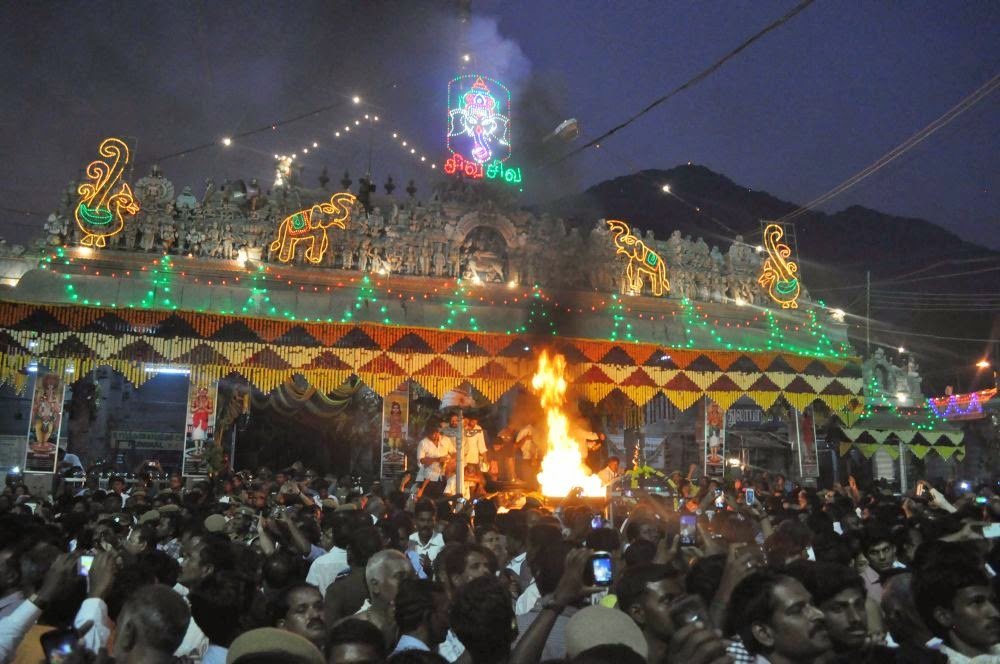
2014 Mahadeepam Arunachaleswarar Temple and on Hill
Meanwhile those from above begin their slow and difficult descent from
the Mountain. They had climbed up early that morning in the first light
of dawn, carrying jars of oil and clarified butter. The worthiest of
their number were entrusted with bearing the sacred fire in order to
light the Deepam flame. This had to be done at the very moment when,
from their lofty observatory, they saw simultaneously the red sun
disappearing in the west while the moon's dish came over the horizon in
the east.
As soon as I left the Temple precincts amid the crowd of faithful, I
joined with many others in once more following the circular road round
Arunachala . . . as I stepped into the cool air of the night . . . all
the detailed features of the Mountain had disappeared. There was nothing
to be seen but the sharp outline of its mystic triangle sketched
against the sky. As the moon climbed majestically towards the zenith, it
shed over it its silvery light, while all around was spread a
mysterious shadow.
The Mountain had become an immense lamp, from the top of which glittered the bright Fame. OM."
[By Swami Abhisktananda 1970]
|
|
|
|