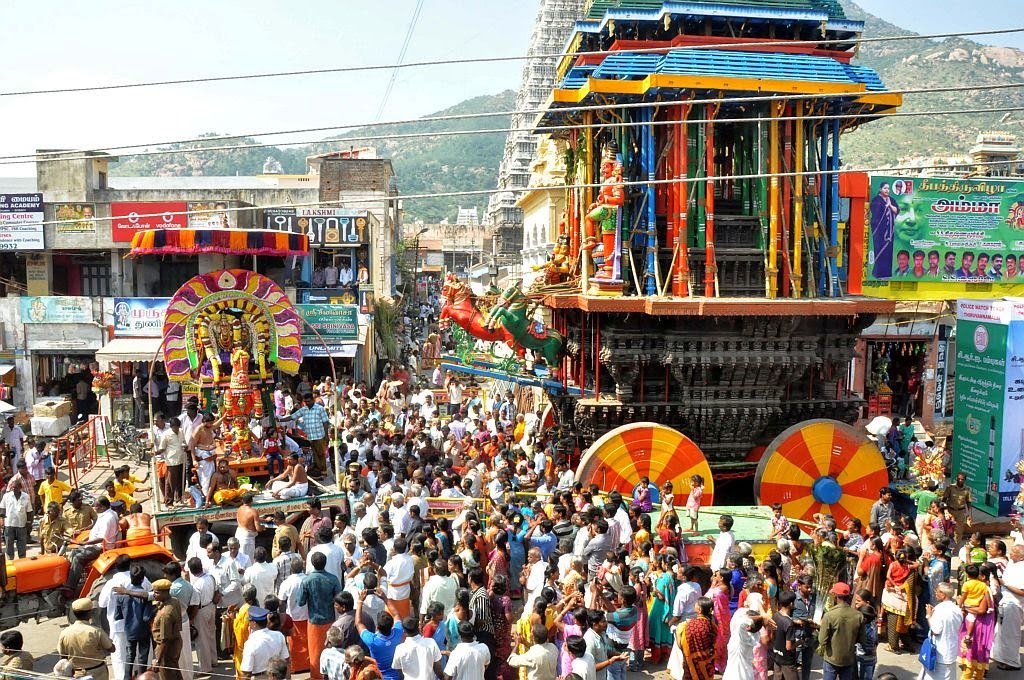
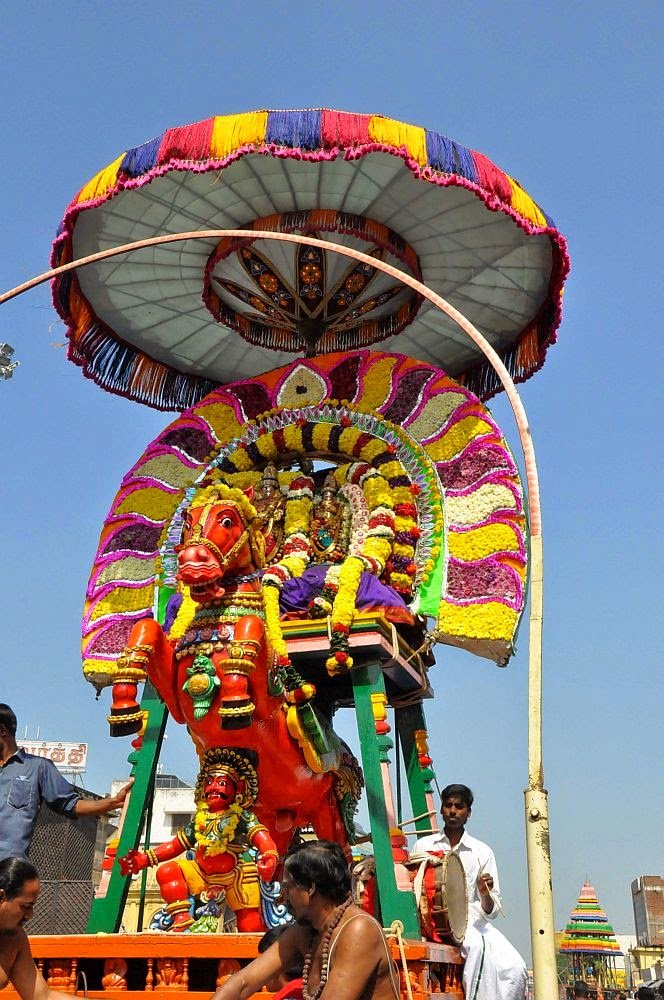
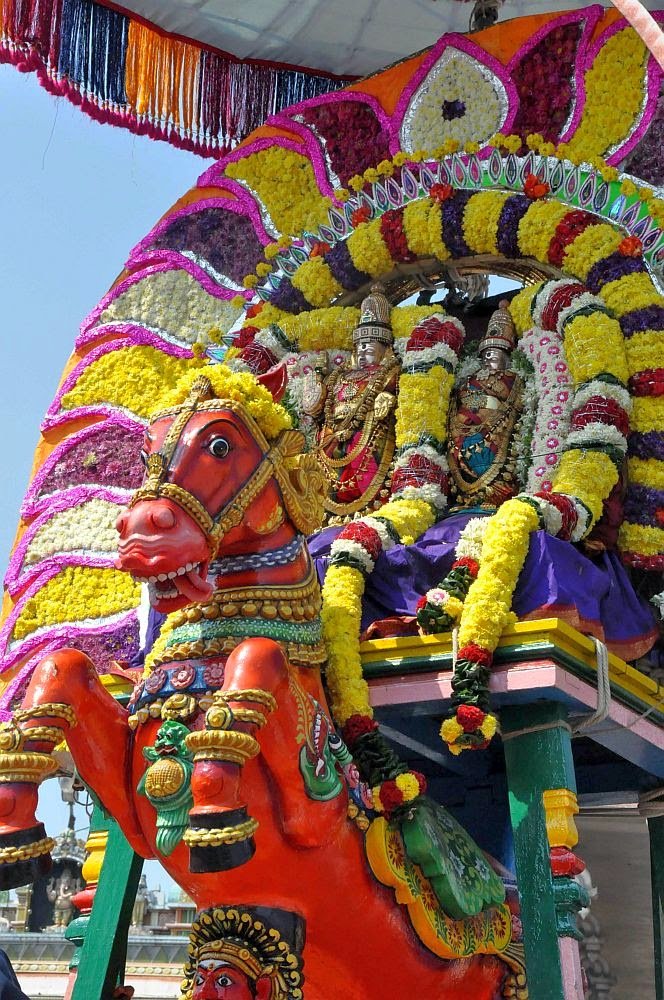
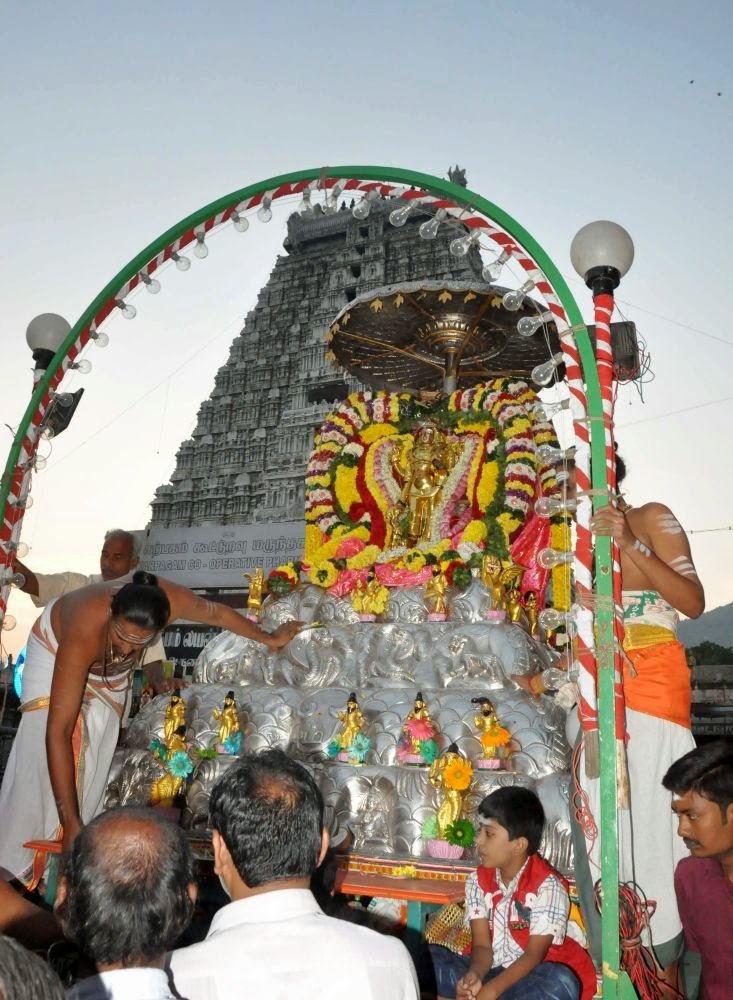
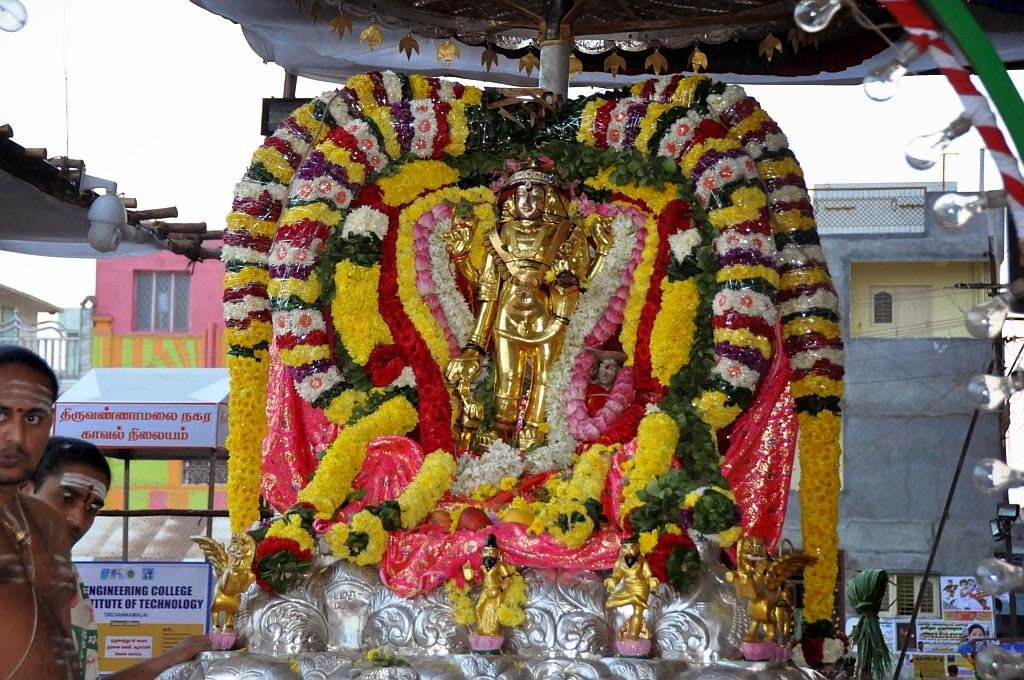
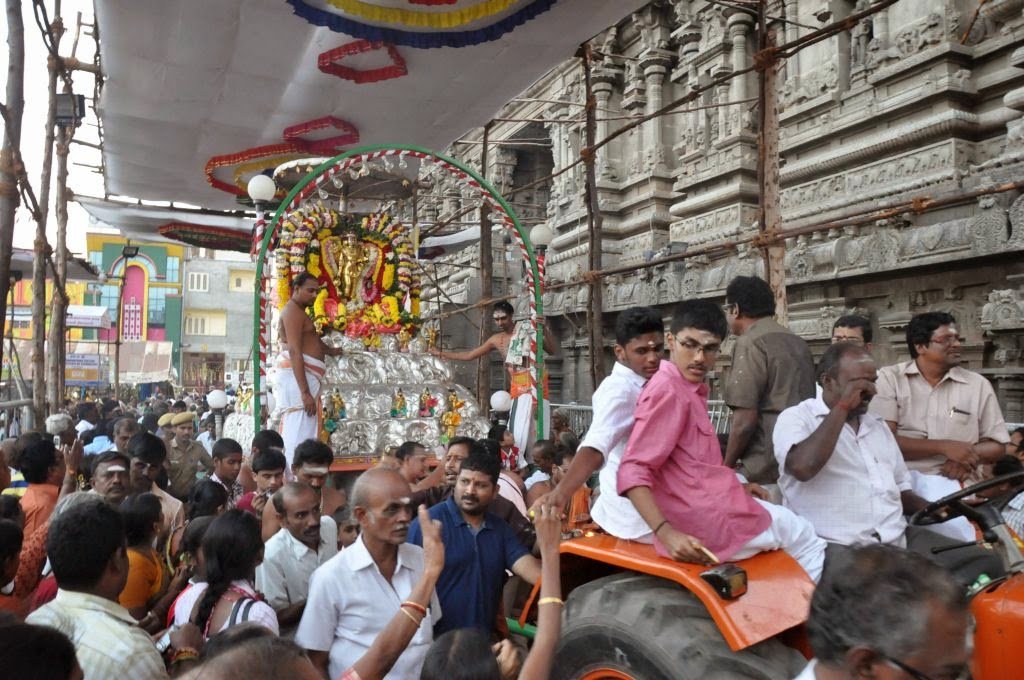
Deepam Festival. Day Eight - Morning: Chandrasekhara on Horse Vahana
On the morning of the eighth day of the Karthigai Deepam Festival, God
on his horse vahana visits the Maha Radham which has returned to its
permanent spot (near the Temple on Car Street) from its previous day's
Temple circumambulation.
|
|
2014 Deepam Festival. Day Eight - Afternoon: Pichandavar
Lord Shiva as Pichandavar
One story of Lord Shiva in the form of Pichandavar (beggar) goes like this:
Punithavathiar as Karaikal Ammaiyar was called (the only woman saint of
the 63 Nayanars), was born in a Vaisya family. Her father was
Danadathan. He was a wealthy virtuous merchant. He and his dutiful wife
prayed to the Lord for a child, and the child the Lord blessed them with
they called Punithavathy. From her childhood, Punithavathy had an
intense love for Lord Siva and His bhaktas. She was married to
Paramadattan, a wealthy Vaisya. Both of them were leading ideal
householder's life.
One day Paramadattan sent two mangoes to his house. Punithavathy kept
them safely so that she could serve her husband them at meal-time. In
the meantime, a Siva Yogi (in the form of Pichandavar i.e. Lord Shiva as
beggar Avatar) appeared before her hungry and completely exhausted.
Punithavathy worshipped him and offered bhiksha. As she had nothing to
give except the mangoes, she gave one to the guest. At midday
Paramadattan returned to his home. His wife served him with one mango,
which he so enjoyed that he asked for the other. In a state of turmoil,
his wife appealed to the Lord for help.
When she finished her prayer, mysteriously a mango fell onto the palm of
her hand. She gave it her husband. He noted that it was exceptionally
sweet and asked her to tell him from where she got it - as he was quite
sure it was not the mango he had sent. Punithavathy told him the truth.
Paramadattan, however, would not believe this and challenged her to
produce another. She prayed again to the Lord and another mango appeared
on her palm - which she gave to her husband. But, at once it disappeared
from his hand. He was astounded and finally understood his wife's
greatness. He felt that it was a great sin to live with her as her
husband. On the pretext of going to a foreign country for trade, he
sailed with a ship load of goods. On return, he established himself in a
big city in the Pandyan kingdom, married a Vaisya girl and lived
happily. He had a daughter by her who he named Punithavathy, after his
first wife.
Punithavathy's relatives came to know of her husband's whereabouts and
took her there in a palanquin. When Paramadattan heard that Punithavathy
was coming to him, he, with his second wife and child, went forward,
and fell at Punithavathy's feet. When the people demanded an
explanation, he revealed that he regarded her, not as his wife, but as a
Goddess. Punithavathy understood his mental condition, and prayed to
the Lord: 'In that case, Oh Lord, deprive me of my present physical
charm and let me have a demoniacal form.' Her prayer was immediately
granted and her charming body was transformed into a skeleton.
She then went on a pilgrimage to Kailasa. Feeling that it would be a
great sin to place her foot on such sacred grounds, she made the last
part of the journey on her head. Goddess Parvati was surprised to see
Punithavathy's strange form and her wonderful devotion. Lord Siva told
her of Karaikal Ammaiyar's greatness. When she went near Him, Lord Siva
welcomed her with extreme love and granted her a boon. She fell at His
Feet, and prayed: 'Oh Lord of Mercy, give me sincere, pure, unalloyed,
eternal and overflowing devotion unto You. I want no more birth. If,
however, I have to take birth here, grant me that I should never forget
You. Whenever You dance, I must be at Your feet singing Your praise.
This is my only wish.' Lord Siva granted the boon and asked her to
proceed to Tiruvalangadu to witness His dance. She went to that place
and spent her life singing the praise of Lord Siva.
A famous festival is celebrated at Karaikal, Pondicherry State which is
known as Mangani (Mango) Festival in which mangoes are thrown onto the
street in front of the route Lord Pichandavar (avatar of Shiva) will
take in his procession during the Festival
2014 Deepam Festival. Day Eight - Night: Arunachaleswarar Horse Vahana
In Hindu iconography, positive aspects of the vahana (vehicle) are often
emblematic of the deity that it carries. In this procession each of the
panchamoorthies not only has the horse as its vahana, but each God also
carries a whip in their hand.
The main characteristic of the horse is its loyalty, industriousness and
swiftness. That means, with God as driver, we have the possibility of
controlling the mind. The neigh of a horse is also symbolic of the power
to awaken the sleepy mind for the practice of sadhana and
righteousness.
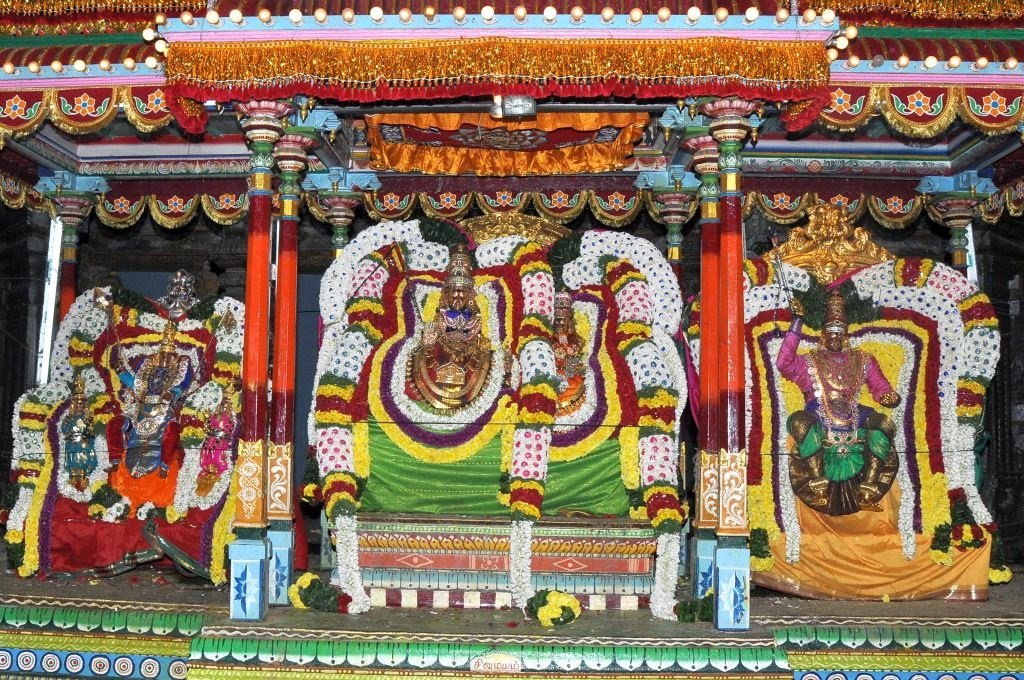
Alangarams: (left to right) Karthikeya, Arunachaleswarar, the Goddess
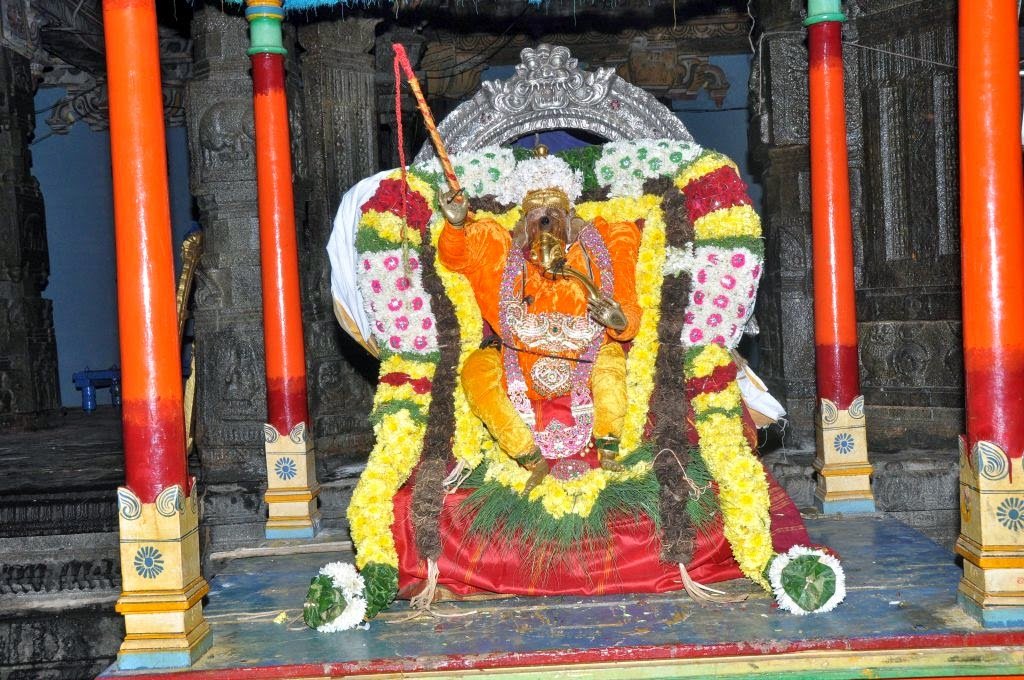
Lord Ganesha, whip in hand
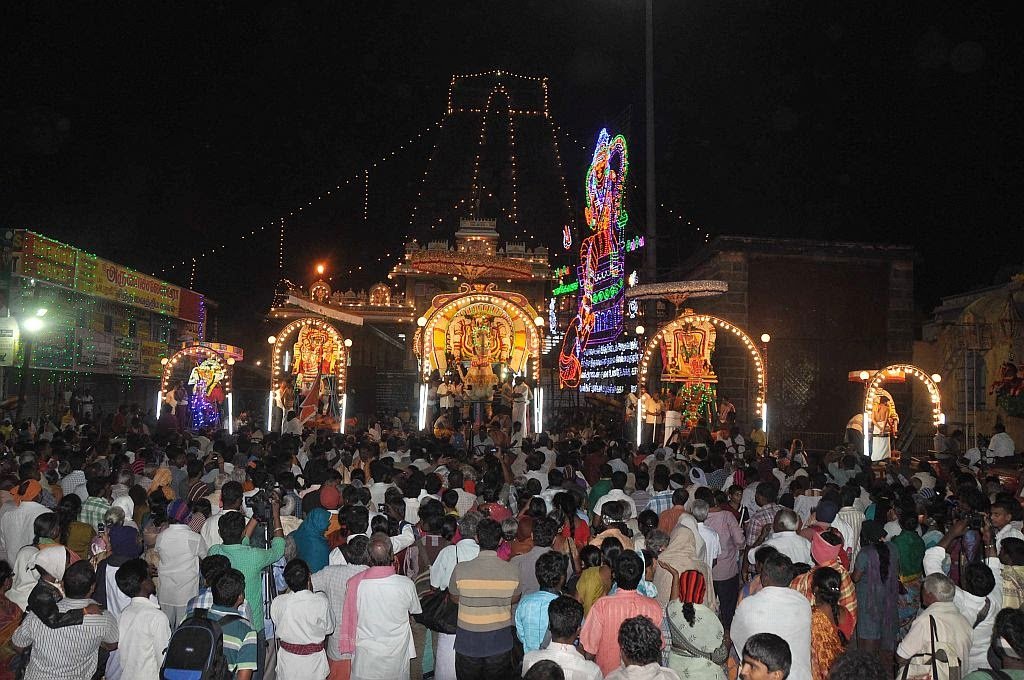
Panchamoorthies Darshan outside Temple Mandapam
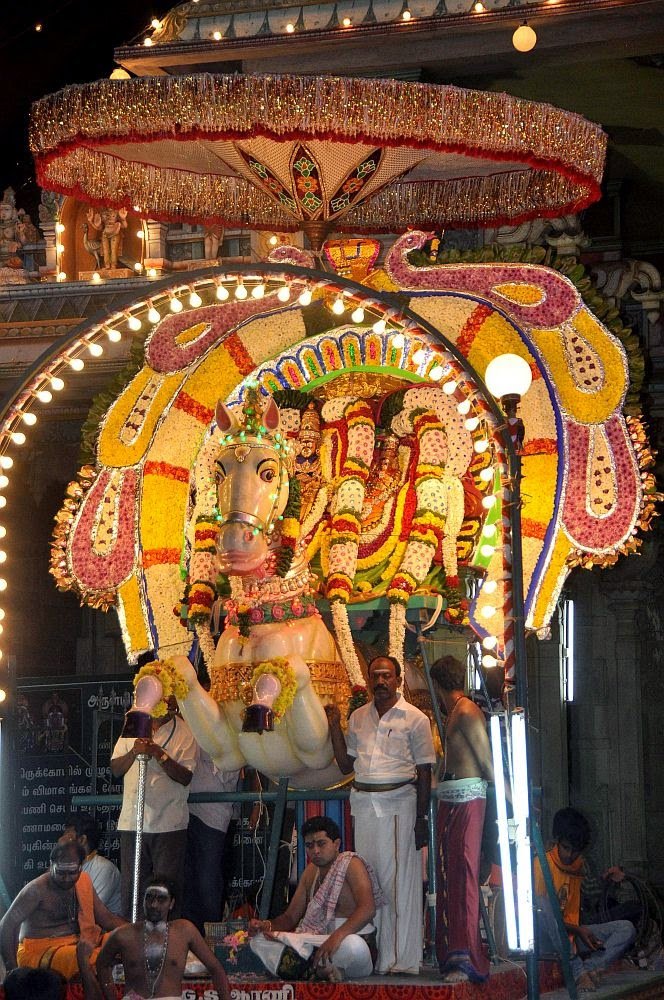
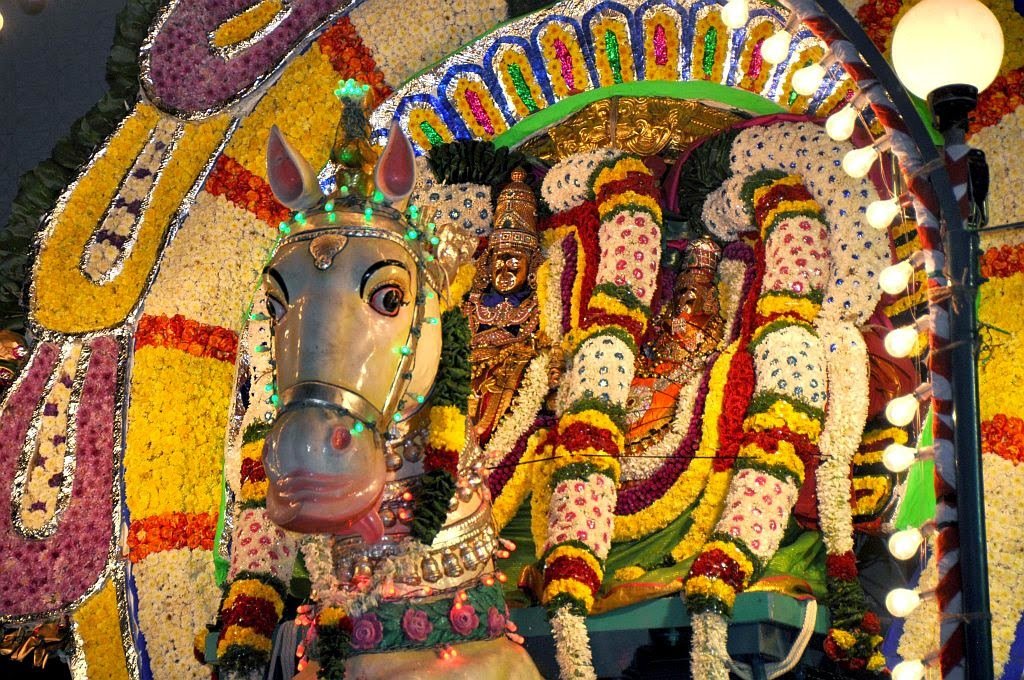
Arunachaleswarar on Horse Vahana
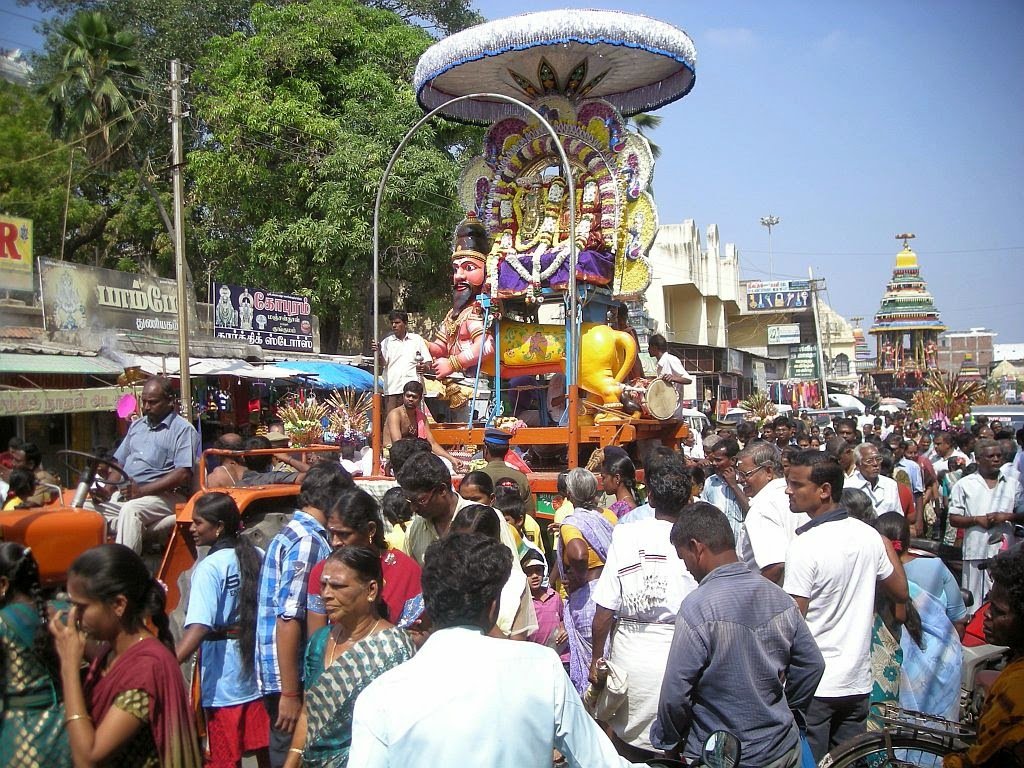
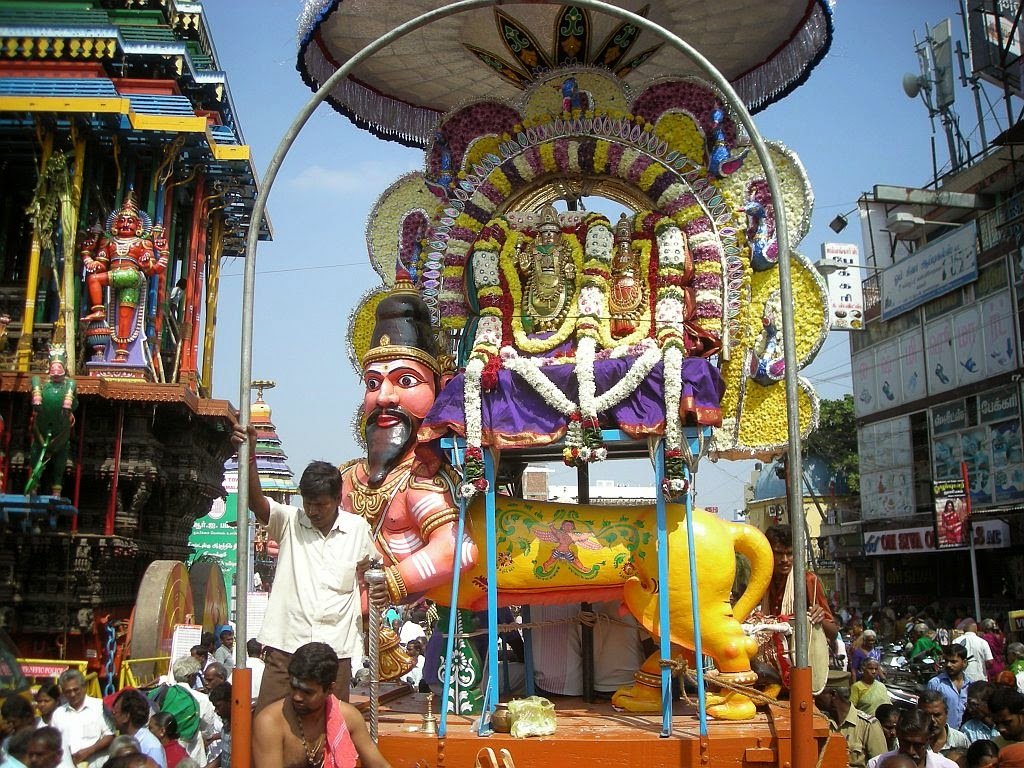
2014 Deepam Festival. Day Nine - Day: Chandrasekhara on Purusha Meruga Vahana
On the morning of the 9th day of the 10-day Karthigai Deepam Festival
Lord Chandrasekhara is mounted on the Purusha Meruga Vahana.
This vahana known in Tamil as PurushaMeruga (man-beast) has the body of a
lion and the head of a human being. The sphinx-like creature supposedly
has the power to avert evil influences and bad luck. It is also
believed to be able to take away the sins of devotees when they enter a
Temple and for this reason is often found in a strategic position at
Temple gateways and near entrances to the inner shrine.
The form of the purushaMeruga adorns lamps used in puja ceremonies
(diparadhanas) and plays an important role in daily and yearly rituals
in Shiva temples.
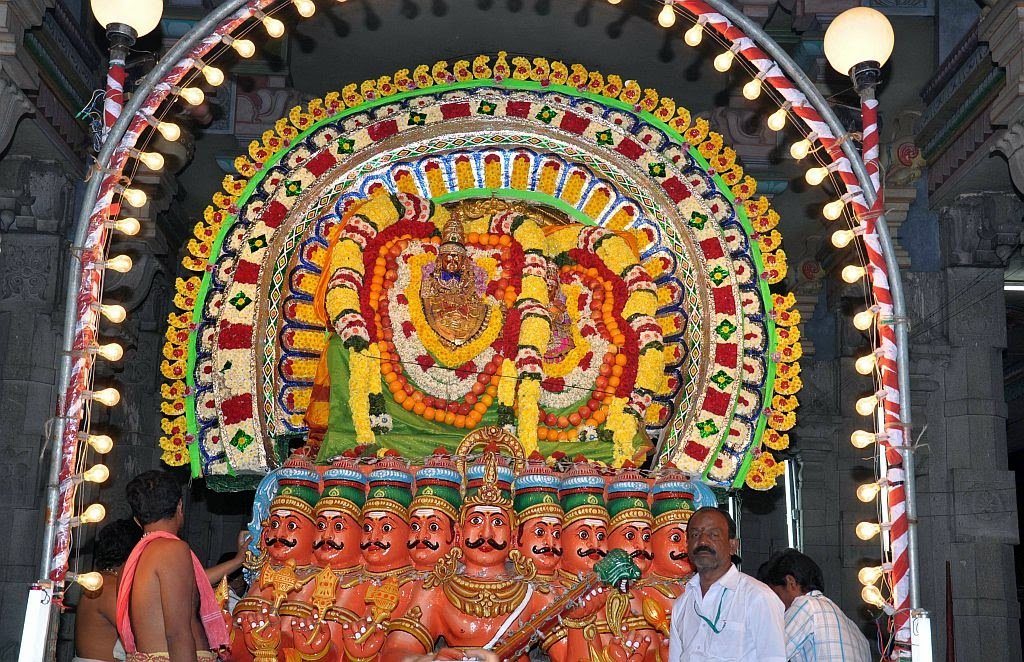
2014 Deepam Festival. Day Nine - Night: Kailasha (Ravana) Vahana
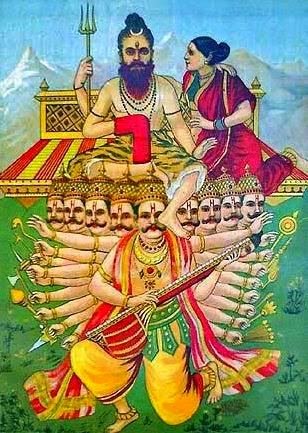
On the night of Day Nine of the Karthigai Deepam Festival, Kailasha
(Ravana) or Ravananugraha-murti ("form showing favour to Ravana") is a
benevolent aspect of Lord Siva depicted seated on his abode Mount
Kailash with the Goddess Parvati, while the rakshasa Ravana tries to
shake the mountain.
The legend recorded in the Ramayana goes like this:
The ten-headed, twenty-armed mighty King Ravana defeated and looted the
city of Alaka (which belonged to his step-brother and God of wealth,
Lord Kubera). After the victory, Ravana was returning to Lanka in a
flying chariot stolen from Kubera, when he spotted a beautiful place
which his chariot could not fly over.
Ravana met Shiva's bull-faced dwarf attendant Nandikeshvara and asked
the reason for his chariot's inability to pass over the place. Nandi
informed Ravana that Siva and Parvati were enjoying dalliance on the
mountain and no one was allowed to pass.
Ravana mocked Siva and Nandi. Enraged by the insult to his Lord, Nandi
cursed Ravana that monkeys would destroy him. In turn, infuriated by
Nandi's curse and his inability to proceed further, Ravana decided to
uproot the Kailash mountain. He put all his twenty arms under Kailash
and started lifting. However, the omniscient Shiva realized that Ravana
was behind the menace and pressed the mountain into place with his big
toe, trapping Ravana beneath it. Ravana gave a loud cry in pain. Advised
by his ministers, Ravana sang hymns in praise of Shiva for a thousand
years. Finally, Siva forgave Ravana and granted him an invincible sword.
Since Ravana cried, he was given the name "Ravana" – one who cried.
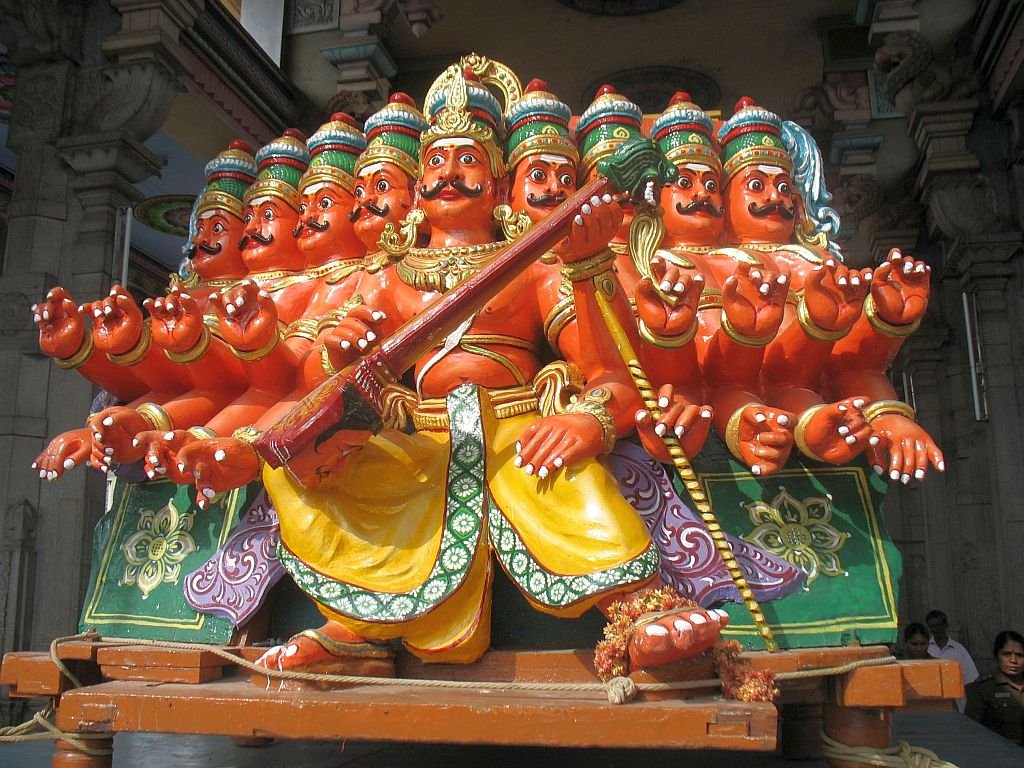
Ravana's head on Veena
The Tamil version of the legend narrates that imprisoned under Kailash,
Ravana cut off one of his heads and built a veena from it. He used his
tendons for the strings and began singing the praises of Siva which
pleased the Lord so much that he bestowed a powerful linga to be
worshipped by Ravana at Lanka.
|
|
|
|