The below narrative with photographs
is a pictorial history of the 2012 Mahashivaratri Festival as
celebrated at the Arunachaleswarar Temple here at Tiruvannamalai. The
Programme of the Festival follows:
At the Mulasthana Lingam pujas and abhiskeham were performed four times:
| 1st Kala |
Puja Night (20th February) 8.30 p.m. |
| 2nd Kala
|
Puja Night (20th February) 11.00 p.m.
|
| 3rd Kala |
Puja Morning (21st February) 02.00 a.m. |
| 4th Kala |
Puja Morning (21st February) 04.00 a.m. |
| |
At 12 midnight on the 20th February there was a special puja and
alankaram performed on the Lingodbhava behind the sanctum of the
Mulasthana Lingam.
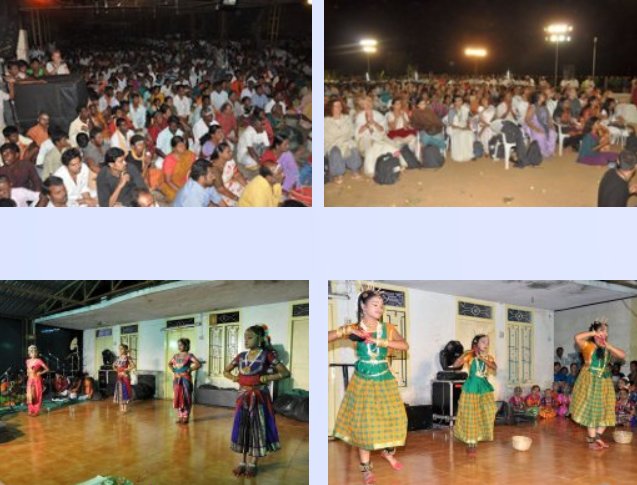
Cultural Programme were performed in the evening of February 20th at the
Temple Cultural Hall (near Rukku the Elephant). The well attended
programme included:
| 5.00 p.m. - 6.00 p.m. |
Devaram Music |
6.00 p.m. - 6.30 p.m.
|
Bharatnatyam Dance from the Tiruvannamalai Natya Sabha
by Mrs. Meenakshi Angapam Group
|
| 6.30 p.m. - 7.30 p.m. |
Bharatnatyam Dance by Tiruvannamalai Kala Ratana Natya Sabha
by Kalaiselvi Subramanian |
| 7.30 p.m. - 8.30 p.m. |
Puppet Dance based on the story of Thiru Kurippu Thonda Nayanar
by Kumbakonam Sri Murugan Sangeeta Puppet Dance Group |
| 8.30 p.m. - 9.30 p.m. |
Bhakti Speech (in Tamil) on Anmegya Nandhavanam
by K.R. Singamurtul |
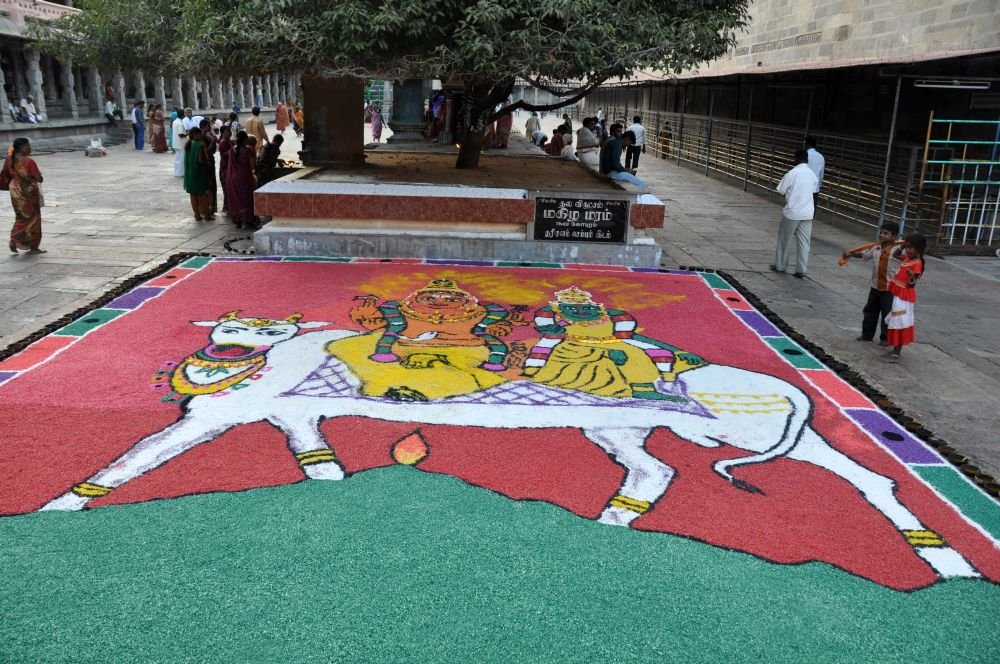
As is traditional at Arunachaleswarar Temple, the
Temple Compound floors were decorated with large coloured drawings
representing certain aspects of Lord Shiva, the Festival of
Mahashivaratri, the mythology of Shiva and both ancient and modern
Tiruvannamalai history.
In the 2012 Mahashivaratri Celebrations, the Temple floor decorations included Five Face Shiva.

A well known name of Shiva is Yogi Raja, the Lord of Yoga, the perfect
ascetic. In some images Shiva is shown to have five faces looking
towards the East, West, North, South and the fifth face shown looking
upward. These aspects represent:
Looking upward - Ishana (the Ruler) copper coloured and the embodiment
of all forms of learning and represents the enjoyer of nature.
Eastern face of Shiva is called Tat Purusha (the Supreme Man) and is
yellow coloured, It represents all nature connected with earth and the
sense of smell.
Western face of Shiva is red and is called Yama Deva (the left hand
Deity) it represents Ego (Ahamkara) and corresponds to the element fire.
It is connected with the sense of sight.
Southern face of Shiva is blue or sometimes blue-black, it is called
Aghora Bhairav (the non-fearful or the frightful). It represents
Intellect (Buddhi) and Eternal Laws (Dharma) It is connected with the
sense of hearing and the organ of speech.
Northern face of Shiva is called Sadyojat (the suddenly born) and is
white in colour. It represents the mind and corresponds to the
sacrificial elixir (Soma).
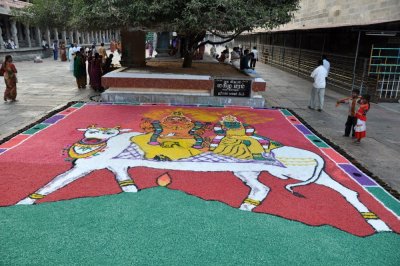
Another floor decoration was of a drawing of Shiva with Parvati (as
Pachaiamman). This aspect of Pachaiamman (i.e. green) is found in
particular at the famous Shakti Temple of Pachaiamman on the Southeast
slope of Arunachala.
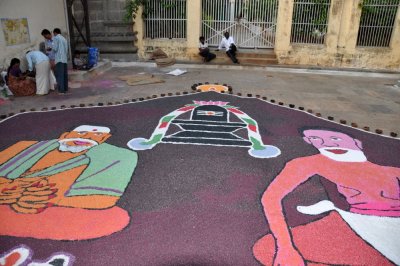
Representing more recent Tiruvannamalai history, below is a floor
drawing of Seshadri Swamigal on the left and Ramana Maharshi on the
right. Both of whom were known to have spent considerable time
meditating inside various parts of the Arunachaleswarar Temple during
their lives.
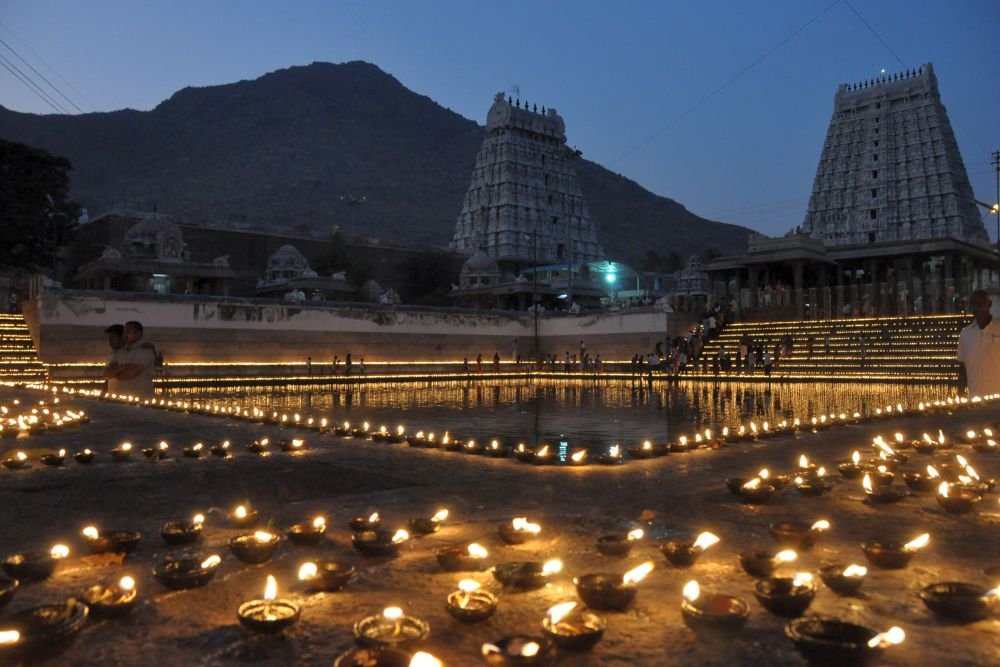
The floor decorations were created in the early part of February 20 (the
date of the 2012 Mahashivaratri) and as the day slowly turned into
dusk, devotees placed small deepams around the perimeter of the Temple
Tank.
As dusk slowly turned into night, the perimeter of the Temple tank
slowly became covered with individual deepams placed by devotees.

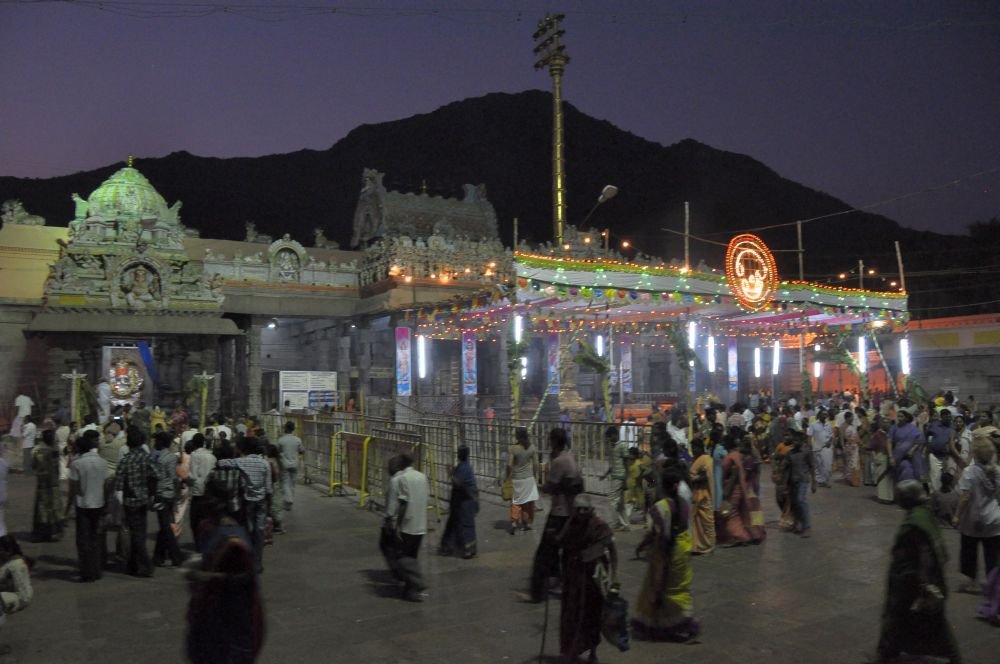
As the evening turned into night, interested pilgrims started to
congregate around the Mulasthana Lingam, where a series of puja were
performed throughout the night and early morning of February 20 and 21.

Those more interested in cultural activities congregated at the outside
Temple Hall (located near Rukku, the Temple Elephant) and watched a
series of Bharat Natayam dancers.
The famed musician commonly known as 'Drums Mani' performed a well received musical programme.
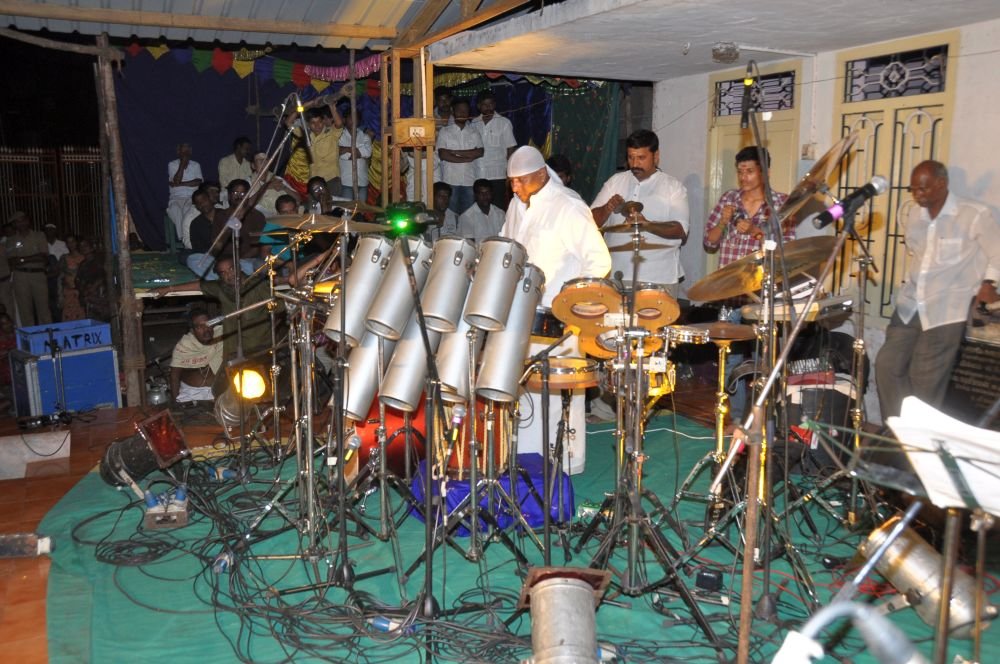

At 12 midnight on the 20th February a special puja and alankaram were
performed on the Lingodbhava behind the sanctum of the Mulasthana
Lingam.

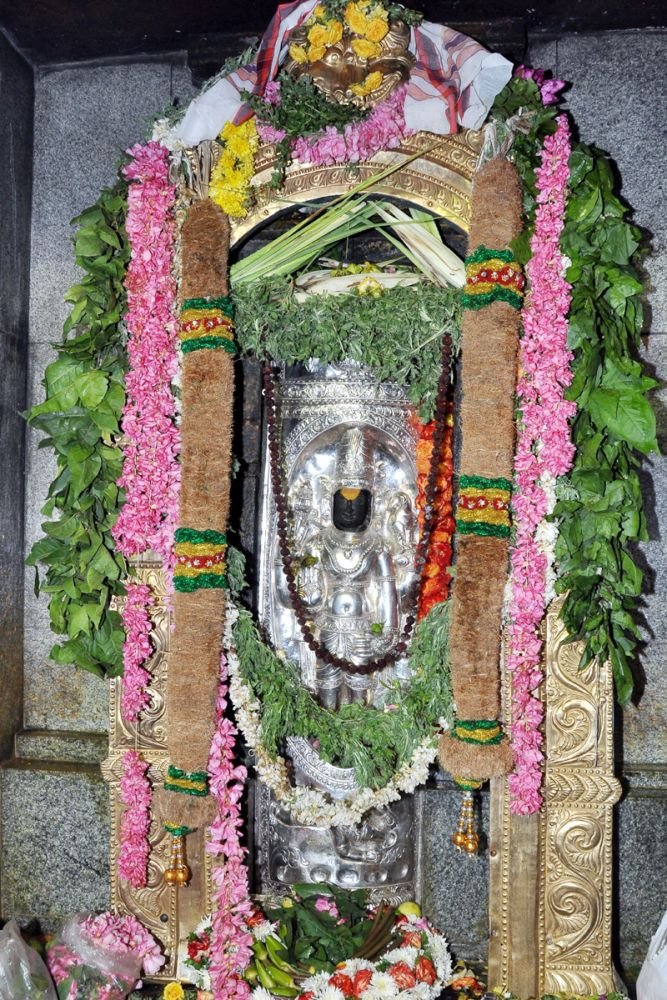
Mahashivaratri is the only night of the year that the Ketaki Flower (screwpine) is used in the worship of Lord Shiva.

To read the famous story of the Shiva column of Light and how the Ketaki
Flower supported Brahma's lie to Shiva and the consequences of the lie,
check out this link here.

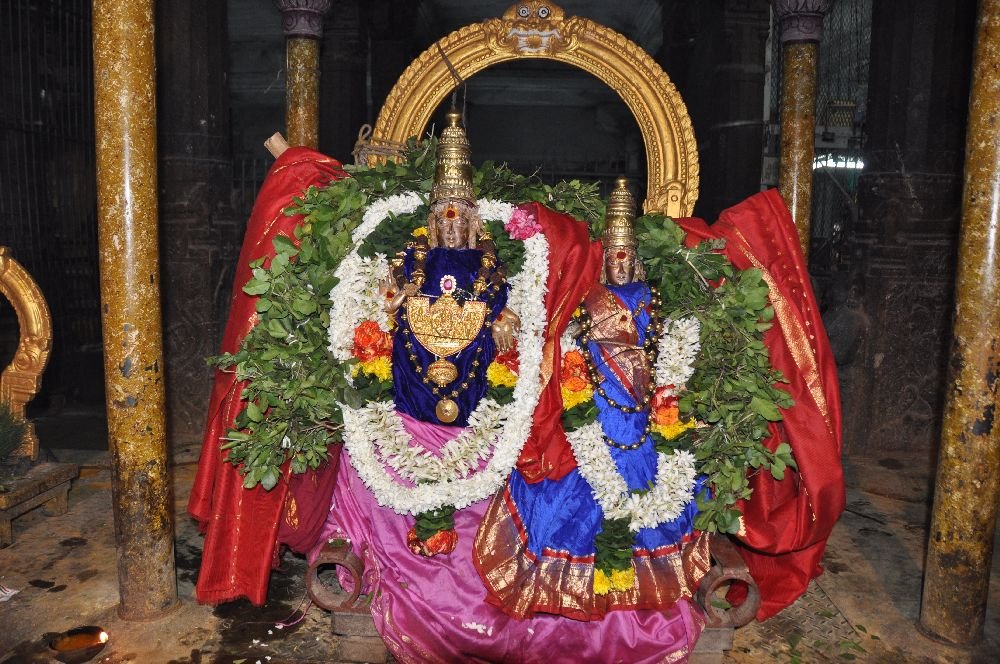
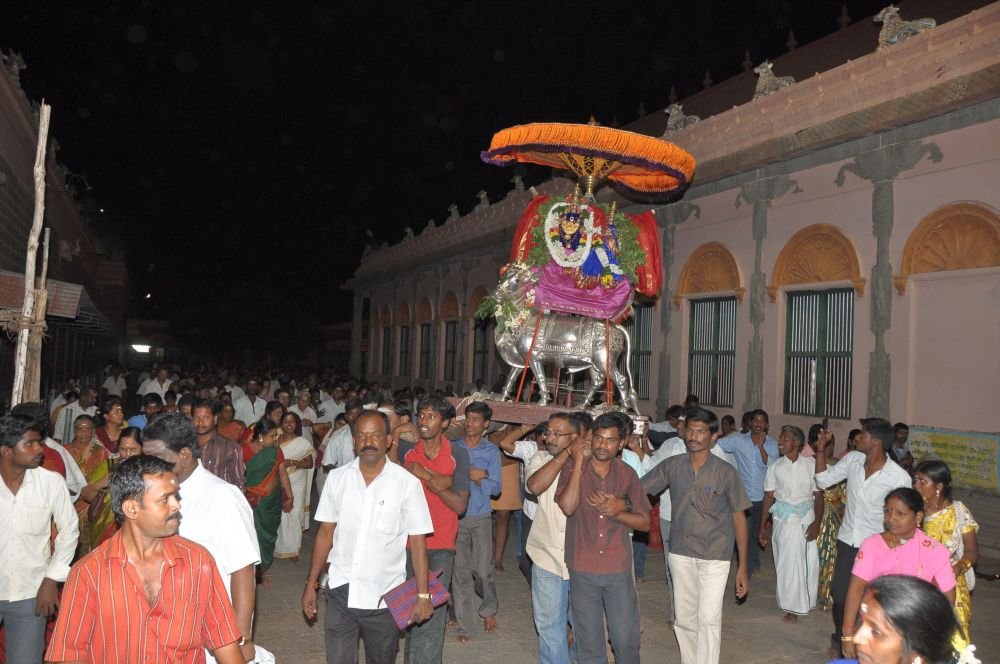
During the evening of this year's Mahashivaratri, statues of
Arunachaleswarar and Unnamulai were taken on pradakshina around the
Temple. As can be seen from the photographs, Lord Arunachaleswarar was
adorned with the Gowri Ruthatcha Malai, jewels that had recently been
donated by a Salem devotee.

|
|
|
|