Antonio's Destiny
Tale about Moving Closer to God
God's Fool
Tale about Purity and Innocence
Kali Yuga
Tale about Greed
The Monks
Moral: God resides Everywhere
The Frog Prince
Tale about the Power of Maya
The Sage and the Thief
Tale about Being in the Same Line of Business
Tale of Ekalavya
Desire made him Great
Farmer and Donkey
Meet Life's Challenges
The Flea and the Elephant
Relax
Nasruddin Tales
Stories that Instruct
The Mouse Merchant
Tale about Diligence and Gratitude

Once upon a time, an important adviser to a certain king was on his way
to a meeting with the king and other advisers. Out of the corner of his
eye, he saw a dead mouse by the roadside. He said to those who were with
him. "Even from such small beginnings as this dead mouse, an energetic
young fellow could build a fortune. If he worked hard and used his
intelligence, he could start a business and support a wife and family."A
passer-by heard the remark. He knew this was a famous adviser to the
king, so he decided to follow his words. He picked up the dead mouse by
the tail and went off with it. As luck would have it, before he had gone
even a block, a shopkeeper stopped him. He said, "My cat has been
pestering me all morning. I'll give you two copper coins for that
mouse." So it was done.
With the two copper coins, he bought sweet cakes, and waited by the side
of the road with them and some water. As he expected, some people who
picked flowers for making garlands were returning from work. Since they
were all hungry and thirsty, they agreed to buy sweet cakes and water
for the price of a bunch of flowers from each of them. In the evening,
the man sold the flowers in the city. With some of the money he bought
more sweet cakes and returned the next day to sell to the flower
pickers.
This went on for a while, until one day there was a terrible storm, with
heavy rains and high winds. While walking by the king's pleasure
garden, he saw that many branches had been blown off the trees and were
lying all around. So he offered to the king's gardener that he would
clear it all away for him, if he could keep the branches. The lazy
gardener quickly agreed. The man found some children playing in a park
across the street. They were glad to collect all the branches and brush
at the entrance to the pleasure garden, for the price of just one sweet
cake for each child.
Along came the king's potter, who was always on the lookout for firewood
for his glazing oven. When he saw the piles of wood the children had
just collected, he paid the man a handsome price for it. He even threw
into the bargain some of his pots. With his profits from selling the
flowers and the firewood, the man opened up a refreshment shop. One day
all the local grass mowers, who were on their way into town, stopped in
his shop. He gave them free sweet cakes and drinks. They were surprised
at his generosity and asked, "What can we do for you?" He said there was
nothing for them to do now, but he would let them know in the future.
A week later, he heard that a horse dealer was coming to the city with
500 horses to sell. So he got in touch with the grass mowers and told
each of them to give him a bundle of grass. He told them not to sell any
grass to the horse dealer until he had sold his. In this way he got a
very good price.
Time passed until one day, in his refreshment shop, some customers told
him that a new ship from a foreign country had just anchored in the
port. He saw this to be the opportunity he had been waiting for. He
thought and thought until he came up with a good business plan. First,
he went to a jeweler friend of his and paid a low price for a very
valuable gold ring, with a beautiful red ruby in it. He knew that the
foreign ship was from a country that had no rubies of its own, where
gold too was expensive. So he gave the wonderful ring to the captain of
the ship as an advance on his commission. To earn this commission, the
captain agreed to send all his passengers to him as a broker. He would
then lead them to the best shops in the city. In turn, the man got the
merchants to pay him a commission for sending customers to them.
Acting as a middle man in this way, after several ships came into port,
the man became very rich. Being pleased with his success, he also
remembered that it had all started with the words of the king's wise
adviser. So he decided to give him a gift of 100,000 gold coins. This
was half his entire wealth. After making the proper arrangements, he met
with the king's adviser and gave him the gift, along with his humble
thanks. The adviser was amazed, and he asked, "How did you earn so much
wealth to afford such a generous gift?" The man told him it had all
started with the adviser's own words not so long ago. They had led him
to a dead mouse, a hungry cat, sweet cakes, bunches of flowers, storm
damaged tree branches, children in the park, the king's potter, a
refreshment shop, grass for 500 horses, a golden ruby ring, good
business contacts, and finally a large fortune.
Hearing all this, the royal adviser thought to himself, "It would not be
good to lose the talents of such an energetic man. I too have much
wealth, as well as my beloved only daughter. As this man is single, he
deserves to marry her. Then he can inherit my wealth in addition to his
own, and my daughter will be well cared for." This all came to pass, and
after the wise adviser died, the one who had followed his advice became
the richest man in the city. The king appointed him to the adviser's
position. Throughout his remaining life, he generously gave his money
for the happiness and well being of many people.
Moral: With energy and ability, great wealth comes even from small beginnings.
Tale about a Snake
Moral: People Prize Goodness Most of All

Once upon a time, King Brahmadatta of Benares had a very valuable
adviser priest. He came from a rich noble family. He was intelligent and
full of knowledge. He was generous with all he had, holding nothing
back. People thought of him as a kind and good person. By practicing the
Five Training Steps, he trained his mind to avoid the five unwholesome
actions. He discovered that giving up each unwholesome action made him
better off in its own way: destroying life, since you have to kill part
of yourself in order to kill someone else; taking what is not given,
since this makes the owner angry at you; doing wrong in sexual ways,
since this leads to the pain of jealousy and envy; speaking falsely,
since you can't be true to yourself and false to another at the same
time; losing your mind from alcohol, since then you might hurt yourself
by doing the other four.
Seeing how he lived, King Brahmadatta thought, "This is truly a good
man." The priest was curious to learn more about the value of goodness.
He thought, "The king honours and respects me more than his other
priests. But I wonder what it is about me that he really respects most.
Is it my nationality, my noble birth or family wealth? Is it my great
learning and vast knowledge? Or is it because of my goodness? I must
find the answer to this." Therefore, he decided to perform an experiment
in order to answer his question. He would pretend to be a thief!
On the next day, when he was leaving the palace, he went by the royal
coin maker. The good priest, not intending to keep it, took a coin and
continued walking out of the palace. Because the money maker admired the
famous priest highly, he remained sitting and said nothing. On the
following day the make-believe thief took two gold coins. Again the
royal coin maker did not protest. Finally, on the third day, the king's
favorite priest grabbed a whole handful of gold coins. This time the
money maker didn't care about the priest's position or reputation. He
cried out, "This is the third time you have robbed his majesty the
king." Holding onto him, he shouted, " I've caught the thief who robs
the king!"
Suddenly a crowd of people came running in, yelling, "You pretended to
be better than us! An example of goodness!" They slapped him, tied his
hands behind his back, and hauled him off to the king. But on their way,
they happened to go by some snake charmers. They were entertaining some
bystanders from the king's court with a poisonous cobra. They held him
by the tail and neck, and coiled him around their necks to show how
brave they were. The tied up prisoner said to them, "Please be careful!
Don't grab that and don't coil that poisonous snake around your own
necks. He may bite you and bring your lives to a sudden end!" The snake
charmers said, "You ignorant priest, you don't understand about this
cobra. He is well-mannered and very good indeed. He is not bad like you!
You are a thief who has stolen from the king. Because of your
wickedness and criminal behavior, you are being carried off with your
hands tied behind your back. But there's no need to tie up a snake who
is good!" The priest thought, "Even a poisonous cobra, who doesn't bite
or harm anyone, is given the name "good." In truth, goodness is the
quality people admire most in the world!"
When they arrived at the throne room, the king asked, "What is this, my
children?" They replied, "This is the thief who stole from your royal
treasury." The king said. "Then punish him according to the law." The
adviser priest said, "My lord king, I am no thief!" "Then why did you
take gold coins from the palace?" asked the king. The priest explained,
"I have done this only as an experiment, to test why it is you honour
and respect me more than others. Is it because of my family background
and wealth, or my great knowledge? Because of those things, I was able
to get away with taking one or two gold coins. Or do you respect my
goodness most of all? It is clear that by grabbing a handful of coins I
no longer had the name 'good'. This alone turned respect into disgrace!"
The king pardoned his most valuable adviser priest. He asked to be
allowed to leave the king's service in the ordinary world and become a
forest monk. After refusing several times. the king eventually gave his
permission. The priest went to the Himalayas and meditated peacefully.
When he died he was reborn in a heaven world.
Moral: People Prize Goodness Most of All
Monks in a Pleasure Garden
Moral: A pupil without a teacher is easily embarrassed
Once upon a time, there was a high class rich man who gave up his
wealth and his easy life in the ordinary world. He went to the
Himalayan forests and lived as a homeless holy man. By practicing
meditation, he developed his mind and gained the highest knowledge.
Dwelling in high mental states, he enjoyed great inner happiness and
peace of mind. Before long, he had many pupils.
In a certain year, when the rainy season was beginning, the pupils said
to their teacher, "Oh wise master, we would like to go to the places
where most people live. We would like to get some salt and other
seasonings and bring them back here." The teacher said, "You have my
permission. It would be healthy for you to do so, and return when the
rainy season is over. But I will stay here and meditate by myself." They
knelt down and paid their farewell respects.
The pupils went to Benares and began living in the royal pleasure
garden. The next day they collected alms in the villages outside the
city gates. They received generous gifts of food. On the following day
they went inside the city. People gladly gave them food. After a few
days, people told the king, "Oh lord king, some forest monks have come
from the Himalayas to live in your pleasure garden. They live in a
simple way, without luxuries. They control their senses and are known to
be very good indeed."
Hearing such good reports, the king went to visit them. He knelt down
and paid his respects. He invited them to stay in the garden during the
whole four months of the rainy season. They accepted, and from then on
were given their food in the king's palace. Before long a certain
holiday took place. It was celebrated by drinking alcohol, which the
people thought would bring good luck. The King of Benares thought, "Good
wine is not usually available to monks who live simply in the forests. I
will treat them to some as a special gift." So he gave the forest monks
a large quantity of the very best tasting wine.
The monks were not at all accustomed to alcohol. They drank the king's
wine and walked back to the garden. By the time they got there, they
were completely drunk. Some of them began dancing, while others sang
songs. Usually they put away their bowls and other things neatly. But
this time they just left everything lying around, here and there. Soon
they all passed out into a drunken sleep. When they had slept off their
drunkenness, they awoke and saw the messy condition they'd left
everything in. They became sad and said to each other, 'We have done a
bad thing, which is not proper for holy men like us." Their
embarrassment and shame made them weep with regret. They said, 'We have
done these unwholesome things only because we are away from our holy
teacher."
At that very moment the forest monks left the pleasure garden and
returned to the Himalayas. When they arrived they put away their bowls
and other belongings neatly, as was their custom. Then they went to
their beloved master and greeted him respectfully. He asked them, How
are you, my children? Did you find enough food and lodgings in the city?
Were you happy and united?" They replied. "Venerable master, we were
happy and united. But we drank what we were not supposed to drink. We
lost all our common sense and self-control. We danced and sang like
silly monkeys. It's fortunate we didn't turn into monkeys! We drank
wine, we danced, we sang, and in the end we cried from shame."
The kind teacher said, "It is easy for things like this to happen to
pupils who have no teacher to guide them. Learn from this. do not do
such things in the future." From then on they lived happily and grew in
goodness.
Moral: A pupil without a teacher is easily embarrassed
A Priest Who Worshipped Luck
Moral: A fool's curse can be a wise man's blessing
Once upon a time, the Enlightenment Being was born into a high class
family in north-western India. When he grew up, he realized his
ordinary life could not give him lasting happiness. So he left
everything behind and went to live in the Himalayas as a forest monk. He
meditated and gained knowledge and peace of mind. One day he decided to
come down from the forests to the city. When he arrived he stayed
overnight in the king's pleasure garden. The next morning he went into
the city to beg for food. The king saw him and was pleased with his
humble and dignified attitude. So he invited him to the palace. He
offered him a seat and gave him the best foods to eat. Then he invited
him to live in the garden for good. The holy man agreed, and from then
on he lived in the king's pleasure garden and had his meals in the
king's palace.
At that time there was a priest in the city who was known as 'Lucky
Cloth'. He used to predict good or bad luck by examining a piece of
cloth. It just so happened that he had a new suit of clothes. One day,
after his bath, he asked his servant to bring the suit to him. The
servant saw that it had been chewed slightly by mice, so he told the
priest. Lucky Cloth thought, "It is dangerous to keep in the house these
clothes that have been chewed by mice. This is a sure sign of a curse
that could destroy my home. Therefore, I can't even give them to my
children or servants. The curse would still be in my house! "In fact, I
can't give these unlucky clothes to anyone. The only safe thing to do is
to get rid of them once and for all. The best way to do that is to
throw them in the corpse grounds, the place where dead bodies are put
for wild animals to eat. But how can I do that? If I tell a servant to
do it, desire will make him keep the clothes, and the curse will remain
in my household. Therefore, I can trust this task only to my son."
He called his son to him and told all about the curse of the clothes
that were slightly chewed by mice. He told him not even to touch them
with his hand. The boy was to carry them on a stick and go throw them in
the corpse grounds. Then he must bathe from head to foot before
returning home. The son obeyed his father. When he arrived at the corpse
grounds, carrying the clothes on a stick, he found the holy man sitting
by the gate. When Lucky Cloth's son threw away the cursed suit, the
holy man picked it up. He examined it and saw the tiny teeth marks made
by the mice. But since they could hardly be noticed, he took the suit
with him back to the pleasure garden.
After bathing thoroughly, his son told Priest Lucky Cloth what had
happened. He thought, "This cursed suit of clothes will bring great harm
to the king's favorite holy man. I must warn him." So he went to the
pleasure garden and said. "Holy one, the unlucky cloth you have taken,
please throw it away! It is cursed and will bring harm to you!" But the
holy man replied, "No no, what others throw away in the corpse grounds
is a blessing to me! We forest meditators are not seers of good and bad
luck. All kinds of Buddhas and Enlightenment Beings have given up
superstitions about luck. Anyone who is wise should do the same. No one
knows the future!"
Hearing about the truly wise and enlightened ones made Priest Lucky
Cloth see how foolish he had been. From then on he gave up his many
superstitions and. followed the teachings of the humble holy man.
Moral: A fool's curse can be a wise man's blessing
The Bull Delightful
Moral: Harsh words bring no reward. Respectful words bring honour to all

Once upon a time, in Northern India, in a city called Takkasila, an
Enlightenment Being was born as a calf. Since he was well bred for
strength, he was bought by a high class rich man who became very fond of
the gentle animal, and called him 'Delightful'. When Delightful grew up
into a big fine strong bull, he thought, "I am a big grown up bull and
there is no other bull who can pull as heavy a load as I can. Therefore,
I would like to use my strength to give something in return to my
master." So he said to the man, "Sir, please find some wealthy merchant
and challenge him by saying that your bull can pull one hundred heavily
loaded bullock carts." Following his advice, the high class rich man
went to such a merchant and struck up a conversation. After a while, he
brought up the idea of who had the strongest bull in the city.
The man said, "Sir, I have a bull who can pull one-hundred heavily
loaded bullock carts." The merchant replied, "This I don't believe and I
am willing to bet a thousand gold coins that your bull cannot pull a
hundred loaded bullock carts." So the bet was made and they agreed on a
date and time for the challenge. The merchant attached together
one-hundred big bullock carts. He filled them with sand and gravel to
make them very heavy.
The high class rich man fed the finest rice to the bull called
Delightful. He bathed him and decorated him and hung a beautiful garland
of flowers around his neck. Then he harnessed him to the first cart and
climbed up onto it. Being so high class, he could not resist the urge
to make himself seem very important. So he cracked a whip in the air,
and yelled at the faithful bull, "Pull, you dumb animal! I command you
to pull, you big dummy!" The bull called Delightful thought, "This
challenge was my idea! I have never done anything bad to my master, and
yet he insults me with such hard and harsh words!" So he remained in his
place and refused to pull the carts. The merchant laughed and demanded
his winnings from the bet. The rich man had to pay him the one-thousand
gold coins. He returned home and sat down, saddened by his lost bet, and
embarrassed by the blow to his pride.
The bull called Delightful grazed peacefully on his way home. When he
arrived, he saw his master sadly lying on his side. He asked. "Sir, why
are you lying there like that? Are you sleeping? You look sad." The man
said, "I lost a thousand gold coins because of you. With such a loss,
how could I sleep?" The bull replied, "Sir, you called me 'dummy'. You
even cracked a whip in the air over my head. In all my life, did I ever
break anything, step on anything, make a mess in the wrong place, or
behave like a 'dummy' in any way?" The man answered, "No, my pet." The
bull called Delightful said, "Then sir, why did you call me 'dumb
animal', and insult me even in the presence of others? The fault is
yours. I have done nothing wrong. But since I feel sorry for you, go
again to the merchant and make the same bet for two-thousand gold coins.
And remember to use only the respectful words I deserve so well."
Then the high class rich man went back to the merchant and made the bet
for two-thousand gold coins. The merchant thought it would be easy
money. When all was ready, the rich man touched Delightful's forehead
with a lotus blossom, having given up the whip. Thinking of him as
fondly as if he were his own child, he said. "My son, please do me the
honor of pulling these one-hundred bullock carts." Lo and behold, the
wonderful bull pulled with all his might and dragged the heavy carts,
until the last one stood in the place of the first. The merchant, with
his mouth hanging open in disbelief, had to pay the two-thousand gold
coins. The onlookers were so impressed that they honoured the bull
called Delightful with gifts. But even more important to the high class
rich man than his winnings, was his valuable lesson in humility and
respect.
Moral: Harsh words bring no reward. Respectful words bring honour to all
The Non-fighting Bird
Moral: Conquer Anger with Calmness
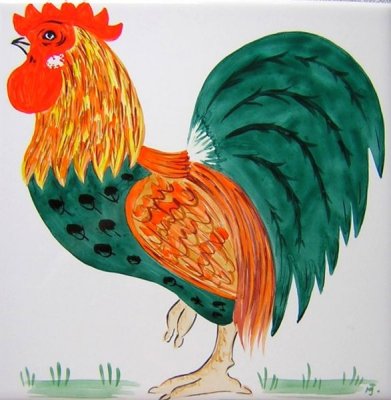
A king was rearing a very fierce fighting bird who he wanted to come
first in a competition. He handed the bird to a trainer who was a Sufi
saint. After some time, when the king enquired about the bird, the
trainer replied, "The bird is not ready yet. It is full of fire. It is
eager for combat and is still afraid." The next time the king asked as
to the progress of the bird's training, the Sufi answered, "The bird
still flares up when he hears another crow in the vicinity. That shows
that he still considers the world as its enemy." After more time
elapsed, in reply to the king's question, the trainer responded, "The
bird is not ready yet sir, it still gets that fierce look and bristles."
A week later, the trainer told the king the bird was ready to
participate in a fight. The king arranged for a competition between
fighting birds. The day came. The king's bird was standing unconcerned
in the centre of the arena. The other birds were prancing around with
menacing looks and were ready to pounce on the king's bird. Even when
they crowed, the eyes of the king's favourite did not flicker. He stood
immobile like a wooden image. It looked as if he was simply bored by the
event.
The other birds stopped in their stride and looked at it first in
astonishment and then with fear. They had never seen a bird which never
reacted. It was standing calmly and confidently absolutely unruffled not
deigning to recognise the presence of these other birds which were
itching to start a fight. The other cocks took one look and ran away
from the cock which was exuding peace all around. "One should conquer
anger with calmness."
Moral: Conquer Anger with Calmness
Heaven
Tale about Loyalty

'. . . Once upon a time, a man, his horse and his dog were travelling
along a road. As they passed by a huge tree, it was struck by lightning,
and they all died. But the man failed to notice that he was no longer
of this world and so he continued walking along with his two animal
companions . . . It was a long uphill walk, the sun was beating down on
them and they were all sweating and thirsty. At a bend in the road they
saw a magnificent marble gateway that led into a gold-paved square, in
the centre of which was a fountain overflowing with crystal-clear water.
The man went over to the guard at the entrance.
"Good morning."
"Good morning," the guard replied.
"What is this lovely place?"
"It's Heaven."
"Well, I'm very glad to see it, because we're very thirsty."
"You're welcome to come in and drink all the water you want." And the guard indicated the fountain.
"My horse and dog are also thirsty."
"I'm terribly sorry," said the guard, "but animals are not allowed in here."
The man was deeply disappointed because he was very thirsty, but he was
not prepared to drink alone, so he thanked the guard and went on his
way. Exhausted after more drudging uphill they reached an old gateway
that opened on to a dirt road flanked by trees. A man, his hat pulled
down over his face, was stretched out in the shade of one of the trees,
apparently asleep.
"Good morning," said the traveller.
The other man greeted him with a nod.
"We're thirsty - me, my horse and my dog."
"There's a spring over the amongst those rocks," the man indicating the spot. "You can drink all you want."
The man, his horse and his dog went to the spring and quenched their thirst.
The traveller returned to thank the man.
"Come back whenever you want," he was told.
"By the way, that's this place called?"
"Heaven."
"Heaven? But the guard at the marble gateway told me that was heaven!"
"That's not Heaven, that's Hell."
The traveller was puzzled.
"You shouldn't let others take your name in vain, you know! False information can lead to all kinds of confusions!"
"On the contrary, they do us a great favour, because the ones who stay
there are those who have proved themselves capable of abandoning their
dearest friends."'
[From "The Devil and Miss Prym," by Paulo Coelho]
The Samurai
Tale about Destiny
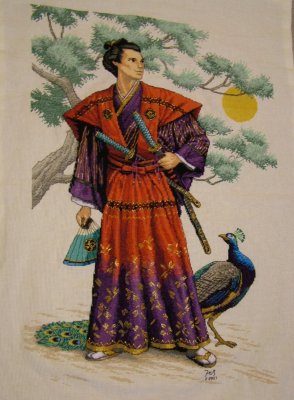
A Samurai who was known for his nobility and honesty, went to visit a
Zen monk to ask advice. However, the moment he entered the Temple where
the master was praying, he felt inferior and concluded that, in spite of
having fought for justice and peace all his life, he hadn't even come
near the state of grace achieved by the man before him.
"Why do I feel so inferior?" he asked, as soon as the monk finished his
prayers. "I have faced death many times, have defended those who are
weak, I know I have nothing to be ashamed of. Nevertheless, upon seeing
you meditating, I felt that my life had absolutely no importance
whatsoever." "Wait. Once I have attended to all those who come to see me
today, I shall answer you." The samurai spent the whole day sitting in
the Temple gardens, watching the people go in and out in search of
advice. He saw how the monk received them all with the same patience and
the same illuminated smile on his face. But his enthusiasm soon began
to wane, since he had been born to act, and not to wait.
At nightfall, when everyone had gone, he asked, "Now can you teach me?"
The master invited him in and lead him to his room. The full moon shone
in the sky, and the atmosphere was one of profound tranquility. "Do you
see the moon, how beautiful it is? It will cross the entire firmament,
and tomorrow the sun will shine once again. But sunlight is much
brighter, and can show the details of the landscape around us: trees,
mountains, clouds. I have contemplated the two for years, and have never
heard the moon say: 'why do I not shine like the sun? Is it because I
am inferior'?" "Of course not," answered the samurai, "The moon and the
sun are different things, each has its own beauty. You cannot compare
the two." "So you know the answer. We are two different people, each
fighting in his own way for that which he believes, and making it
possible to make the world a better place; the rest are mere
appearances."
[Paulo Coelho]
Antonio's Destiny
Tale about Moving Closer to God
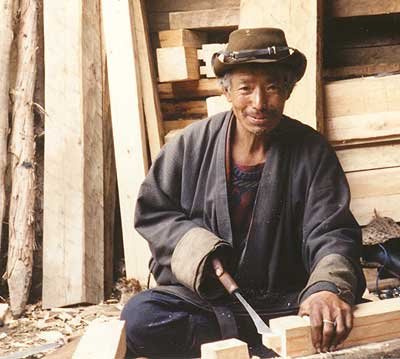
"Antonio was a civil servant in a small city in the interior. One
afternoon he saw two cocks fighting. Feeling sorry for the birds, he
went to the centre of the square to separate them, without realising
that he was interrupting a fight between two fighting cocks. The furious
spectators beat him up. One of the them threatened to kill him because
he was almost winning and would have won a fortune in bets. Filled with
fear, Antonio decided to leave town. People found it odd when he failed
to turn up for work, but since there were many applicants for the job
they soon forgot the old civil servant.
After three days of travelling, Antonio met a fisherman, and feeling
sorry for Antonio, the fisherman took him home. After chatting, he found
that Antonio knew how to read, and proposed a deal: he would teach the
newcomer to fish in exchange for teaching him to read and write. Antonio
learned to fish. With the money from fishing, he bought books to be
able to teach the fisherman. Through his reading, the fisherman learned
things that he did not previously know.
One of the books taught carpentry, and Antonio decided to set up a small
workshop. He and the fisherman bought tools and started to make tables,
chairs and bookcases. Many years passed. The two continued to fish and
they contemplated during the time they spent on the river. They also
continued to study and the many books unveiled the human soul. Both
continued to work at carpentry, and the physical work made them healthy
and strong.
Antonio loved talking to the customers. Since he was now a cultured,
wise and healthy man, people came to him for advice. The whole city
began to progress, because everyone saw Antonio as someone capable of
finding good solutions to the problems of the region. Soon people formed
study groups around Antonio and many of these people developed into
disciples. A famous biographer was commissioned to report the lives of
the Two Wise Men, as Antonio and his friend were now called.
The biographer wrote for five months. When the book came out, it became a
great success. It was a marvellous and exciting story of two men who
seek knowledge, abandon all they are doing, fight against all sorts of
adversity and encounter secret masters. "It was nothing like that," said
Antonio. "Wise men need to have exciting lives," answered the
biographer. "A story has to teach something, and reality never teaches
anything."
Antonio gave up arguing. He knew that it was reality that taught
everything a man needs to know, but it was no use trying to explain
that. "Let these fellows go on living with their fantasies," he said to
the fisherman. And they continued, reading, writing, fishing, working,
teaching disciples, and doing good.
They only promised never again to read books on the lives of saints,
since the people who write these books fail to understand a very simple
truth; everything that a common man does in his life brings him closer
to God."
[By Paulo Coelho, abridged]
"4,000 volumes of metaphysics will not teach us what the soul is."
[Voltaire]
God's Fool
Tale about Purity and Innocence

Once there came from the desert to the great city a man who was a
dreamer, and he had naught but his garment and a staff. And as he walked
through the streets he gazed with awe and wonder at the temples and
towers and palaces, for the city was of surpassing beauty. And he spoke
often to the passers-by, questioning them about their city - but they
understood not his language, nor he theirs.
At the noon hour he stopped before a vast inn. It was built of yellow
marble, and people were going in and coming out unhindered. "This must
be a shrine", he said to himself, and he too went in. But what was his
surprise to find himself in a hall of great splendour and a large
company of men and women seated about many tables. They were eating and
drinking and listening to the musicians. "Nay", said the dreamer. "This
is no worshipping. It must be a feast given by the prince for the
people, in celebration of a great event."
At that moment a man, whom he took to be the slave of the prince,
approached him, and bade him to be seated. And he was served with food
and wine and most excellent sweets. When he was satisfied, the dreamer
rose to depart. At the door he was stopped by a large man magnificently
arrayed. "Surely this is the prince himself," said the dreamer in his
heart, and he bowed to him and thanked him. Then the large man said in
the language of the city. "Sir you have not paid for your dinner." And
the dreamer did not understand, and again thanked him heartily. Then the
large man bethought him, and he looked more closely upon the dreamer.
And he saw that he was a stranger, clad in but a poor garment, and that
indeed he had not the wherewithal to pay for his meal.
Then the large man clapped his hands and called - and there came four
watchmen of the city. And they listened to the large man. Then they took
the dreamer between them, and there were two on each side of him. And
the dreamer noted the ceremoniousness of their dress and of their manner
and he looked upon them with delight. "These," said he, "are men of
distinction." And they walked all together until they came to the House
of Judgment and they entered. The dreamer saw before him, seated upon a
throne, a venerable man with flowing beard, robed majestically. And he
thought he was the king. And he rejoiced to be brought before him. Now
the watchmen related to the judge, who was the venerable man, the charge
against the dreamer; and the judge appointed two advocates, one to
present the charge and the other to defend the stranger. And the
advocates rose, the one after other, and delivered each his argument.
And the dreamer thought himself to be listening to addresses of welcome,
and his heart filled with gratitude to the king and the prince for all
that was done for him.
Then sentence was passed upon the dreamer, that upon a tablet hung about
his neck his crime should be written, and that he should ride through
the city on a naked horse, with a trumpeter and a drummer before him.
And the sentence was carried out forthwith. Now as the dreamer rode
through the city upon the naked horse, with the trumpeter and the
drummer before him, the inhabitants of the city came running forth at
the sound of the noise, and when they saw him they laughed one and all,
and the children ran after him in companies from street to street. And
the dreamer's heart filled with ecstasy, and his eyes shone upon them.
For to him the tablet was a sign of the king's blessings and the
procession was in his honour.
Now as he rode, his heart swelled with joy, and he cried out with a
shout. "Where are we? What city of the heart's desires is this? What
race of lavish hosts? - who feast the chance guest in their palaces,
whose princes companion him, whose king hangs a token upon his breast
and opens to him the hospitality of a city descended from heaven?" And
the procession passed on. And the dreamer's face uplifted and his eyes
were overflowing with light.
[Kahlil Gibran -- Abridged]
Kali Yuga
Tale about Greed

Satya Yuga and Treta Yuga had ended and it was the Dwarapa Yuga.
Only one month remained for Dwarapa Yuga to end and after that would
begin the age of the Kali Yuga. Lord Brahma, Lord Vishnu, Lord Mahesh
and Dharma Raj went to Kali and said, "Your age, the Kali Yuga will
begin after one month. How will this new age be? What will be your
influence on it? The Goddess replied, "I will tell you now that during
my time wealth will reign supreme. There will be treachery and fraud.
People will stoop to any depths to get wealth."
Before Kali could say anymore, the Gods witnessed the following scene: A
merchant was holding a large copper vessel filled with treasure. He
said to the Brahmin, "After I bought your house, I found this vessel
filled with treasure. I think your forefathers must have buried it in
the house. Therefore, it belongs to you." The Brahmin said, "This
treasure is not mine. As, I sold the house to you, along with the earth
below it and the sky above it. Therefore, whatever you get from it,
belongs to you alone." "No," said the Merchant, "It belongs to you." "Of
course not," argued the Brahman, "It belongs to you only." Soon the
argument turned into a quarrel between the Merchant and the Brahmin.
At last they decided to give the treasure away to the Village Head. But
even the Village Head refused to accept the treasure. So they went to
the King, and said, "Your Highness, this treasure does not belong to
anyone. So please deposit it in the State Treasury." But even the King
refused to deposit it in the State Treasury. After a long debate, it was
decided to keep the treasure with a money lender for a month.
Everybody there present said, "We will think about this after a month."
And in their presence the money lender buried the treasure deep in the
ground. One month passed and the Kali Yuga had begun. And with the
beginning of the Kali Yuga, the merchant thought, "I found the treasure
in my house, so it belongs to me." Meanwhile the Brahmin thought, "The
treasure was buried by my forefathers so it belongs to me."
The Village Head thought, "Neither the Merchant nor the Brahmin wanted
the treasure so it belongs to the Village. We can use the money to have a
lavish feast for the village. And by hosting the feast I can make some
money." The King thought, "The people have no right over any treasure.
Whatsoever is found under the ground belongs to the King."
And so with the beginning of Kali Yuga, everybodies way of thinking
changed. Their intentions were no longer noble. They became selfish,
greedy and dishonest. As decided earlier, the work of digging up the
treasure began in the presence of all who had taken part in the debate
about the treasure. When the vessel containing the treasure was pulled
out and opened, everybody was shocked and surprised as the casket was
only full of charcoal. Kali said to the Gods, "Did you see that? The
money lender cheated everyone. Did you see my influence?"
Then pointing towards a pond, Kali said to the Gods, "Now look at what
is happening there." Four thieves were sitting near the pond. They were
very hungry. Two trusted their accomplices with the job of guarding
their stolen gains, and went off to buy sweets at a nearby village. On
their way to town, they thought, "If we poison the sweets, we can kill
the two men waiting back at the pond, then we can have their share of
the wealth." So the thieves ate to their hearts content and then mixed
poison in the remaining sweets. When they returned to the pond and their
accomplices, they said, "We have already eaten our sweets, here are the
remaining ones for you." The thieves who had gone to town were tired
and drowsy from the food they eaten and quickly fell asleep under the
tree. One of the remaining thieves, said, "We will eat the sweets later,
first let us kill these men. Then we can have a share of their wealth
also." Thinking thus they stabbed the sleeping thieves. They then
unknowingly ate the poisoned sweets and themselves went into a never
ending sleep." In this way the four thieves lost their lives because
they had deceived each other.
Just then four maidens came by to fill water from the pond. When they
saw the men lying dead under the tree, the maidens hearts filled with
compassion. Each of the maidens sacrificed whatever they had gained by
their virtuous deeds at the feet of Shiva and Parvati, and prayed that
the thieves be brought back to life. As a result the four thieves came
back to life. The first maiden's virtuous deed was her pilgrimage. The
second maiden's deed was her penance. The third maiden's act of virtue
was her fasts and prayers on the behalf of others. And the fourth
maiden's virtue was in her acts of truthfulness.
It was then asked by the observers of this drama, "Of the four maidens,
whose virtuous deeds was it that had the power to bring the men back to
life?" The answer was, "It was the virtuous deed of the fourth maiden's
Truth that could restore life. As during the Kali Yuga, all go on
pilgrimages, meditate, perform penances and fast to show they are
virtuous . . . But very few speak the truth."
[Adapted from the stories of Vikramaditya]
The Monks
Moral: God resides Everywhere

A group of monks were living with their master in a Tibetan
monastery. Their lives were disciplined and dedicated, and the
atmosphere in which they lived harmonious and peaceful. People from
villages far and wide flocked to the monastery to bask in the warmth of
such a loving spiritual environment. Then one day the master departed
his earthly form. At first the monks continued on as they had in the
past, but after a time, the discipline and devotion, that had been
hallmarks of their daily routine, slackened. The number of villagers
coming through the doors each day began to drop, and little by little,
the monastery fell into a state of disrepair.
Soon the monks were bickering among themselves, some pointing fingers of
blame, others filled with guilt. The energy within the monastery walls
crackled with animosity. Finally, the senior monk could take it no
longer. Hearing that a spiritual master lived as a hermit two days walk
away, the monk wasted no time in seeking him out. Finding the master in
his forest hermitage, the monk told him of the sad state the monastery
had fallen into and asked his advice.
The master smiled. "There is one living among you who is the incarnation
of God. Because he is being disrespected by those around him, he will
not show himself, and the monastery will remain in disrepair." With
those words spoken, the master fell silent and would say no more.
On the way back to the monastery, the monk wondered which of the
brothers might be the Incarnated One. Finally, after dismissing each and
every one of his brothers for this fault or that, the senior monk
realized there were none left. Knowing it had to be one of the monks
because the master had said it was, he worried over it a bit before a
new thought dawned. "Could it be that the Holy One has chosen to display
a fault in order to disguise himself?" he wondered. "Of course it
could! That must be it!"
Reaching the monastery, he immediately told his brothers what the master
had said and all were just as astonished as he had been to learn the
Divine was living among them. Since each knew it was not himself who was
God Incarnate, each began to study his brothers carefully, all trying
to determine who among them was the Holy One. But all any of them could
see were the faults and failings of the others. If God was in their
midst, he was doing a fine job of hiding himself. Finding the Incarnated
One among such rubble would be difficult, indeed.
After much discussion, it was finally decided that they would all make
an effort to be kind and loving toward one another, treating each with
the respect and honor one would naturally give to the Incarnated One. If
God insisted on remaining hidden, then they had no recourse but to
treat each monk as if he were the Holy One. Each so concentrated on
seeing God in the other that soon their hearts filled with such love for
one another the chains of negativity that held them bound fell away. As
time passed, they began seeing God not just in each other, but in every
one and everything. Days were spent in joyful reverence, rejoicing in
His Holy Presence. The monastery radiated this joy like a beacon and
soon the villagers returned, streaming through the doors as they had
before, seeking to be touched by the love and devotion present there.
It was some time later that the senior monk decided to pay the master
another visit to thank him for the secret he had revealed. "Did you
discover the identity of the Incarnated One?" the master asked. "We
did," the senior monk replied. "We found him residing in all of us." The
master smiled.
The Frog Prince
Tale about the Power of Maya

For the first hundred years at the bottom of the well, the frog
prince rehearsed his memoir. It went like this: He was born into a sweet
life of silks and pastries. The one day this humpbacked hag of a
peasant came to plead her case before the king. What did she want?
Something trivial. When the hag didn't get what she wanted, she cursed
the king's eldest son. Him. The hero of the story. The poor prince had
done nothing to deserve this wretched fate, cast down into the lowest,
dampest, darkest place in the kingdom, with the kiss from a princess his
only hope of becoming human again.
Waiting for the princess to transform him, he had plenty of time to
think. And just to be. His days went back like this. Breathe in. Breathe
out. Day after year after decade, no princess came to the well.
In time he ceased to repeat his story and only sat with his eyes at the
waterline. Breathe in. Breathe out. It was enough to be a frog, to eat
what crawled at the bottom of the well. To breathe in. To breathe out.
To think of youth, and old age and suffering.
But when the golden ball splashed into the water in front of him and the
princess began to weep at the lip of the well, her sobbing touched his
heart. He knew that returning her treasure would be a small gesture. She
would lose many more things in life, and seldom any as easy to recover
as a golden ball. He knew, too, that even if she did kiss him, he would
be only a prince. When he emerged from the well, she would be repulsed
by him at first, then adore him, and perhaps be repulsed by him again
years from now. And he by her, perhaps.
Breathe in. Breathe out. He was content, and he might have remained a
frog forever. But the story is still told to this day because he took
the golden ball in his mouth and climbed toward the light and the
weeping.
[Bruce Rogers]
The Sage and the Thief
Tale about Being in the Same Line of Business
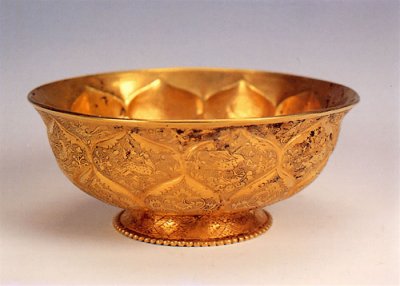
A sage used to live naked with a begging bowl as his only
possession. A Queen, very much devoted to him asked him for his begging
bowl and replaced it with one she had specially made. The sage replied,
"There is no problem in accepting your bowl in exchange for mine, any
begging bowl will do!" The bowl the Queen presented was studded with
precious jewels. As the sage walked from the palace a thief seeing the
begging bowl (which shone like stars) followed him. The holy person ate
his food from the bowl and then threw it away towards where the thief
was hiding. The thief could not believe it. He was really shocked. For a
moment he could not think what to do. "What kind of man is this?"
Perplexed he stood up and faced the holy person.
The sage spoke answering the thief's silent question, "To bring you in, I
had to throw the bowl out! Come here, the bowl is yours, don't be
worried. I have given it to you. It is a gift, a present. I don't have
anything else, only the bowl, and I know I cannot keep it for long
because when I sleep somebody will take it away, and you have taken so
much trouble. Please don't refuse. Take it." The thief said, "You are a
strange man. Don't you know how costly it is?" The sage replied, "Since I
know myself nothing is costly." The thief looked at the sage and said,
"Then give me one more present; how can I know myself, which to you in
comparison makes this precious bowl worth nothing? But first let me
introduce myself, I am a thief." The sage answered, "Who is not? Don't
be concerned with trivia. In this world everybody is a thief because
everybody comes naked without anything, and then everybody gains
something or other. All are thieves, so don't be worried. Just do one
thing, and that is whatever you do, make sure you do it well. So, when
you are stealing be aware, be alert, be watchful ... If you lose
watchfulness, then don't steal. That is a simple rule. You can come back
in two weeks to see me, but first try my suggestion."
For two weeks the thief tried and he found that it was the most
difficult thing in the world. Once he even reached inside the palace,
opened the door of the treasury . . . and when he tried to take
something he lost his awareness. As he was an honest man he felt
compelled to leave that thing. But it was difficult. Finally he returned
empty-handed to the sage and said, "You have disturbed my whole life.
Now I cannot steal." The holy person replied, "That is not my problem.
Now it is your problem. If you want to steal, forget all about
awareness." But the thief answered, "Those few moments of awareness were
so valuable. I have never felt so at ease, so peaceful, so silent, so
blissful - the whole treasure of the kingdom was nothing compared to it.
Now I understand what you mean by saying that once you have known
yourself, nothing else is of value. I cannot stop practicing awareness. I
have tasted just a few drops of the nectar which you must be tasting
every moment. Will you allow me to be a disciple and follow you?" The
sage replied, "I knew it the first day we met and I already initiated
you when you followed me. You were thinking that you are going to steal
the begging bowl, and I was thinking how to steal you. We are both in
the same business!"
[Osho]
Tale of Ekalavya
Desire made him Great
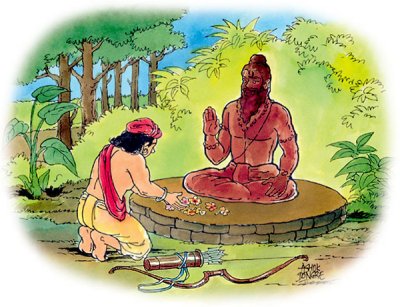
Ekalavya was a young hunter who wished to train as a warrior under
Drona, the best-known guru in this field at the time. Drona rejected him
as a disciple on account of his low birth, whereupon Ekalavya acquired
the skills himself through rigorous practice, after installing a replica
of Drona.
Ekalavya soon surpassed Drona's favourite pupil Arjuna in skill and, in
order to ensure that no one could ever surpass Arjuna as an Archer,
Drona demanded the thumb of Ekalavya as his Guru Dakshina, even though
he had taught only in abstentia. In the end, Drona is slain by the very
Pandavas for the sake of whose supremacy Drona had amputated Ekalavya's
thumb! And the irony here is not that of a Greek tragedy so much as that
of a morality tale. Drona lost his life as the result of a lie told to
him.What goes around comes around!
Ekalavya's story makes the point that it is the guru as one's mental
construct, rather than his or her physical form, which is the
transforming agency. The guru, as a mental construct, imparted some
supreme skill to Ekalavya, the guru in the physical form deprived him of
his capacity to exercise it.
Is there also a warning here against false gurus in the flesh as against
those in spirit? And even the further teaching that "there are no
gurus, only disciples", that ultimately, one is one's own guru. It was the desire of Ekalavya to be a great archer, which made him a great archer. All that perfection ultimately requires of us is that our desire for it be perfect.
[Professor Arvind Sharma]
Farmer and Donkey

One day a farmer lost his donkey. While searching for the donkey he
heard loud cries coming from a well. He looked down the well and found
his old donkey crying piteously. He thought the old donkey must have
received severe injuries, and thus believed; "Its better to bury the
Donkey in the well and close the well to prevent any future calamities".
So the farmer called his neighbours for help and they all started
throwing mud inside the well.
Initially one could hear loud cries coming from inside the well but
slowly the cries stopped coming. After some time they looked down the
well and to their amazement the donkey was still very much alive. As the
farmers were throwing mud into the well, the animal was shaking the mud
from its back and taking one step up. This way the creature was gaining
height and slowly coming closer to the edge of the well until it was
soon out of its dire straits.
All challenges in our life are like the mud which life throws at us.
We just need to shake off the mud and take one step up. All challenges
are opportunities to rise higher.
[Osho]
The Flea and the Elephant

A flea decided to move with his family into the ear of an elephant. So
he shouted, "Mr. Elephant, Sir, my family and I plan to move into your
ear. I think it only fair to give you a week to think the matter over
and let me know if you have any objection?"
The Elephant, who was not even aware of the existence of the flea went
his placid way so, after conscientiously waiting a week, the flea
assumed the Elephant's consent and moved in. A month later Mrs. Flea
decided the Elephant's ear was not a healthy place to live in and urged
her husband to tell the Elephant that they were moving; in such way so
as not to hurt the Elephant's feelings.
So, Mr. Flea put it to tactfully to the Elephant, "Sir, we plan to move
to other quarters. This has nothing at all to do with you of course,
because your ear is spacious and warm. It is just that my wife would
rather live next door to her friends at the buffalo's foot. If you have
any objection to our moving, do let me know in the course of the next
week." The Elephant said nothing, so the flea changed residence with a
clear conscience.
Moral of the Story: Relax -- the Universe is not aware of your existence!
[Anthony De Mello]
Nasruddin Tales
Money 1
As Nasruddin emerged from the mosque after prayers, a beggar sitting on
the street solicited alms. The following conversation followed:
"Are you extravagant?" asked Nasruddin.
"Yes, Nasruddin," replied the beggar.
"Do you like sitting around drinking coffee and smoking?" asked Nasruddin.
"Yes," replied the beggar.
"I suppose you like to go to the baths everyday? asked Nasruddin.
"Yes," replied the beggar.
. . . "And maybe amuse yourself, even, by drinking with friends?" asked Nasruddin.
"Yes, I like all those things," replied the beggar.
"Tut, Tut," said Nasruddin, and gave him a gold piece.
A few yards further on, another beggar who had overhead the conversation begged for alms also.
"Are you extravagant": asked Nasruddin.
"No, Nasruddin," replied the second beggar.
"Do you like sitting around drinking coffee and smoking?" asked Nasruddin.
"No," replied the second beggar.
"I suppose you like to go to the baths everyday? asked Nasruddin.
"No," replied the second beggar.
. . . "And maybe amuse yourself, even by drinking with friends" asked Nasruddin.
"No," I want to only live meagerly and to pray," replied the second beggar.
Whereupon the Nasruddin gave him a small copper coin.
"But why?" wailed the second beggar, "Do you give me, an economical and
pious man, a penny, when you give that extravagant fellow a sovereign?"
"Ah! my friend," replied Nasruddin, his needs are greater than yours!
Money 2
The mullah went to see a rich man to earn some money from him. He asked the man to give him some money.
The man said, "Why do you need money?"
Mullah said, "I want to buy an elephant so that is why I need money! "
The man said, "If you don't have enough money how you are going to look after the elephant?"
Mullah said, "I came here to get money not advice!"
Business Acumen
Mullah Nasruddin's neighbour was a crooked man with a large, bushy
moustache who thought he could take advantage of Nasruddin's bad
financial situation. "I want to help you, good neighbour. I will buy
your house from you, even though I don't really have any interest in
it." The man offered a pitiful price.
Mullah Nasruddin looked delighted and drew a small piece of paper from
the folds of his clothing and promised to sell the house if they agreed
to a little clause in the contract. "What clause?" asked the neighbour,
suspiciously. "Only a very small thing. This house was built by my
father and you see here on the wall of the living room, there is one
nail sticking out. My father never had the chance to finish hammering it
in. He had a heart attack and died. I therefore request that I be
allowed to keep ownership of that nail, and do whatever I want with it."
The neighbour and his wife agreed as they were getting the house for
half its value, and thus felt that they could give one small nail to
Mullah Nasruddin. The contract was signed.
A month went by. One evening they heard a knock on the door. It was
Nasruddin, with head bowed. Nasruddin explained that he had come to
worship his nail. Mullah humbly walked behind the man, bowed in front of
the nail, and put his hat on it. Two weeks passed before Mullah
Nasruddin's next visit. "Ah, good morning Mullah. You have come to take
back your hat, I presume?" "No thank you, my dear friend. I have come to
worship my nail." Once again he bowed before the nail and his worship
finished, he hung a scarf with this hat and turned to leave. The crooked
man was not amused but there was nothing he could do when Nasruddin
claimed he was worshipping his dead father's nail. He slammed the door
behind the departing pilgrim and hoped his wife wouldn't be too angry.
A week after Mullah Nasruddin returned and bowed towards the nail.
Before turning to leave he took off his coat and hung it on the nail
along with the hat and the scarf. The wife was furious and she upbraided
her husband, "Now look what he's done. He is taking advantage of our
kindness. No, advantage of your weakness!" "But what can I do? We agreed
that he can do whatever he wants with his nail. But fear not, pumpkin,
now the nail is full."
The next day, Mullah Nasruddin showed up again. The man tried to shut
the door in his face when he saw who it was, but Nasruddin had already
placed his foot inside, nothing was going to stop him worshipping his
nail. He entered, dragging behind him the carcass of a sheep and as he
proceeded to hang it on his nail, the wife went mad with rage, and
screamed at her husband. The husband protested vehemently, "Mullah
Nasruddin, this is going too far. We cannot have that." "But you signed
the contract, good neighbour." "Well, we will see about that. Let us
have the council of elders make a ruling."
Soon an assembly of all the wise men of the village had been convened,
and the neighbour explained the situation while smearing the few wisps
of his once bristling moustache across his upper lip. Mullah simply
presented the contract, without uttering a word in his defense. The wise
men studied it carefully, and eventually pronounced that the Mullah was
perfectly entitled to do as he wished with his nail. There is nothing
in the contract that restricted how the nail should be worshipped. The
case was therefore dismissed, and the neighbour went home dejected.
After long arguments with his wife and a sleepless night, he begged
Mullah to buy his house back at a bargain price. Nasruddin agreed and
they moved out as quickly as possible. Mullah was once again able to
enjoy his house and his nail, having made a tidy sum of money.
Humility
My beloveds, I remember a time long ago when I was still a Mulla. I
lived in a small town, just big enough for a real mosque, with a
beautiful mosaic wall. I remember one evening, we had finished our
prayers. The stars were clear and bright, and seemed to fill the sky
solidly with lights. I stood at the window, gazing at the lights so far
away, each one bigger than our world, and so distant from us across vast
reaches of space. I thought of how we walk this earth, filled with our
own importance, when we are just specks of dust. If you walk out to the
cliffs outside the town, a walk of half an hour at most, you look back
and you can see the town, but the people are too small to see, even at
that meagre distance. When I think of the immensity of the Universe, I
am filled with awe and reverence for power so great.
I was thinking such thoughts, looking out the window of the mosque, and I
realized I had fallen to my knees. "I am nothing, nothing!" I cried,
amazed and awestruck. There was a certain well-to-do man of the town, a
kind man who wished to be thought very devout. He cared more for what
people thought of him than for what he actually was. He happened to walk
in and he saw and heard what passed. My beloveds, I was a little shy at
being caught in such a moment, but he rushed down, looking around in
the obvious hope someone was there to see him. He knelt beside me, and
with a final hopeful glance at the door through which he had just come,
he cried, "I am nothing! I am nothing!"
It appears that the man who sweeps, a poor man from the edge of the
village, had entered the side door with his broom to begin his night's
work. He had seen us, and being a man of true faith and honest
simplicity, his face showed that he entertained some of the same
thoughts that had been laid on me by the hand of Allah (wonderful is
He). He dropped his broom and fell to his knees up there in a shadowed
corner, and said softly, "I am nothing...I am nothing!"
The well-to-do man next to me nudged me with his elbow and said out of the side of his mouth, "Look who thinks he's nothing!"
Fate
A certain man asked Mullah Nasruddin ,
"What is the meaning of fate, Mullah Nasruddin?"
"Assumptions, Mullah Nasruddin replied."
"In what way?" the man asked again.
Mullah Nasruddin looked at him and said,
"You assume things are going to go well, and they don't - that you call
bad luck. You assume things are going to go badly and they don't - that
you call good luck. You assume that certain things are going to happen
or not happen - and you so lack intuition that you don't know what is
going to happen. You assume that the future is unknown. When you are
caught out - you call that Fate."
God's Will
One time I moved to a convenient place outside a small town, on a hill.
The view was fine, and the hill was as thick with thorns and burdock as a
peace-loving soul could want. I was very happy with the thorns, because
they discouraged agriculture. In fact, they discouraged just about
everything. No one bothered me. Eventually, however, this changed. After
a certain time, the townsfolk became curious and began to come up the
hill, through the thorns, until they had made a path. That made it
easier for me to get down to the town, which was convenient. It also
made it easier for them to get up to me, which was not so convenient.
Somehow, the townsfolk came to view my silence and seclusion as marks of
wisdom. And of course, whenever we admire something, we want to possess
it. And that was what I was afraid of. They would consider my seclusion
to be admirable, so they would troop up to share it with me, until none
of us was secluded any more. One day, something happened that let me
know I could preserve my seclusion in the long run.
A group came to me, much distressed. "All our roosters have died!" they
cried. "What are we to do? How will we live?" Knowing the old saying
that not a leaf turns except by the will of God, I looked at them for a
long time. Finally they demanded an answer.
"God's will," I said. "God's will?" Is that all you have to say? What
good does that do us?" and they stalked down the hill, very
dissatisfied. However, my peace didn't last for long. Up they came again
with a fresh calamity. "All our fires have gone out!" they cried. "What
will we do?" "I suppose it wouldn't help if I pointed out you have no
roosters to cook anyway?" It didn't help. "What shall we do? We haven't a
live coal in the village, and the next village is far away." I looked
at them and shrugged. "God's will," I said.
"We thought you'd say that," they muttered, and stalked off down the
hill, very annoyed. They were back sooner than I thought they would be.
"All our dogs have died!" they cried. "What other town is more
unfortunate than ours? First our roosters, then our fires, now our dogs!
Who will keep away wild animals, who will warn us of thieves?" "Do you
really have so many thieves?" I asked. They admitted nothing had ever
been stolen in the town. "I have only one thing to say, and I know you
don't want to hear it," I said.
"We know . . .God's will. That's the last time we'll ever ask YOU for
advice," they said, and stalked off down the hill, very annoyed. I hoped
it was true.
But that very night, something occurred which I had been expecting. I
didn't know exactly what to expect, but I expected something. It was a
little too much to have roosters, fires and dogs all die, all at once in
the whole town. So I sat up and listened. Around midnight, when all was
quiet in the town below, I heard the sound of a large number of armed
men approaching. I crept to the top of the next hill for a better view.
It's a good thing I'm very stealthy, because their scout crept to the
top of the same hill, and we almost bumped into one another. He gave a
hand signal, and an army of several hundred men with shields and spears
and bows and arrows, poured up the hill and their leader gave the signal
for silence. He stood listening carefully, looking down at the town.
After a little time he spoke. "Well, men, we have had a good run of it,
going from town to town, pillaging and burning, and gathering such
treasures as we found." There was a quiet clatter of spears and shields
and shuffling of feet. "But it looks as if our luck has run out. Where
is the smoke from the fires? Where are the dogs barking? It's almost
daylight. Where are the roosters crowing? This village is abandoned. Let
us move on." So they turned back down the hill, and went on their way.
The next day a few villagers came to see me. "Have you thought of any
solutions to our problems?" they asked, "or are you going to say the
same thing over and over?" "You mean, God's will?" They nodded. "Oh! I
still believe it's God's will, but I have something to add. No matter
how bad you think your problems are, they could always be worse. Be
content with what befalls you. It is truly sent from Heaven." To this
day, they don't believe me!
|
|