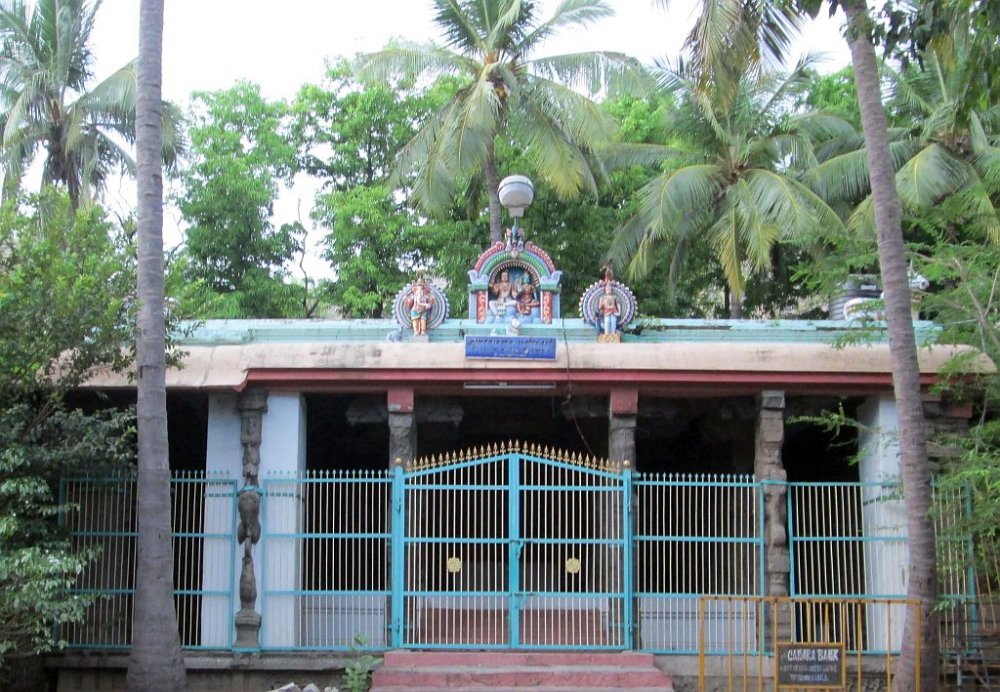
Bairavar Temple
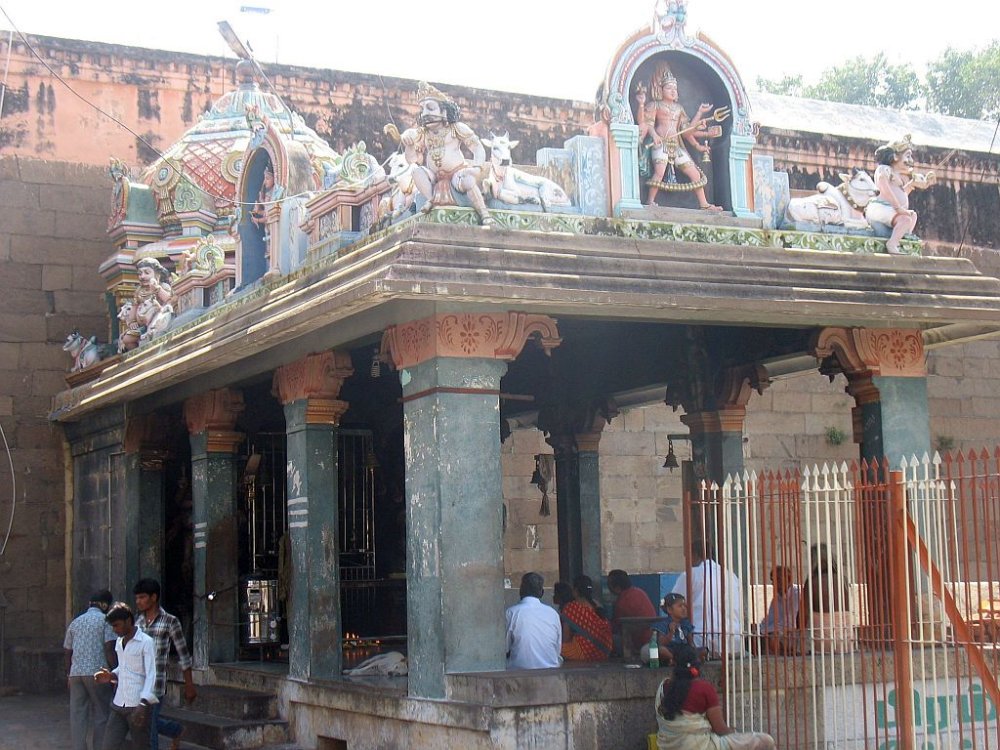
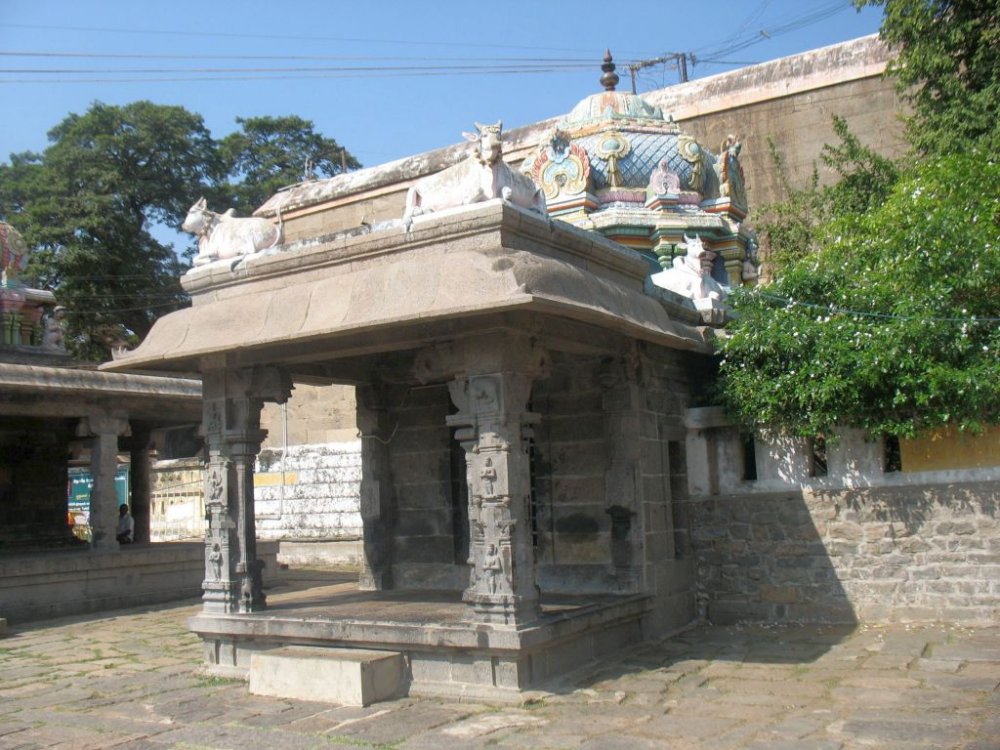
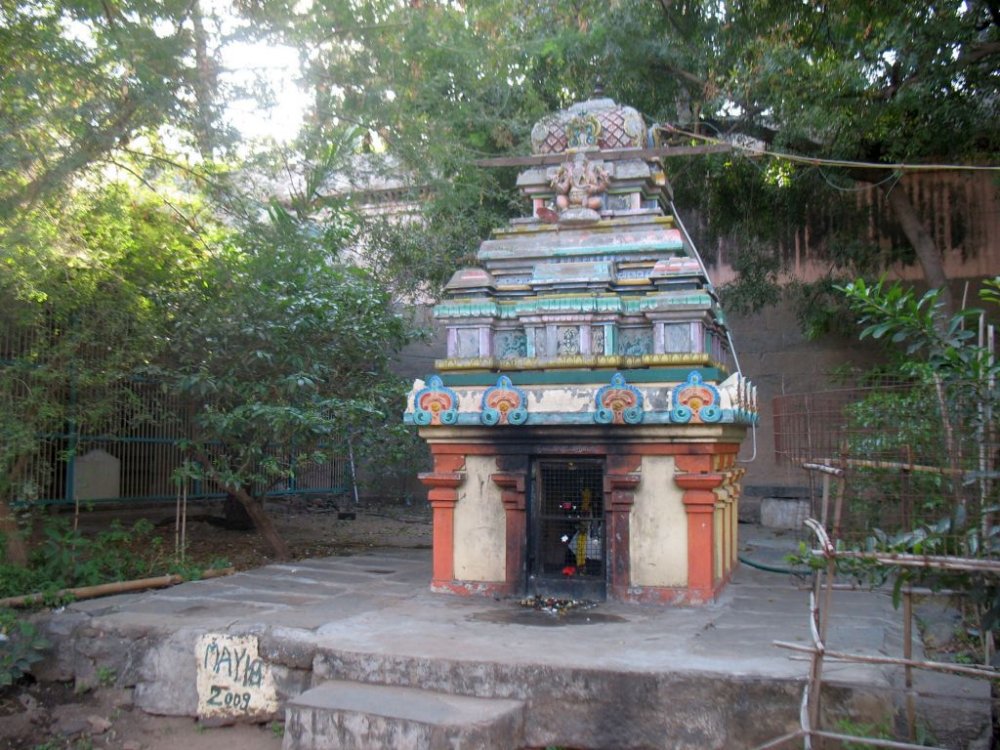
Kalabhairavar is the God whose main duty is to determine time. His mount
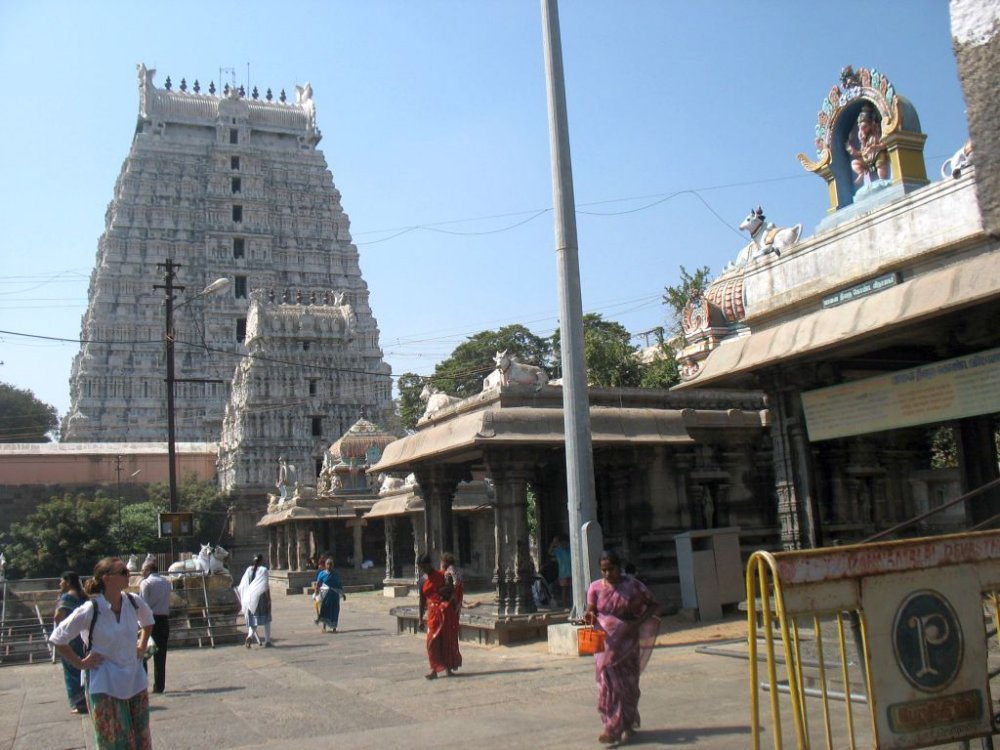
is the dog. The Bairavar shrine is located between southwest of Vallala
Maharaja Gopura and on the north east bank of the Brahma Teertham.
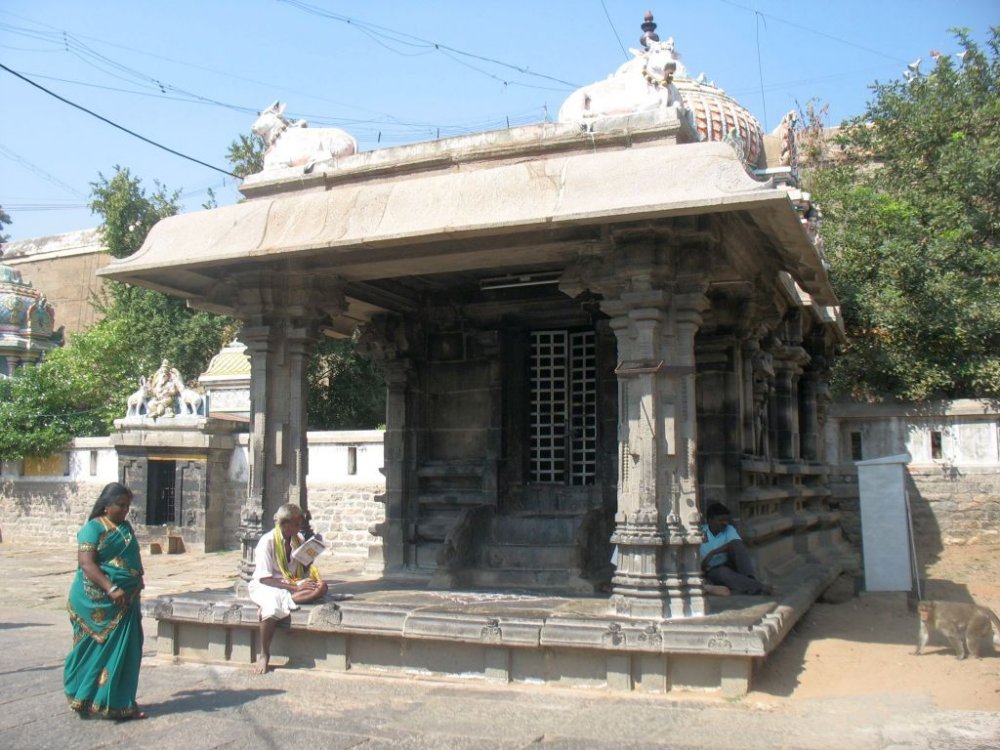
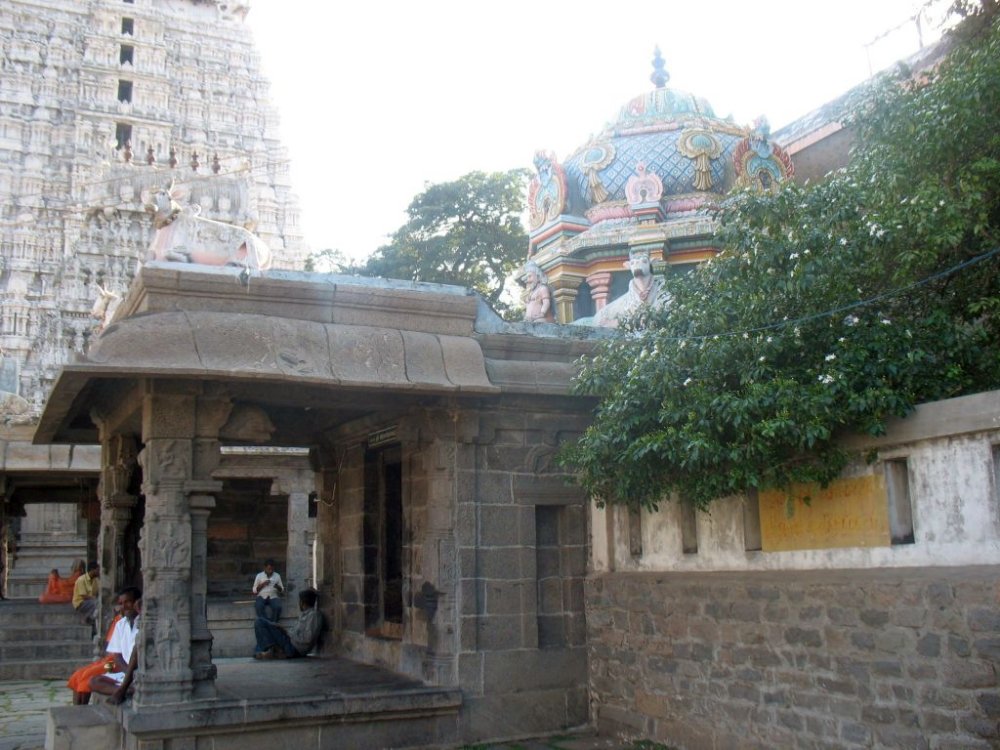
Shrine adjacent to Brahma Teertham
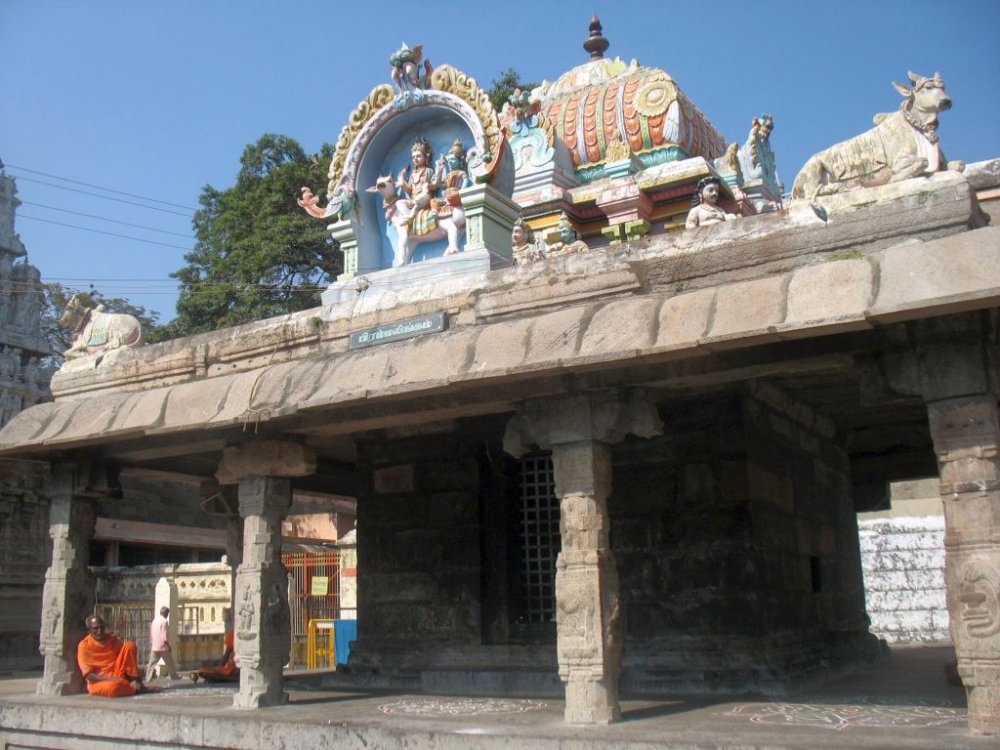
The Shrine is rectangular with a square open mandapam supported by eight pillars.
Bhairava (Fierce Aspect of Siva)
Powerful Shrine in 4th Prakaram
In the inside of the Mandapam eight pillars each support different manifestations of Lord Bhairavar, namely:-
Each pillar supports an aspect of Lord Bhairavar
Niru Bhairavar, Kapali Bhairavar, Bhisha Bhairavar, Krothana Bhairavar,
Asitharga Bhairavar, Samkara Bhairavar, Unnathu Bhairavar, and Sandai
Bhairavar
On the ceiling of this mandapam are four paintings that refer to the
origin of Arunachala. Only two of the original four paintings have
escaped damage from the continuous use of camphor during aarthi.
The four original paintings are as follows:-
1. Depicts the argument between Brahma and Vishnu
surrounded by many celestials. Both Gods are trying to decide which is
the greater.
2. Portrays the creation of Bhairavar by Siva in order
to remove Brahma's head, after lying about seeing the top of the column
of light.
Creation of Bhairavar by Lord Siva
3. Bhairavar seen to enter Brahma Loka, where he nicks the tuft of Brahma's fifth head with his finger nails
4. Brahma realises his error and falls at the feet of
Lord Bhairavar, begging for forgiveness. Brahma is spared by Siva and
blessed by Bhairavar.
Brahma begging forgiveness
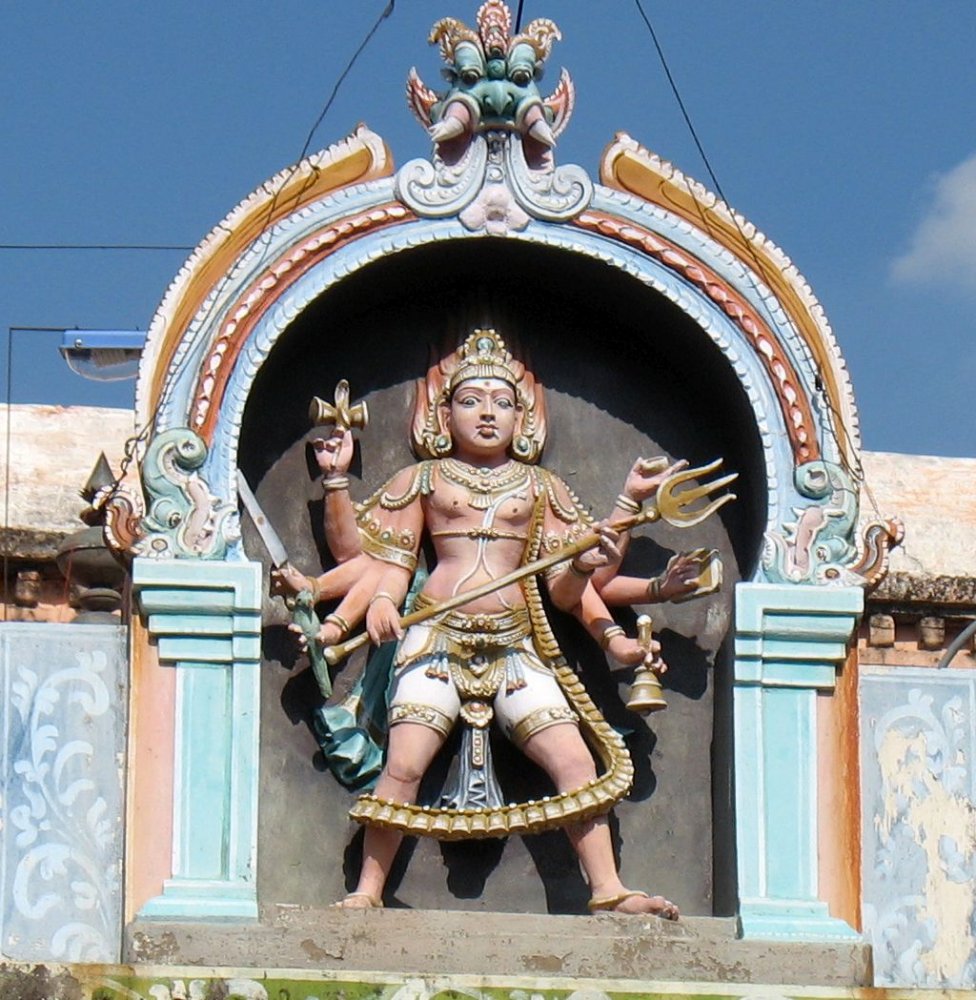
The statue of Kala Bhairavar at this Shrine, is in standing position
with height of three and a half feet. The Lord's face expresses intense
anger. He has eight arms carrying a small drum, skull, knife, shield,
parrot, bell and trident. Around his head there is a halo of fire. His
canine teeth are visible. He has three eyes and wears anklets. The
utsavamurti of this deity belongs to the 13th or 14th Century A.D.
 Fierce aspect on roof of Shrine
Formerly Kala Bhairavar was situated in the second Prakara near the
Palliarai (sleeping chamber of the deities). The reason for the change
in location goes as follows:-
"After an untoward incident according to a legend a child was left
inside the second Prakara but when the mother came to reclaim her child
after the doors had been closed she was advised by a voice from inside
to come and take back her child in the following morning and reassured
that her child would be safe. But the mother insisted and so the voice
angrily told her to take her child and proceeded to throw it out with
torn limbs—and the child was dead. This was supposed to be done by Kala
Bhairavar who is the guardian of the Temple. Hence this powerful statue
was shifted to the fourth Prakara. Kala Bhairavar is one of the fierce
manifestations of Lord Siva." [From: Ramana's Arunachala Page 123]
Brahma Teertham
This tank is located at the south-east of the fourth prakaram. It is
adjacent to the Kala Bhairavar Shrine. The tank is square and on the
northern side there is a flight of steps leading down to the teertham.
At the beginning of the steps there is a four pillared mandapam called
the Thirthavari Mandapam. During solar and lunar eclipse thirthavari
takes places here.
Brahma Teertham, 4th Prakaram
This tank was dug by King Venudaiyan, son of the Kadava King
Koperunsinga (1230 A.D.) The tank was previously known as the Perumal
Teertham.
Puravi Mandapam
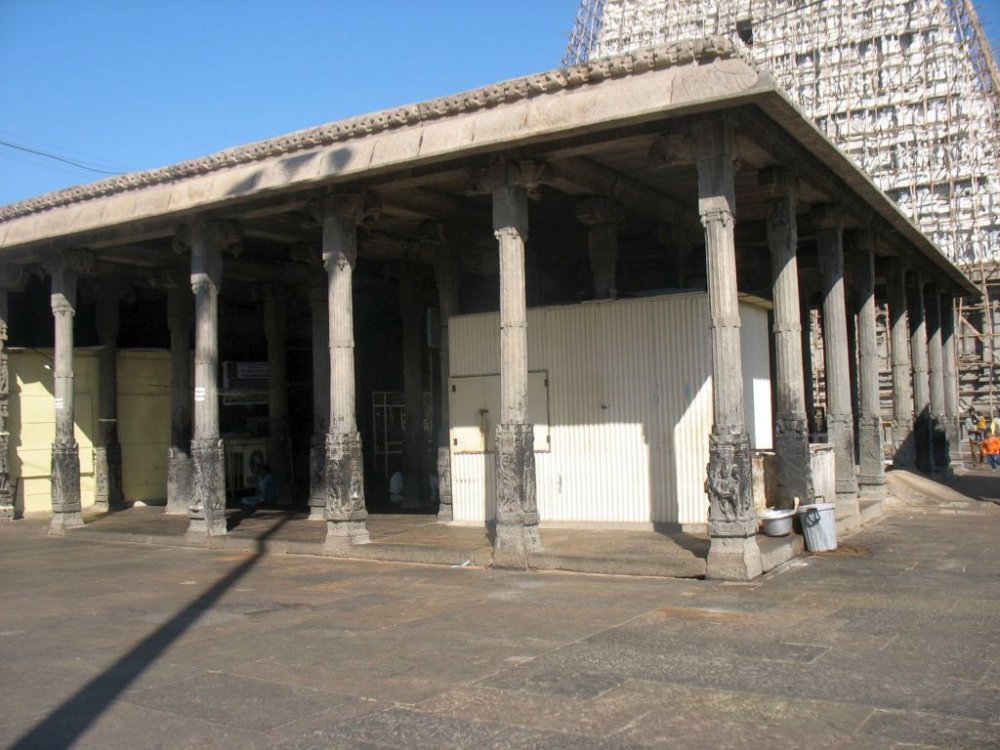
Across from the Brahma Teertham is the Puravi (horse) Mandapam, earlier
it was known as the Perumal Mandap. It is a rectangular hall with a
front mandapam.
Puravi Mandapam, Vallala Gopura background
The hall opens on the southern side into the square mukha Mandapam which
has openings on the east-west side. The Puravi Mandapam contains
ornamental pictures (from the Nayak period) on the ceilings. Most are in
black pigment and include scenes of the churning of milk from the ocean
(Samudram Manthan) which are painted as a series.
It is believed that this mandapam originally was used for the stabling
of horses thus the name Puravi (i.e. horse). It was built by the Kadava
King Koppersunsingam and images of him and his son Venu Udaiyan are
carved on one of the pillars of the Puravi Mandapam facing north.
Rukku, Arunachala's favourite Elephant
It is now famous as the day shelter for Rukku, the Temple Elephant.
Mani Mandapam adjacent to Theertham
A small mandapam known as the Mani Mandapam is close to the elephant shelter.
Entrance to Temple Offices
Temple Model outside Office
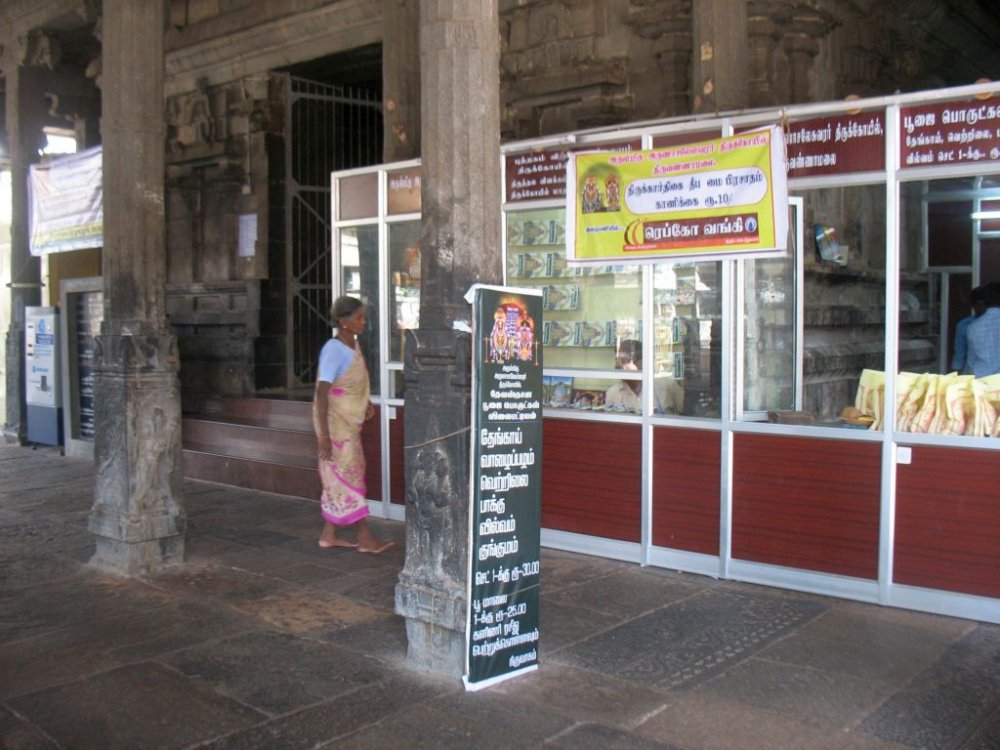
The 100 pillar mandapam also houses the Devasthanam Office, where all Temple administration occurs.
Auditorium
Adjacent to the mandapam is an open auditorium, which is the venue for
cultural programmes and religious discourses during Festivals and
special occasions.
Auditorium
Pichai Ilayanar-Muruga (southern side of Kili Gopura)
The name of this Shrine means "begging mendicant" and Ilayanar refers to
Lord Muruga who is the younger brother of Vinayaka. It is located to
the north of the Kili Gopuram with its southern side actually attached
to the Tower. Lord Muruga with his two wives, Valli and Devasena preside
at this modern Shrine.
Pichai Ilayanar-Muruga
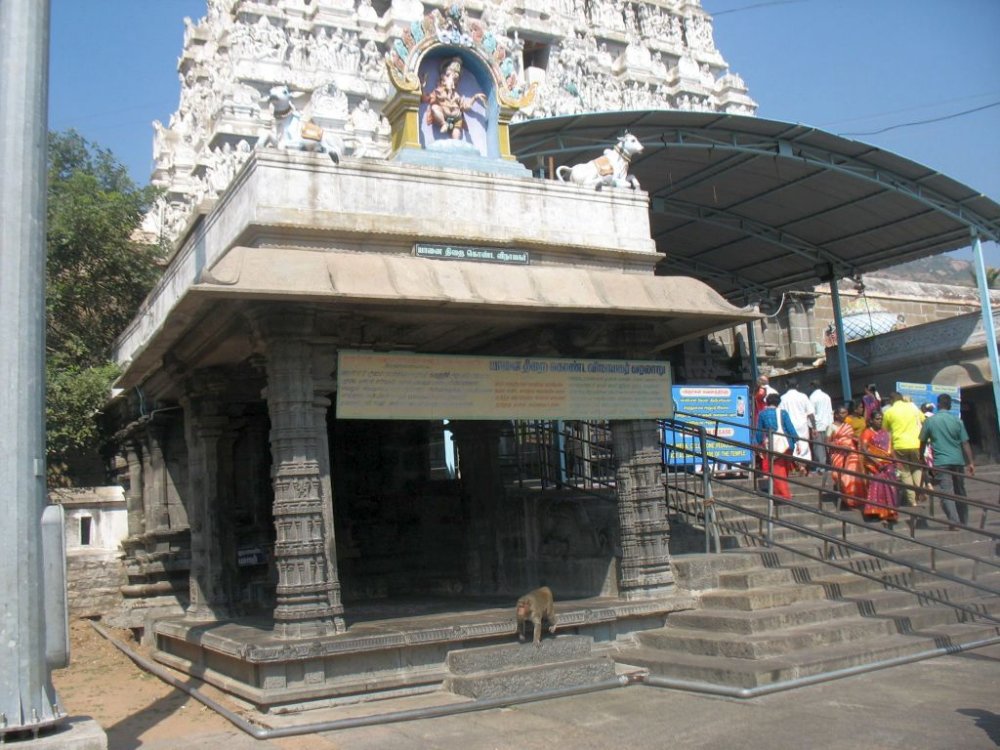
Yanai (Elephant) Thirai Konda Vinayakar
The name of this Shrine also means "Vinayaka who got a ransom of
elephants". It is on the northern side of the Kili Gopura and partially
attached to it. It has a garbhagriha and a bigger mandapam. In front of
the stone mandapam there is an open mandapam supported by four pillars.
The Vimana on this Shrine is a replica of the Ekambareshwarar Shrine.
Six small steps lead upwards to the raised stone platform of the Shrine.
 Navagrahas
Yanai (Elephant) Thirai Konda Vinayakar
It has a small aperture and is very dark inside. The legend attached to this ancient shrine is thus:-
A King from Andhra Pradesh having performed a great battle, captured the
region and allowed his troops to occupy the area. During the night
while everyone slept, the King had a strange dream. He dreamt that an
elephant of great strength charged after the troops and sent them
scuttling away. When the King asked his advisors the meaning of the
dream, the King was told that he had rested his troops on holy ground
and the land was protected by Vinayagar, son of Lord Siva. The King upon
hearing this, gifted his elephants to the Temple asking for
forgiveness. It is possible that the Shrine itself was already there
during this time in history when the King and his troops rested at this
place.
Naleswarar Shrine
This shrine is situated to the right of the Yanai Thirai Konda Vinayakar
Shrine. King Nala worshipped Saniswarar (Saturn) at Tirunallaru to be
absolved of the effects of Saturn's influence in his life. Siva absolved
all evil effects of Saturn from Nala. Hence the King has the name
"Naleswarar". In this shrine images of Durgai in exquisite form are
found.
Naleswarar Shrine
Vigneswarar Shrine
This Shrine is locally known as the Vinai Theerkum Vinayagar. It has a
square cella and rectangular arthamandap. At the corners of the Shrine
are pilasters and its Vimana is of the Nagara type. It is situated
between the Naleswarar and Vidyadhareshwarar Shrine.
Vigneswarar Shrine
Vidyadhareswarar Shrine
This Shrine is next to the Vigneswarar Shrine. It consists of a square
cella and antarala. An open mandapam is attached and supported by two
pillars in front. The wall surface has devakostas with corner pilasters
and a plinth.
Vidyadhareswarar Shrine
Popular with visiting pilgrims
Brahma Lingam (Muka Lingam)
This Shrine is situated between the Vidyadhareswarar shrine and the
south Kattai Gopura. The Braham Linga Shrine is on a high plinth with
kanta structure. It consists of a square cella and an open courtyard
supported by 12 pillars on all sides. It has a Nagara Vimana.
Brahma Lingam Shrine
Brahma Lingam Shrine near Teertham
In this Shrine the Linga is carved with four beautiful human faces, each
looking towards a cardinal point. These four faces represent Fire, Air,
Earth and Water. The Linga is Pancha Mukhi or five faced; the fifth
face is Akasha or Ether and this is represented by the top or dome of
the Linga. To learn more about the esoteric aspect of the five faces of
the Lord, go to this link here.
Line of Shrines 4th Prakaram
The below photographs show the sequence of Gopurams and Shrines in the southwest 4th Prakaram.
From left to Right:
Thirumanjana Gopura, West Kattai Gopura, Brahma Lingam, Vidyadhareswarar
Shrine, Vigneswarar Shrine, Naleswarar Shrine, Yanai (Elephant) Thirai
Konda Vinayakar.
Photograph showing line of Shrines
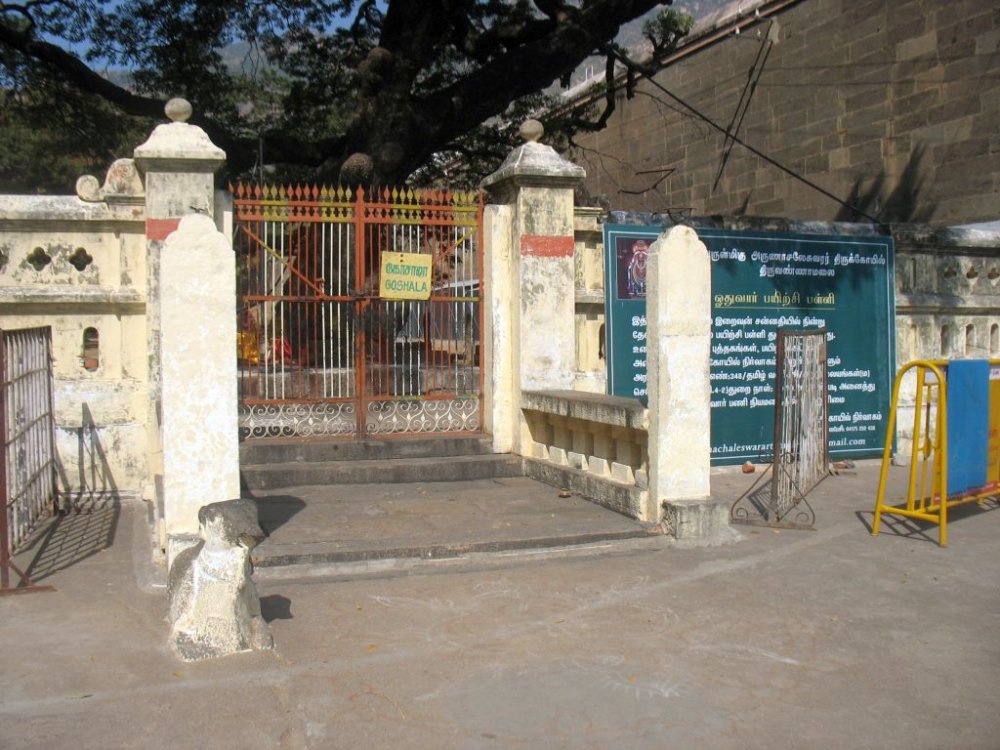
Goshala (Cow Shed)
The entire space of the southern prakaram from the Kattai Gopura to the
west corner of the second enclosure wall is occupied by the Goshala.
Goshala Entrance
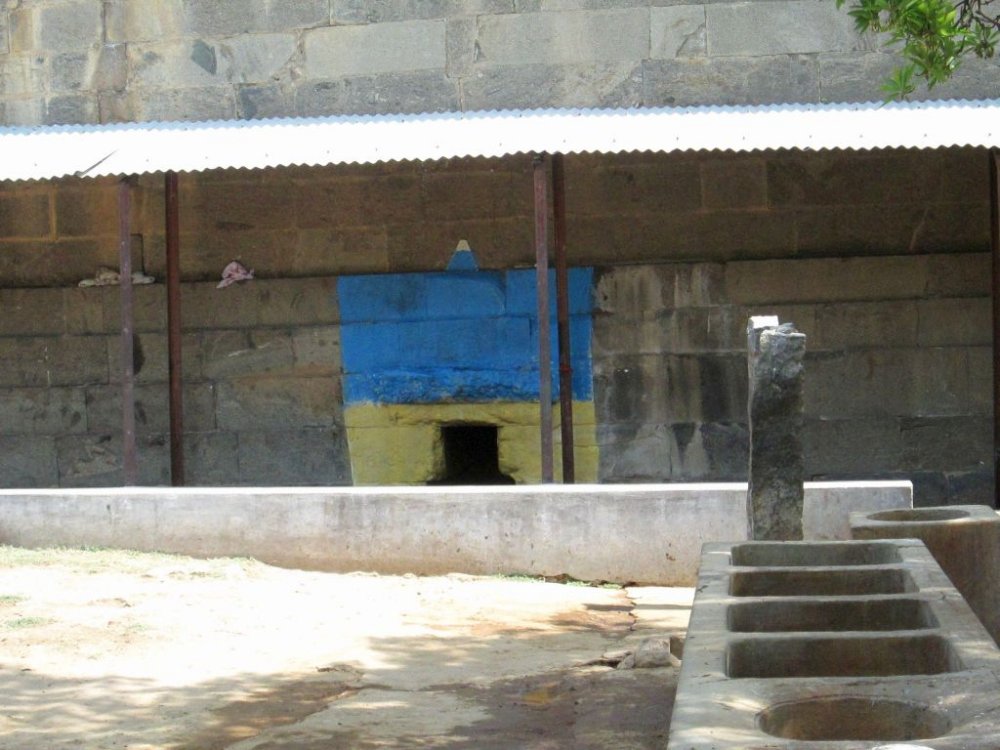
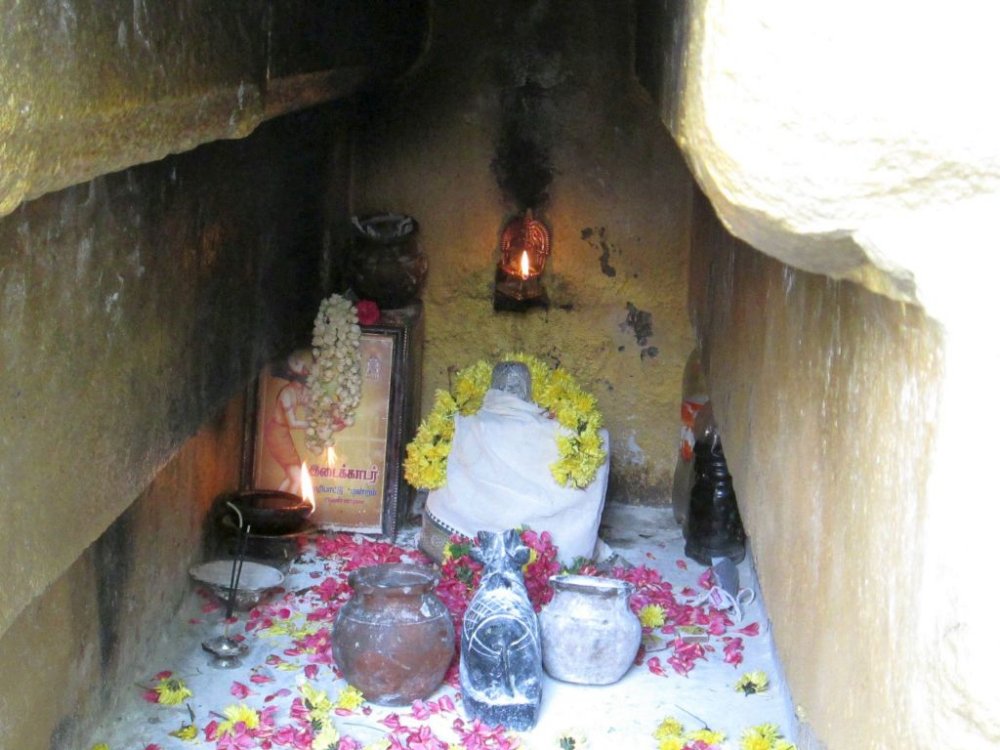
Sri Idaikadar Samadhi
On the side of the Goshala on the outside of the south Third Prakaram
Wall is a niche in the wall which houses what is believed to be the
samadhi of the great Tamil Saint Sri Idaikadar.
Samadhi outside south Prakaram Wall
Samadhi maintained by Trust
Samadhi Shrine of Sri Idaikadar
Amavasya Mandapam
This mandapam is situated in the south west corner of this prakaram.
This is an open square Mandapam reached by a flight of steps. It is
supported by 20 pillars on the outside square and 12 pillars in the
inner square.
Amavasya Mandapam
There are many carvings on the Mandapam pillars. There is a small,
rare five leafed Vilva tree near this Mandapam. On every poornima (full
moon day), Lord Chandrasekarar is brought here.
Vinayakar Shrine
There is a small Vinayakar Shrine next to the Amavasya Mandapam. Adjacent to this shrine is the Adimudi Kana Ammalaiyar Shrine.
Vinayakar Shrine
Adimudi Kana Annamalaiyar Shrine
Tiruvannamalai is above all its mountain, which symbolizes the pillar of
fire from which Siva emerged. This myth has given rise to two
iconographic representations. One of them is well-known: the
Lingodbhavamurti. The other is a later development, specific to
Tiruvannamalai, and which does not stretch back earlier than the 16th
Century. In this other representation, Lord Siva and the Goddess Parvati
are figured on a stele covered with semi-circular incisions to
represent the mountain; on the rear face of this stele is a linga, which
is visible from the back. This representation is known locally as 'adi
mudi', the high and the low, after the same words in poems by Sambandar
and Sundarar, referring to the directions in which Brahma and Visnu
sought the extremities of the Column of Light.
Top of Adimudi Shrine
Adimudi Shrine
"The Adimudi stele is carved on one side with a linga as background and
half circles (crescents) representing the mountain. On the other
side Siva and Parvati are seated on the bull, or standing close to the
bull. At the top of the stele Brahma is represented as a bird and below
Vishnu as a boar. The same two gods can also be standing with clasped
hands (anjali) in anthropomorphic form at the bottom of the relief."
[From: "The Montagne" by Francoise L'Hernault]
Stele at Arunachaleswarar Temple
Paadam Shrine
Siva Paadam Shrine
This Shrine which is located a little further north and directly
adjacent to the West Kattai is a small shrine where the two feet of Lord
Siva are represented. This Shrine appears to be of recent origin.
Lord Murugan Shrine
Going northwards after the Padam Shrine and crossing the front of the
West Kattai Gopura is a small shrine dedicated to Lord Murugan. This
shrine is of contemporary origin.
Lord Murugan Shrine
Karthigai Mandapam
Karthigai Mandapam
Situated at the north-west corner, this Shrine is similar in
construction to the Amavasya Mandapam. There is a Vinayaka statue in one
of the pillars. Lord Muruga is the presiding deity of this Mandapam. On
the Krittika Star Day, Lord Subramanya is brought here for darshan.
Nearby is a small shrine dedicated to Nagadevata. A nearby well supplies
water for garden and shrines.
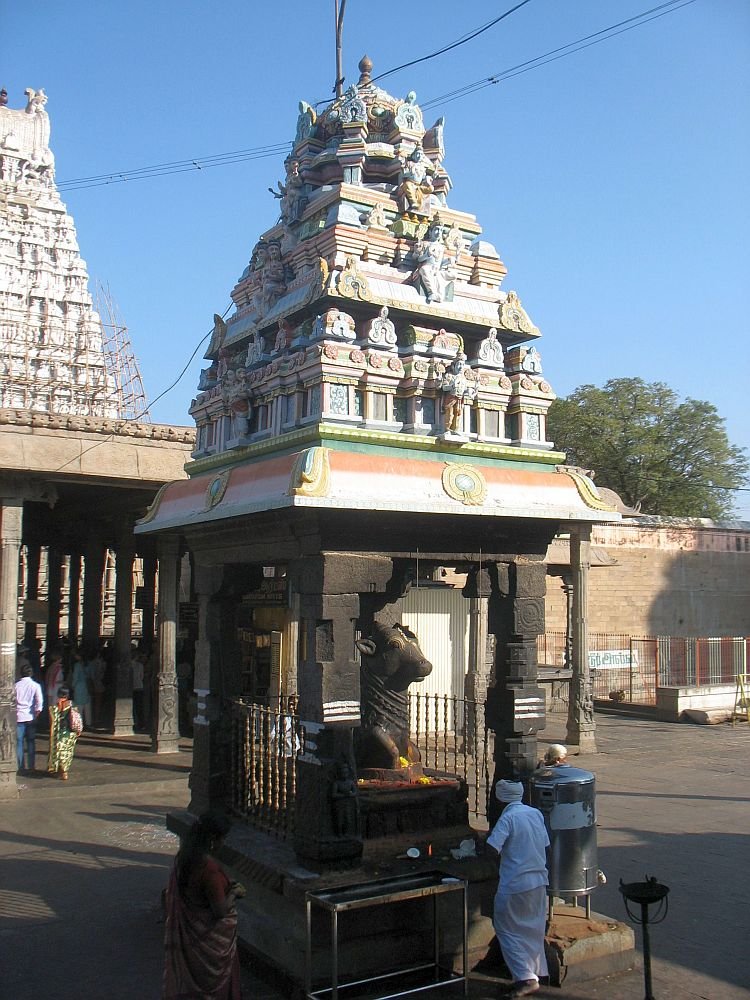
Small Nandi
This second Temple Nandi is located in a Mandapam with four pillars and
situated in front of the 6 storey Kili Gopura. This Nandi was installed
by King Vallala. His figure is seen on the structure.
Small Nandi, 4th Prakaram
Nandi with King Vallala bottom left pillar
King Vallala
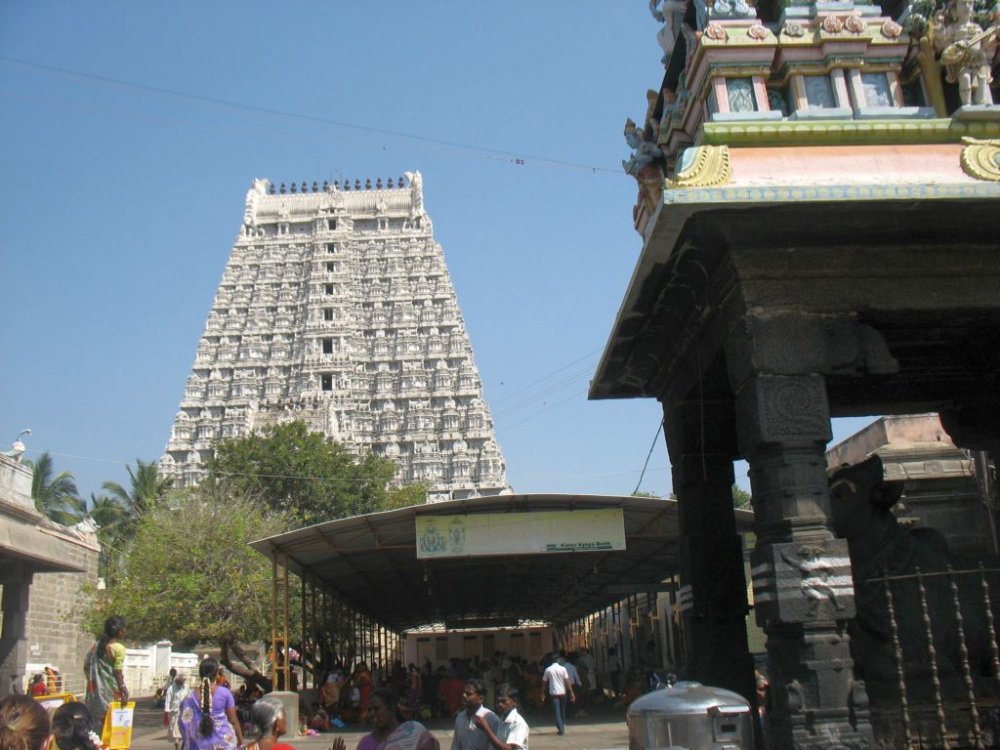
Kili Gopura
This tower was built in 1053 A.D. by Rajendra Chola who was known as
Thirubhavana Chakravarthi (Emperor of the Three Worlds). The tower has
five storeys. The inner side walls of the Gopura has inscriptions and
the outer base of the Gopura has fish sculptured on it. The ceiling of
each storey has wooden beams and rafters. A painting of Mohini (an
incarnation of Lord Vishnu) in dancing pose, fills the recess within the
right arch of the Gopura.
Kili Gopura
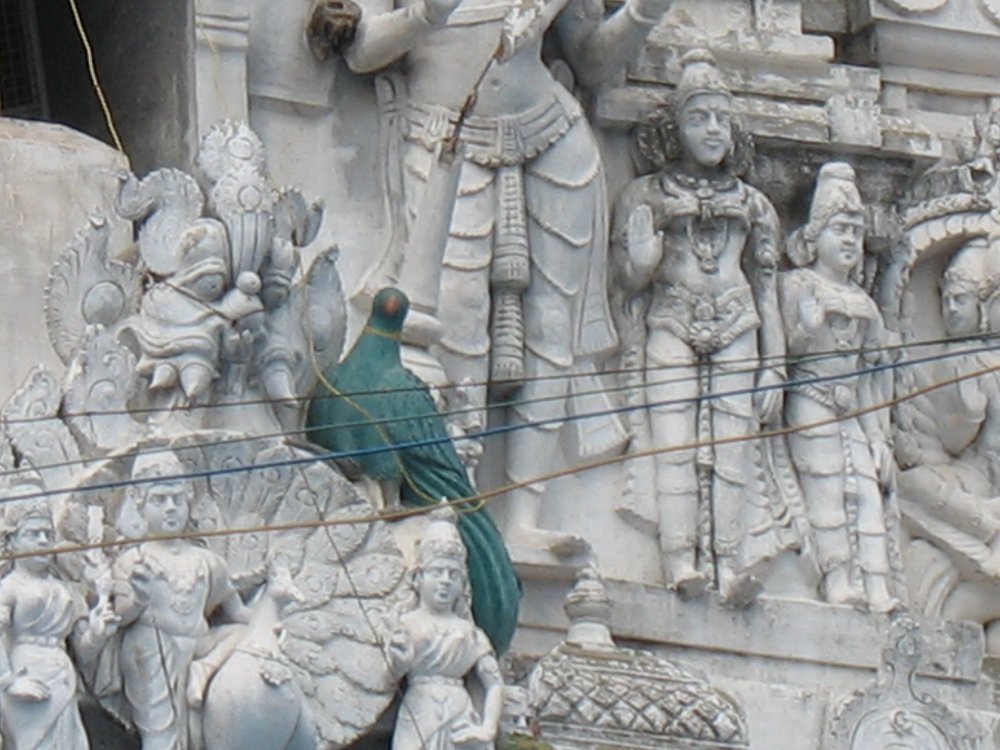
Kili Gopuram means Parrot Tower and in a niche in the tower, and perched
on the top of the Gopura, there are mortar images of a green parrot. It
is believed that the great Saint Arunagirinathar
(who composed his famous Kandar Anubhuti as well as other famous poems)
is represented by these stone statues of the green parrot.
Kili Gopuram - side view
In a niche at the left side of Kili Gopuram, images of Veera Rajendira
Cholan (who ruled around 1063 A.D.) and his ministers are found. The
Kili Gopuram was built by Bhaskaramoorthy whose statue along with his
wife are also still found at the tower. All idols of the Gods taken from
the Temple for procession go through the tower gate of this Gopuram.
Stone Parrot front of Gopura
Stone Parrot top of Gopura
Legend of the Parrot
In connection with this tower, in another legend of Arunagirinathar,
when Sambandandan lost a competition with the Saint, he took revenge by
telling the blind King:-
'If your highness can persuade Arunagirinathar to bring a parijata
flower from svargaloka [one of the heavenly worlds], a few drops
squeezed from the flower onto your eyes will restore your eyesight.'
The King, eager to regain his vision, commissioned Arunagirinathar to do
the job. In order to reach the heavenly world, Arunagirinathar entered
the body of a parrot that had recently died and reanimated it. He left
his own body in one of the niches of a Gopura at Arunachaleswarar Temple
and flew off to find and collect the flower. After the parrot had
departed on its mission, Sambandandan, who had been watching
Arunagirinathar's movements, showed the lifeless body of the poet to
Pravuda Devaraya, announced that it was dead, and asked for permission
to cremate it. The King agreed and the body was quickly burned.
Some time later Arunagirinathar returned with the flower only to
discover that he no longer had a human body to return to. He went to the
King in his parrot body, restored the King's eyesight with the parijata
flower juice and explained what had happened. Realising that he had
been tricked, the King was struck with grief because he knew that it
would now be impossible for Arunagirinathar to again resume human form.
Arunagirinathar, untroubled by this bizarre turn of events happily spent
the remainder of his life in the parrot's body and even continued to
compose poetry in praise of Lord Muruga. It is said that he composed and
sang his famous work Kandar Anubhuti and several other poems while he
was still occupying the parrot's body.
Two large coloured mortar parrots representing Saint Arunagirinathar are on this Gopura.
|