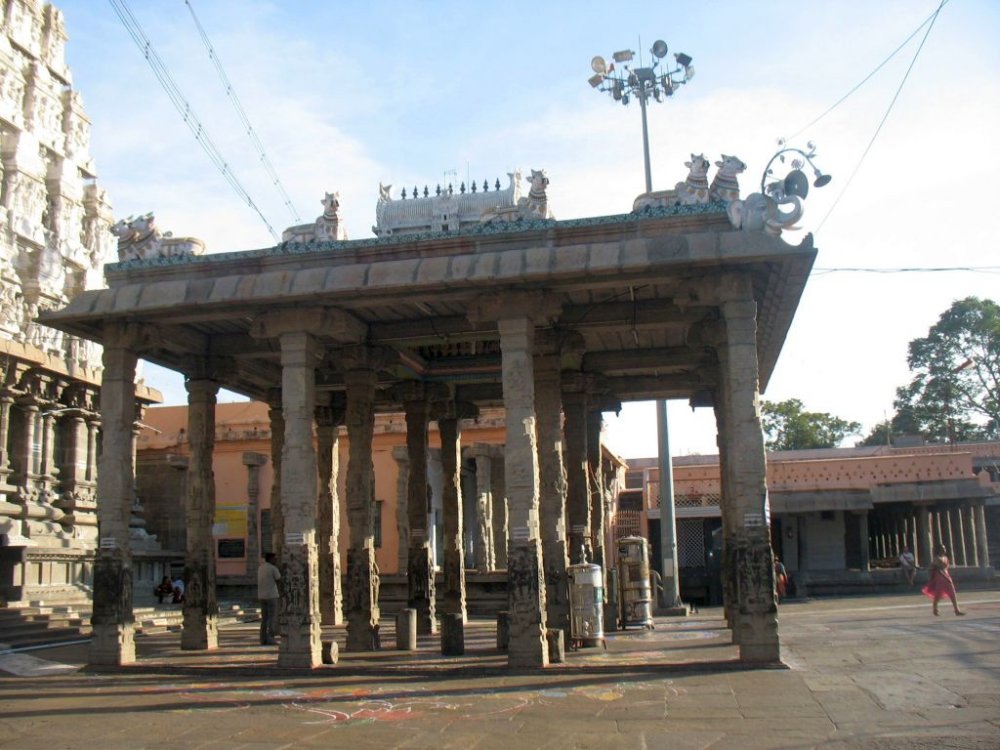
16 Pillar Kaatchi Mandapam
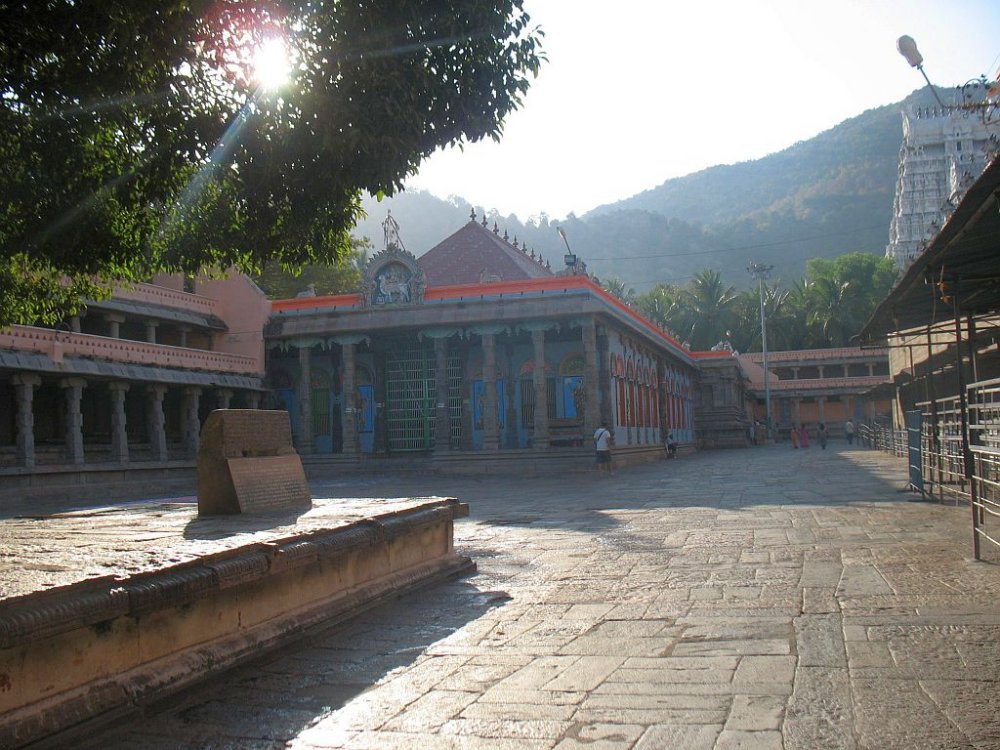
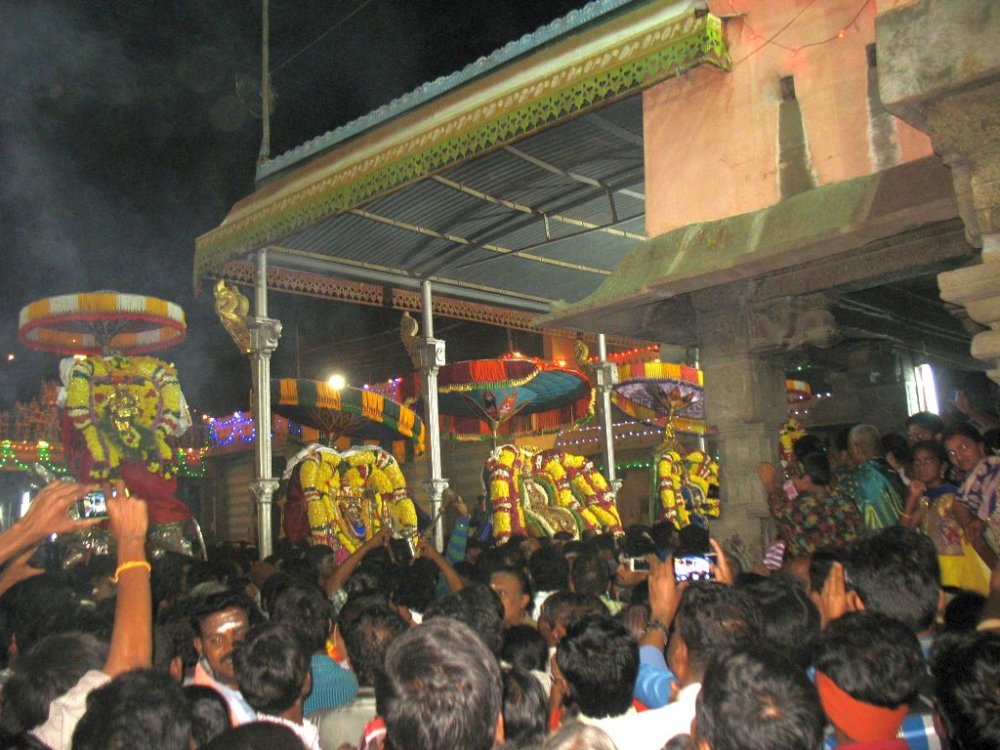
Stepping through the Kili Gopura directly in front is the 16 pillar
Katchi Mandapam, where the panchamoorthies (five Gods) and
Ardhanarishvara give darshan during Deepam Festival and from where the
Lords may witness the light of the fire on the top of Arunachala. This
Mandapam was built by Mangayakkarasi and her brother in 1202 A.D.
Kaatchi Mandapam
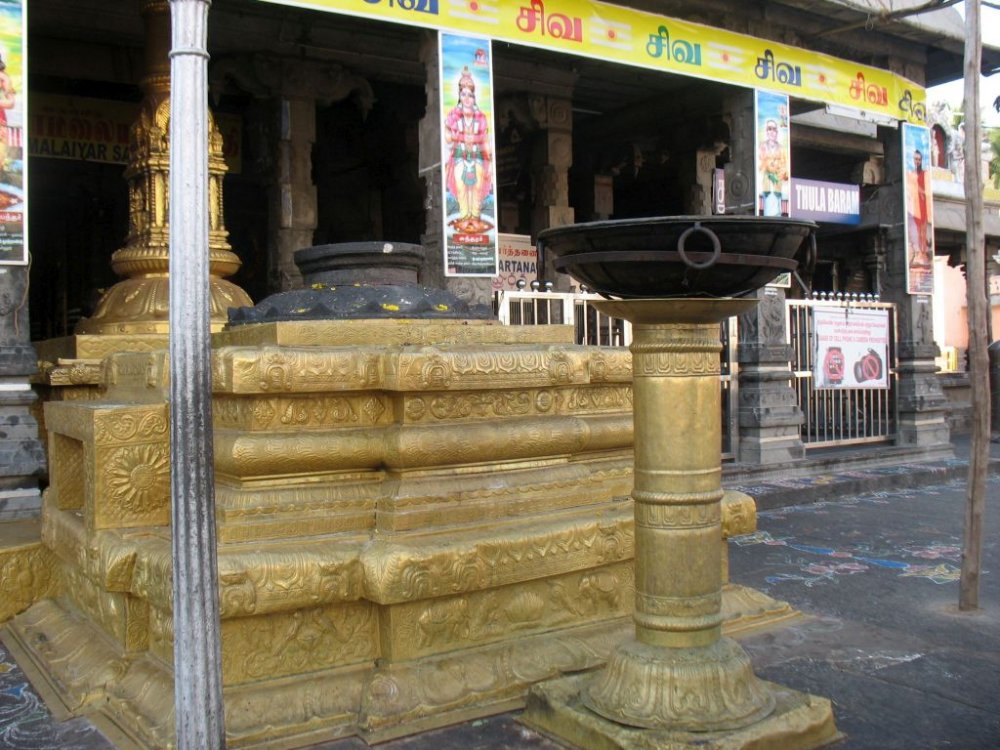
Opposite this mandapam, there is the Bali Peedam (sacrificial altar), Nandi and the Flag Staff (dwajasthambam).
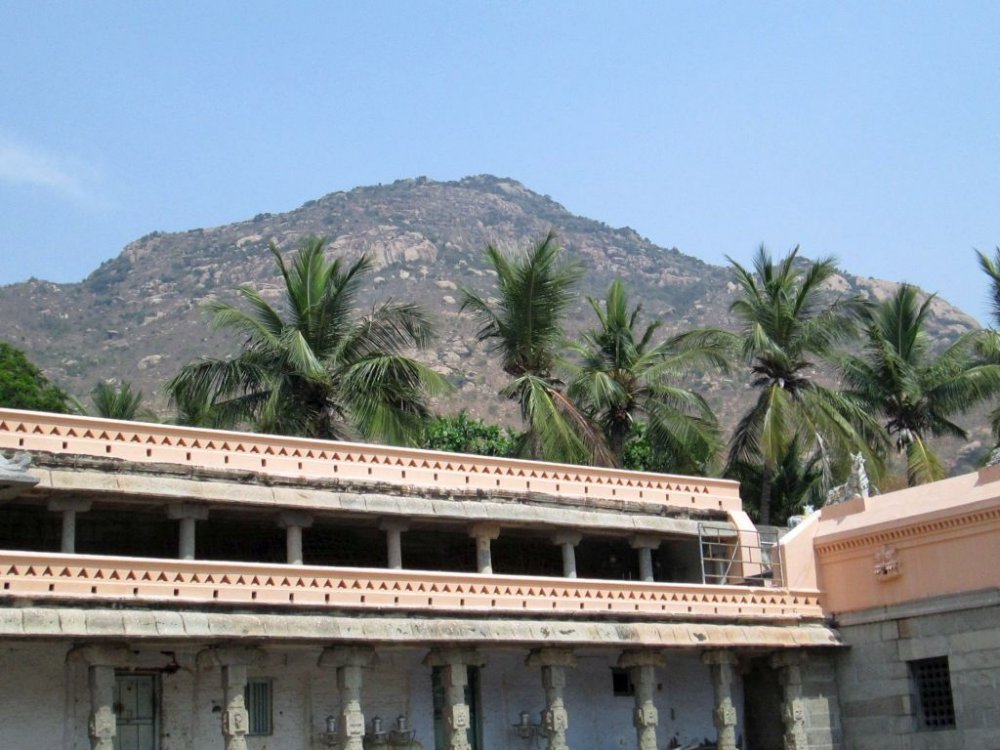
Siva Sannidhi, Arunachala background
Temple Gallery
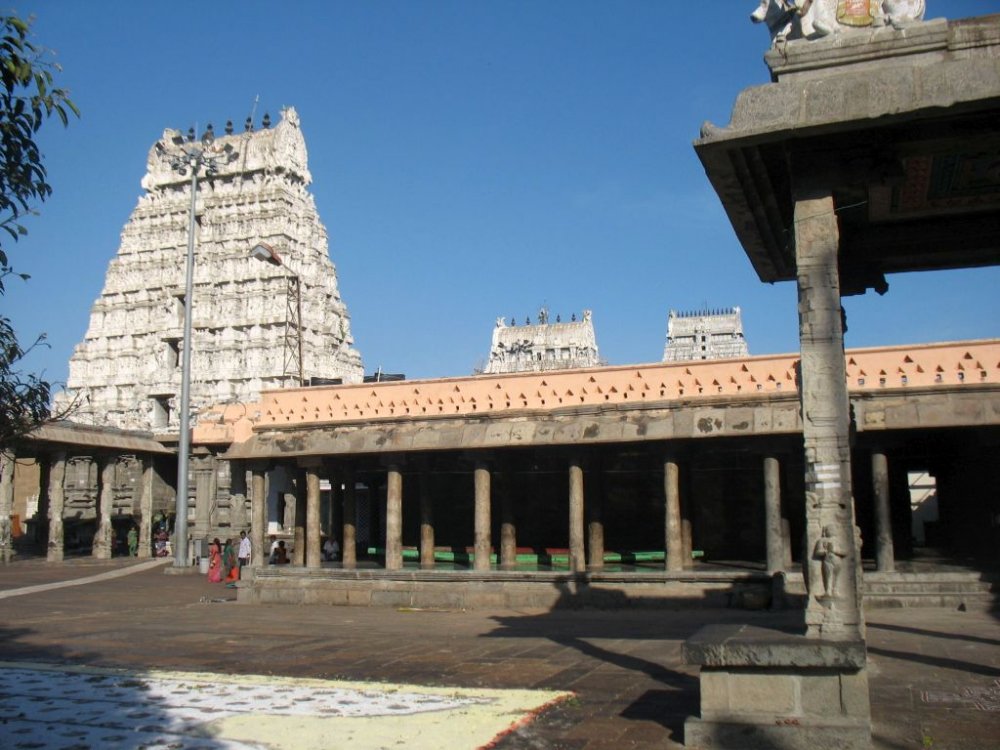
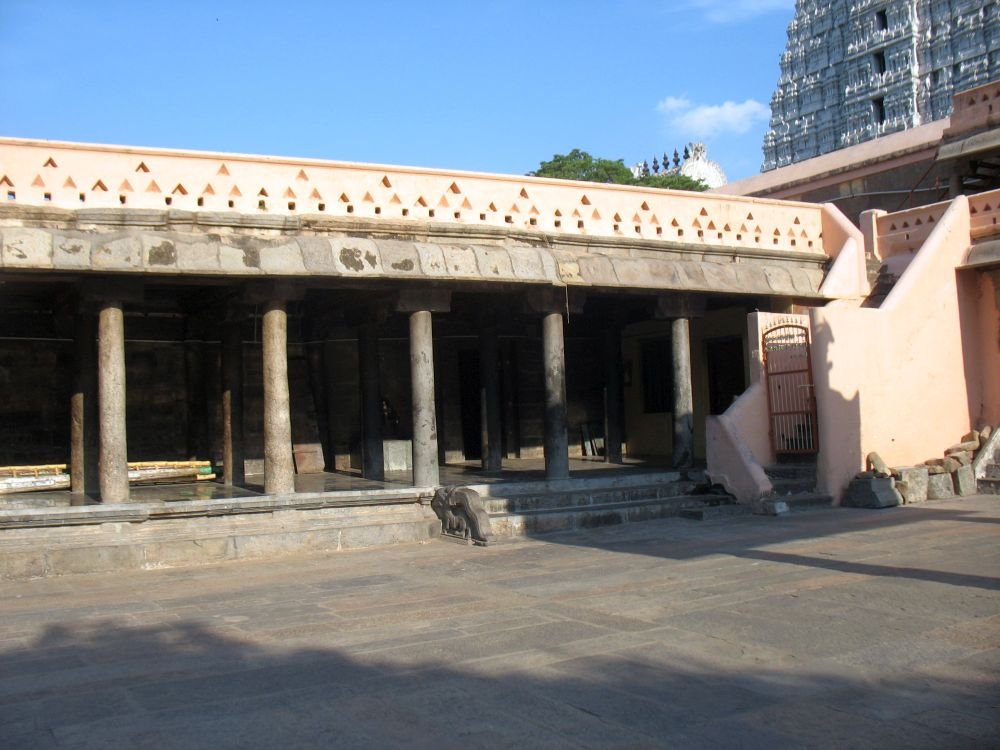
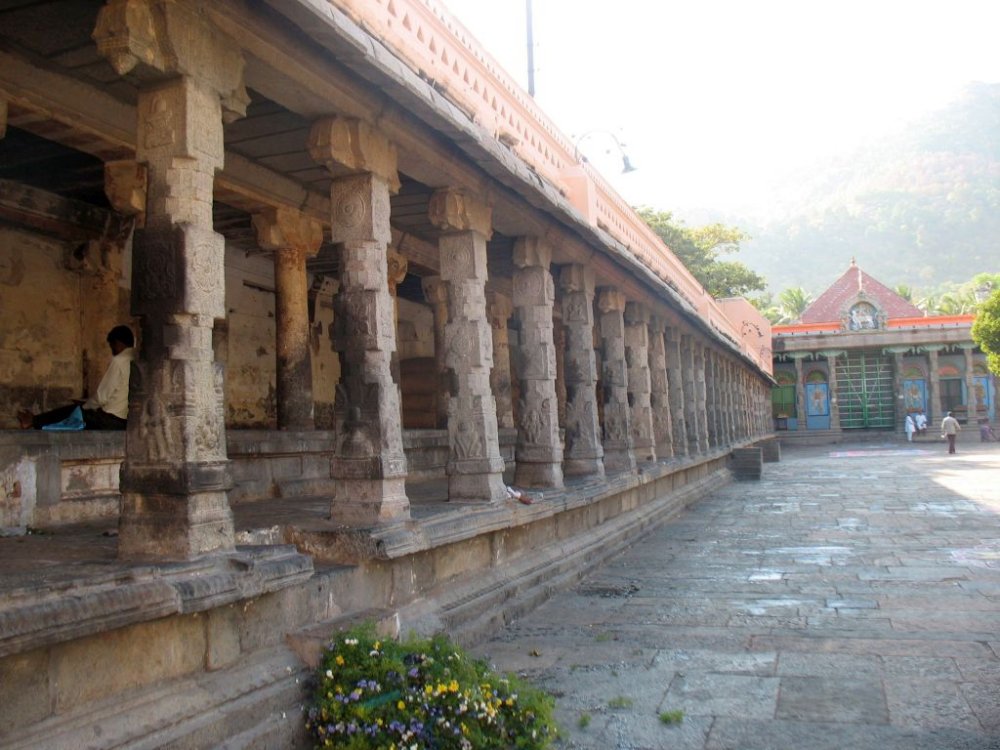
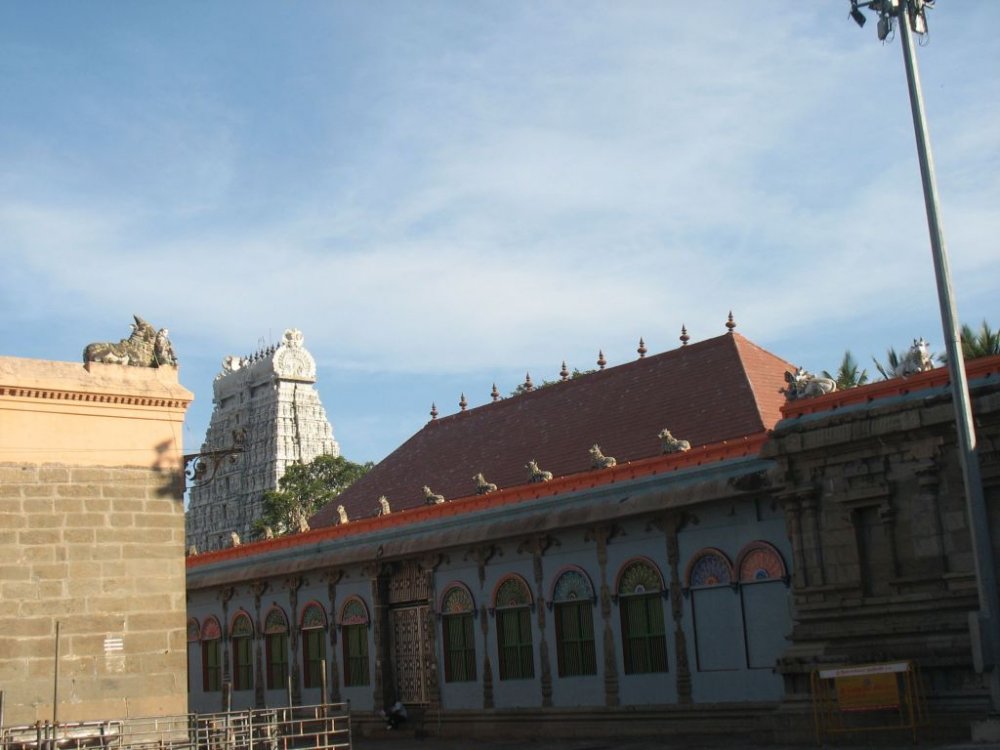
This structure which has many pillars, is a beautiful gallery running
round the inside of the walls of the Third Prakaram. Many enclosed and
locked portions were erected in the modern era.

Gallery inside the perimeter third prakaram
This section includes the Temple Kitchens
Hall south 3rd Prakaram
The south-east corner of this structure has been converted into kitchen
temples, the south-west corner is occupied by the Kalayana Mandapam
(Wedding Hall) and Bhimeshwara Shrine.
Hall northwest 3rd Prakaram
Gallery in front of Mother's Shrine (northside)
Paneer Mandapam
This mandapam is used during certain Festivals, one of which is Vasantha
Utsavam during which certain rituals are undertaken at the end of the
Festival connected with the burning of Manmatha (God of Love). For more
information go to this link here.
Paneer Mandapam
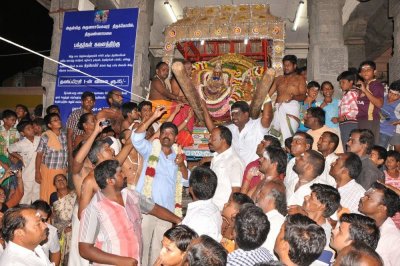
Function at Mandapam
Sthala Vriksha
The Banyan Tree is the sthala vriksha (assigned tree) of Arunachala and
the tree that Arunagiri Yogi reportedly sat under. A young Banyan tree
is located in the Fifth Prakara. Previously there was a Banyan Tree in
the Third Compound but as the roots of that tree go very deep, to
protect the structure of the Sannidhi, 3 Magizha trees (which have
shallow roots) were planted in the Third Prakaram. It could be said that
because of its central location, that this tree (species Mimosops
Elengi - Magadam Pu in Tamil) is now regarded as the Sthala Vriksha, or
Temple tree.
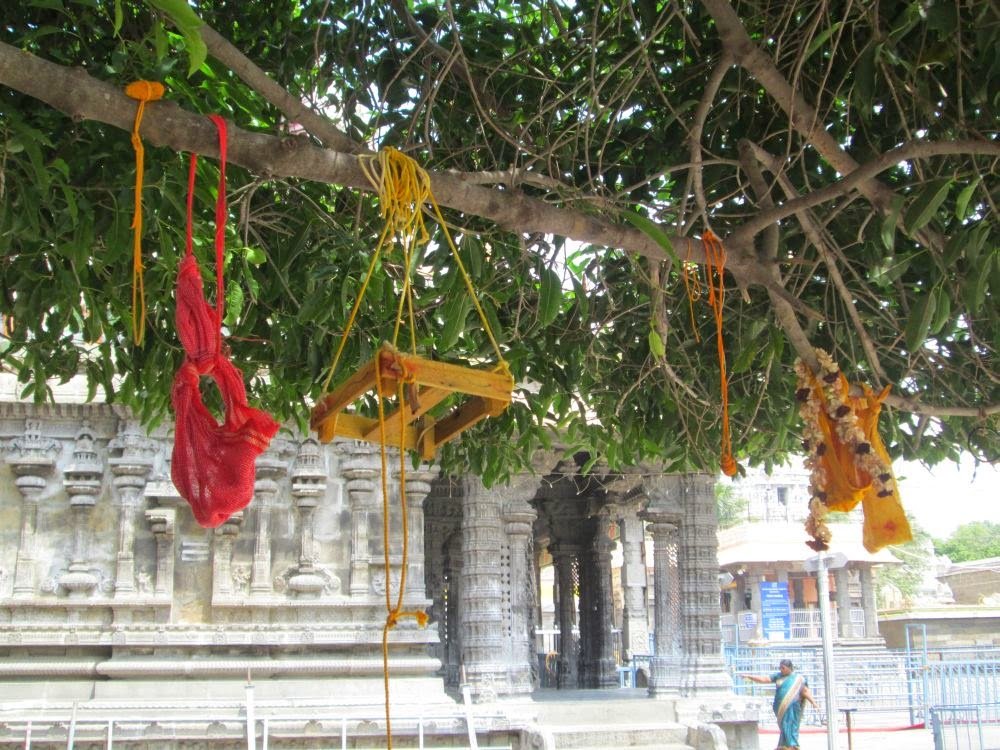
Boon Cradles hanging from trees
There are three such trees, and one of these may be about a couple of
centuries old. Devotees hang boon cradles made from cloth and sometimes
wood, from branches of the tree, when seeking the blessings of Lord
Annamalaiyar (often) for the boon of a child.
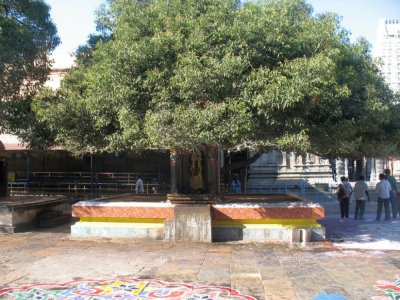
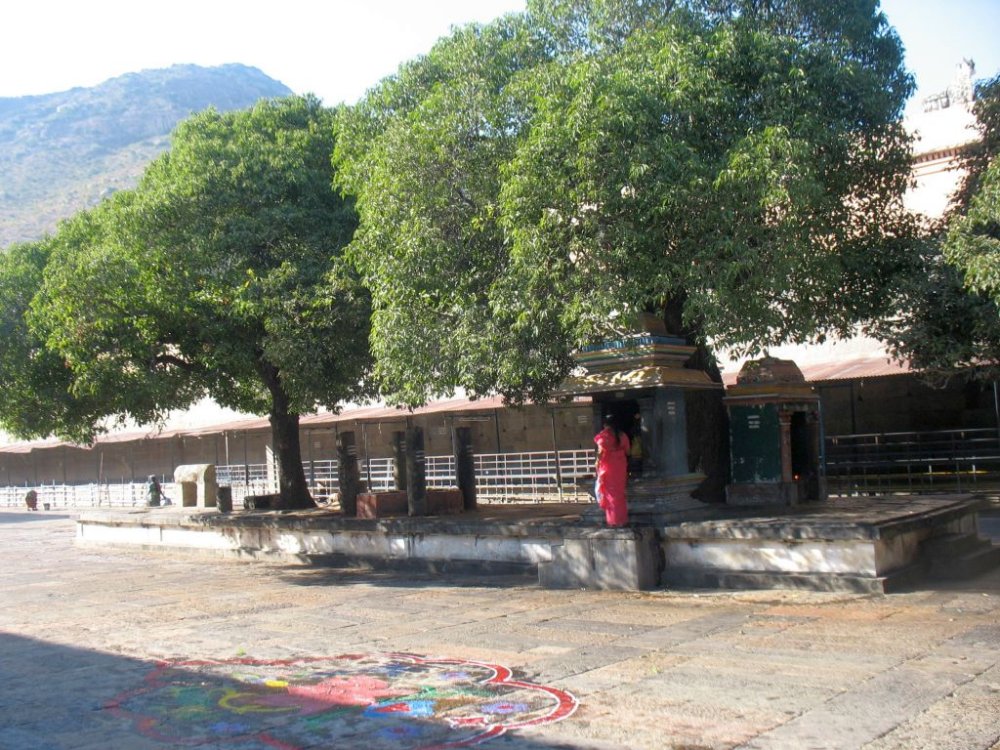
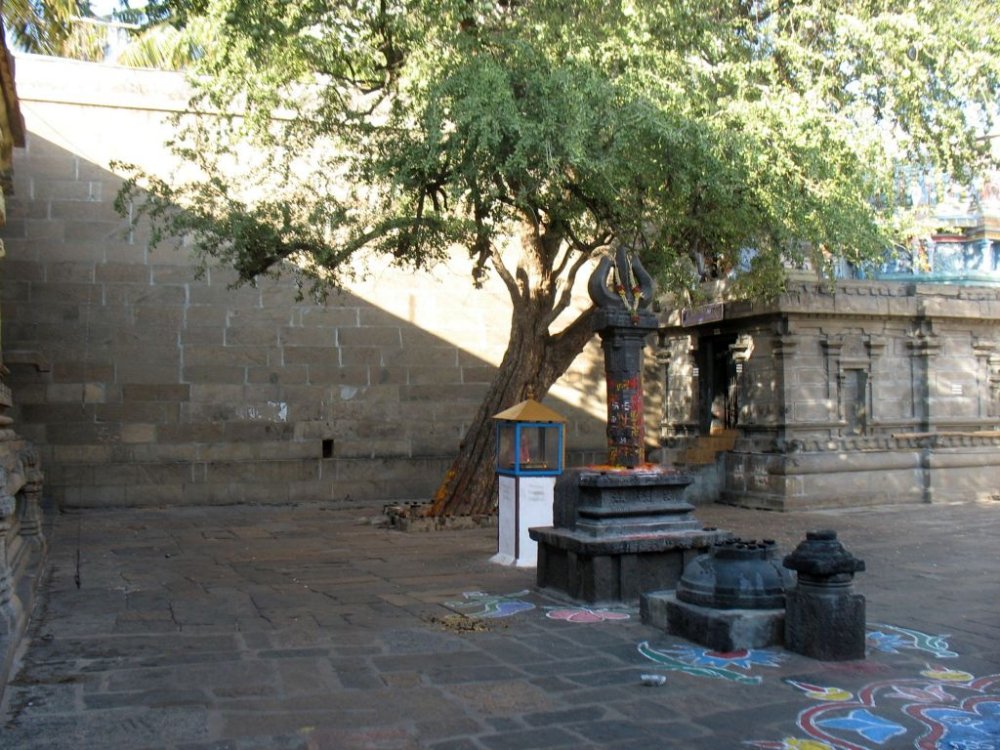
Magizha tree and dais 3rd Prakaram

Platform with shrines and 2 Magizha Trees
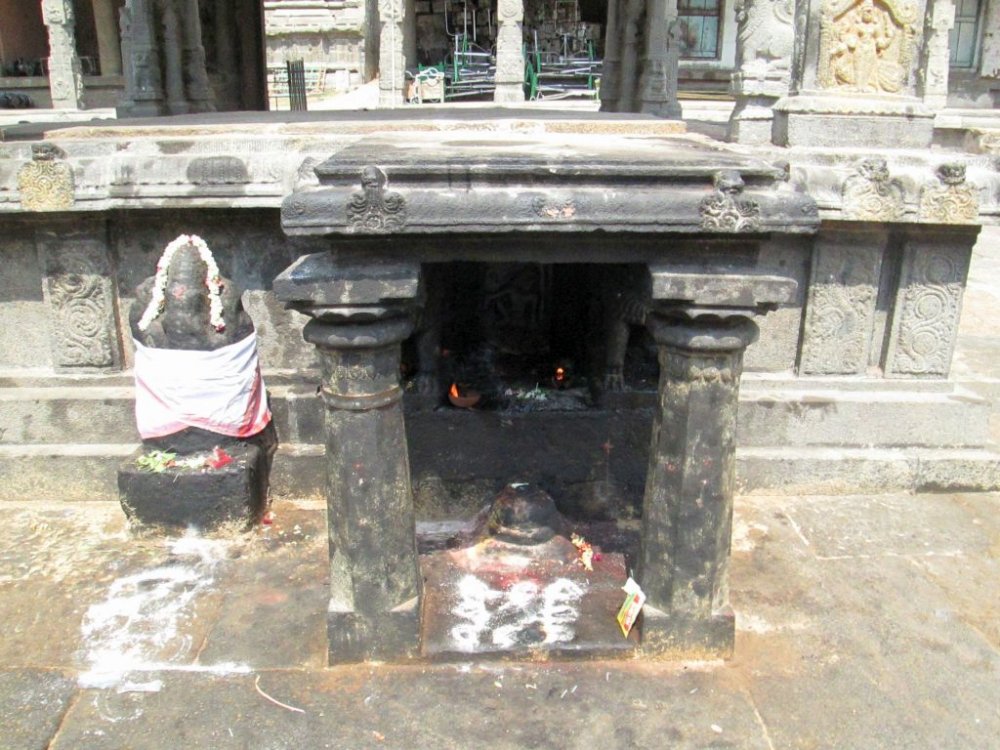
Amongst the trees on a raised platform are shrines of Sri Dakshinamurti,
an image of Lord Ganesha facing east and a four-pillar open shrine of
Sri Jambu Keswarar Linga. During the Vasantha Utsavam the inset Siva
Lingam is submerged in water and amongst floral decorations during that
Festival, the Lingam appears to be floating.
Jambu Keswarar Linga
Between these three trees and the wall of the fourth enclosure there are
about four stones in the pavement with inscriptions on them. One among
them bears on it the insignia of the Vijayanagar Kingdom, via., Boar and
Dagger. These stones may have found their way here during the extensive
repairs funded by the Nattukottai.
On the wall opposite, about 10 feet from the ground, there is a panel
containing the statuette of a Thambiran; other panels in a line depict
the occasion of the Thambiran reviving the dead horse of the then Chola
King, which evidently died of snake bite. The snake is also shown in the
panel. Below these there is another statuette, in a niche, and it may
be the representation of the disciple of Thambiran.
Standing next to the platform with the trees there is a circle (which
has been marked on the ground) from where it is possible to view all
nine Gopurams of Arunachaleswarar Temple. For more information visit
this link here.
Kalyana Mandapam
This hall (Tirukkalyana Mandapam) is situated in the south-west corner
of the third Prakaram. It is here that the Gods are installed during
Festival days. It was initially constructed by the Vijayanagar Emperors
and later renovated by the Nattukotai Chettiars. On the ceiling and
walls there are paintings of stories from the Arunachala Purana, the
Epics, figures of God, animals and nature. In the east of this mandapam
is situated a small Vinayakar Shrine.
Kalyana Mandapam, Arunachala back
Bheemeswara Shrine back of Mandapam
Bheemeswara Lingam
This is located inside the Kalyana Mandapam. The ancient Bheemeswara
Lingam Shrine has been at Arunachaleswarar Temple for centuries. Some
say that Lord Bheema (who represents knowledge - jnana) worshipped Lord
Siva at this sacred spot.
Arunagiri Yogi
This mandapam is located in the West opposite the Pey Gopura. This
mantap or seat is dedicated to Arunagiri Yogi, who is represented by a
figure on a stone slab facing east. This seat is dedicated to the Siddha
Purusha on Arunachala Hill.
Arunagiri Mandapam
Tradition has it that from underneath this mantap, there is an
underground passage leading to the other side of Arunachala Hill and to
Adi Annamalai Temple. Vinayagar and an image of Yogiswara are also found
in this shrine facing east.
Temple of Unnamulaiamman (Apithakuchamba)
The separate structure of the Temple of Unnamulaiamman has been erected
in the northwest corner of the third Prakaram - it is (as expected) to the
left of Lord Siva.
The Amman Temple is situated in the northwest corner of the Temple
compound. The wall of the Amman Temple is about 10 feet high. The emblem
of Hoysala, (the Kandaperanda Bird) is found and nearby there is also a
statue of a standing man with worshipping hands. The standing man is
identified as Ballala. Hence it is presumed that the outer walls might
have been built by the Hoysala King.
Left to the open doors leading to Mother's Shrine is Vijaya Raghava
Vinayagar in seating pose. To the right of the doorway is a row of nine
statues; Vinayaka, Lingabhavamurti, Ganapathi, Bhairava, Linga, Valli,
Shanmugan, Devasena and Dakshinamurti. Two large Dwarapala Guardians
flank the open door leading to the Inner Shrine - a Nandi faces inward
towards the Mother's Shrine. The Dvarapalakas are armed with Gadha,
exhibit Tarjani mudra and have a Crown. All round the sanctum and in the
antara are five Sakti Ammans in ghostas, each image is approximately
1½ tall.
After passing through the doorway one enters a large mandapam facing the
Shrine of the Mother. In front of the entrance to the inner shrine
there is a second Nandi and on either side of the Goddess her two sons;
Vinayaka and Karthikeya guarding the entrance. Pillars representing the
Ashta Lakshmis extend from the entrance doors to the Inner Shrine.
Because of the Ashta-Lakshmis (eight Lakshmis), this mandapam is known
as the Ashta Laxmi Mandapam.
In the north-eastern corner stands the sacrificial pavilion used during
the thirteenth century onwards, with an opening on each of its four
sides as in the Vedic sacrificial pavilions, which were light structures
to be burnt after sacrifice was completed. In the prakaram around this
sanctum the festival idol of Vinayaga, Somalinga, Cheralingam, Brahmi,
and Durga are housed.
It can be inferred from inscriptions dated 1180 A.D. during the region
of the Chola King Kulothunga III, that there was a Shrine to the Goddess
(at Arunachaleswarar Temple), called Thirukkalakotam. The Navagraha
Shrine, the Kodemara Mandapam, the Astalakshmi Mandapam and the Sanctum
Sanctorum are important structures of the Unnamulai Amman Temple.
Unnamulai Amman Temple
The Devi temple and the mandapam in front of it are quite modern,
remodelled by the Chettiars in the last century. It seems the Devi's
temple was on a lower level than that of the Siva temple and there
existed a flight of steps leading down into the shrine. Now the shrine
is on the same level as that of the other shrines. Inside this shrine,
is a colonnade of carved pillars and the prakara is covered with stone
roofing. The image of the Devi's Shrine is believed to date from the
11th century.
Mandapam leading to Unnamulai Amman Temple
In the mandapam in front of the Devi's shrine is the Flagstaff, Nandi
and a shrine dedicated to the Navagrahas which is held in great
veneration by devotees, who light lamps and go round the Shrine in order
to propitiate the evil influence of the planets.
Near the Shrine to the nine planets are shrines dedicated to Yama (the
Lord of Death) and his secretary-bookkeeper, Chitragupthanar.
Vasantha Mandapam
The Vasantha Mandapam used to be known as the Kolu Mantap, and was built
by Vena Odeyan in 1230 A.D. This Mandapam has walls on the rear and in
the front. It stands on a plinth. The rear portion is supported by four
rows of pillars, six pillars in each row in an east-west direction form a
rectangular part in the middle and is supported by one pillar on each
side in the centre.

Vasantha Mandapam
This building used to be the central office for the Temple Devasthanam,
which has now relocated to offices located in the Puravi Mandapam of the
Fourth Prakaram.
Kalahasthiswarar Shrine
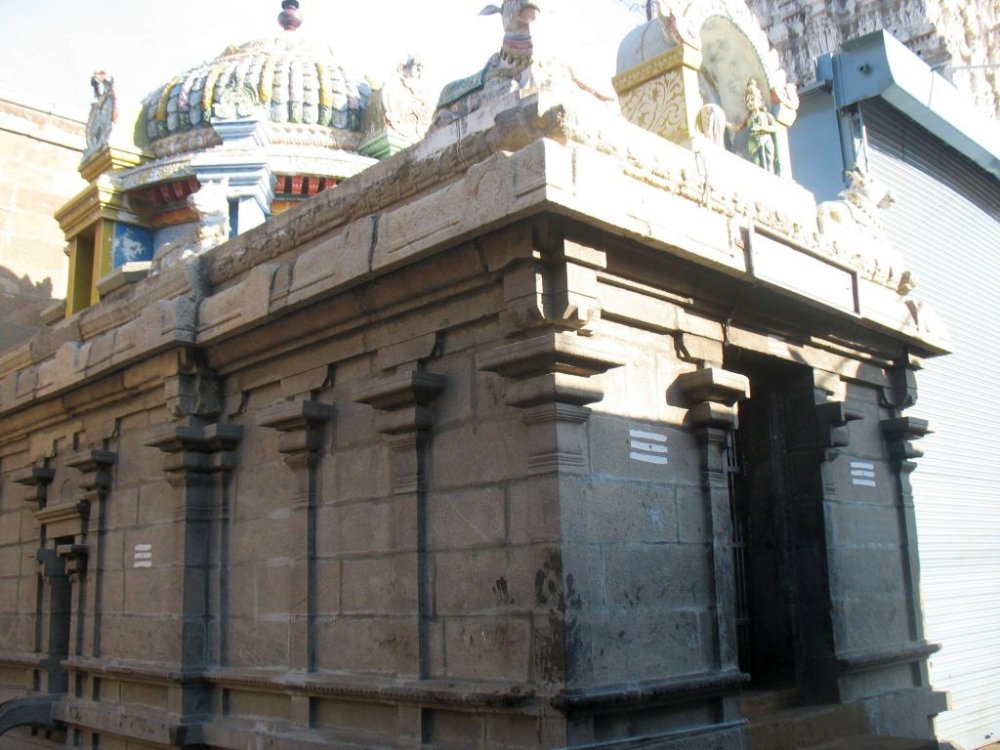
To the east of the Unnamulai Temple, there is the Kalahasthiswarar
shrine facing west. It has a garbhagriha and antarala. A small mandapam
is in front of the antarala supported by four pillars. The exterior
surface of the walls contain pilasters and over the garbhagriha, there
is a Nagara Vimana. The Nandi located in the front mandapam - is of
particular interest as that statue is very long with short horns.
Kalahasthiswarar Shrine for Vayu (Air)
Including the adjacent quadrangle, there are a total of four shrines
which represent the elements. The Kalahasthiswarar Shrine stands for the
element Vayu (air).
Yagasala Mandapam
The Yagasala Mandapam is situated to the southern side of the
Kalahasthiswarar shrine. It has open mandapam supported by four
pillars. The plinth shows upapitha, kanta and kapota parts. The mandapam
has eight pilasters on the northern, eastern and southern sides. At the
centre of each side there is a window of holes. This Yagasala was built
in 1944 and is used during the four ten day Festivals celebrated at
Arunachaleswarar Temple.
Yagasala Shrine
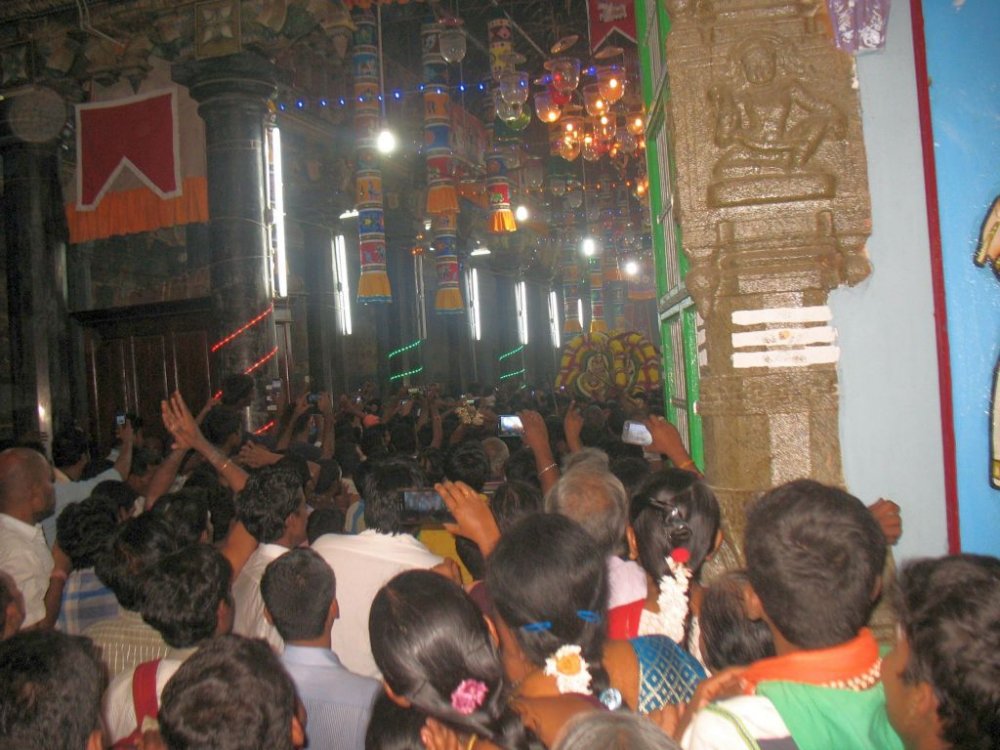
During the Grand Festivals at Arunachaleswarar Temple, alangaram is
performed at the Kalyana Mandapam. The Gods then leave by the front door
of that Mandapam, perform circumambulation of the Siva Sannidhi and
then stop at the Yagasala Mandapam for adornment and aarthi performed by
the priests.
Gods leaving by front of Kalyana Mandapam

Gods arriving at Yagasala Shrine for adornment and aarthi
Pidari Amman Shrine
The modern shrine of Pidari, housing the tenth-century "Seven Mothers"
(which originally stood in the second enclosure), is a perfect example
of how Temple life has changed over the centuries. In fact, when worship
of the "Seven Mothers" declined after the end of the Chola period,
their images were often removed from Siva Temples and installed in small
village Temples under the name of a single deity who functions as the
village Goddess. In this capacity Goddess Pidari presides over orthodox
Brahmin Temple festivals, giving protection by touring villages before
the first day of the festival. The unusual feature at Tiruvannamalai is
that Goddess Pidari is found within the great Temple itself, and that
new images of the "Seven Mothers" were provided for the second prakaram
at a later date.
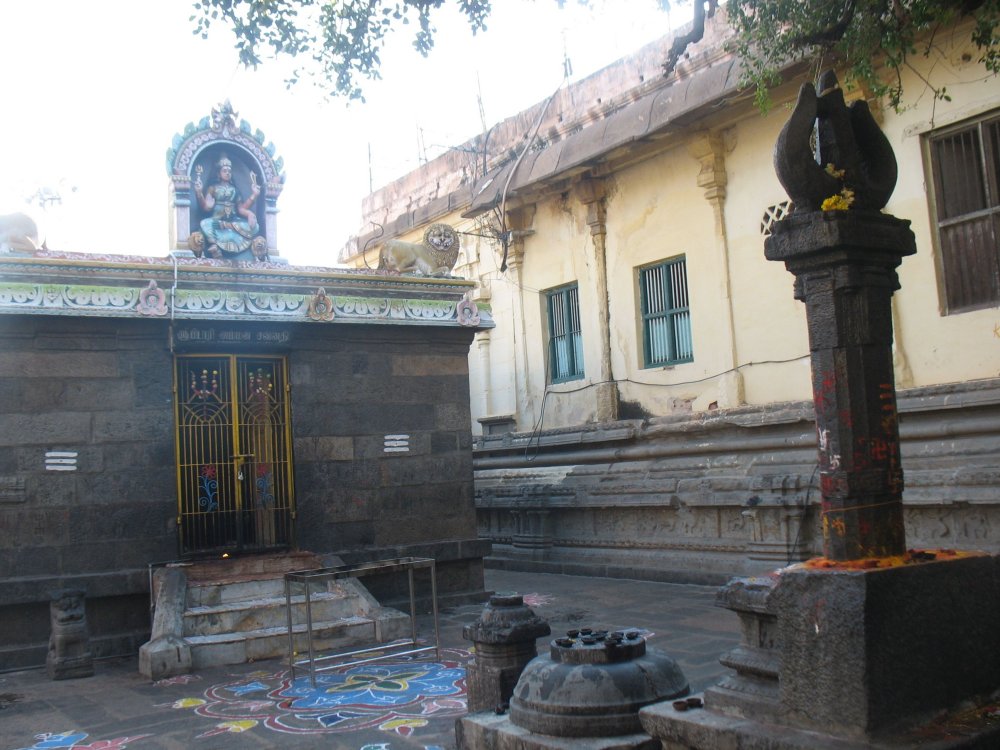
In front of the Pidari shrine, which faces North, there is a stone
trident and two Bali peethas or sacrificial altars. At this place there
is also an ancient Bilva tree - from this tree "pittu munn" (i.e. small
amounts of soil) are taken from the ground around the tree's trunk and
used in rituals during the Grand Festivals of; Uttarayana, Dakshinaya,
Karthigai and Margazhi. After such rituals the earth is then immersed in
the tanks of the Sivagangai Teertham, Iyyankulam Teertham, Brahma
Teertham and Tamari Kulam.
Inside the Pidari shrine are representations of; Ganesha, Sapta Kanyas
or seven 'Matris' (chiselled in separate stones), a severed head of a
Goddess with a crown and Nidambasudani who gives darshan with eight
arms. This severed head represents 'Renuka' the Goddess worshipped at
Padaiveedu, a town about 30 miles from Tiruvannamalai. Renuka represents
the 'Formidable' the 'Fearful' aspect of Kali, the consort of Siva. The
stoned head of 'Reunka' is about 2½ high and although it has a slightly
damaged nose, is a very beautiful image.
Pidari Shrine

Trident and Balipeedam at Pidari Shrine
Goddess Pidari is Kali in a rural setting and regarded as being a
consort of Siva. Pidari is the ferocious aspect of Amman. The Mother
Goddess gives life but Kali takes life. Goddess Pidari is the feminine
form of Kala - time. Kali is the energy or the power of time. Her
blackness swallows all that exists and the emptiness of space is her
clothing, for when the Universe is dissolved, the power of time remains
without maya (veil).
Kali's extension, Pidari and her worship; evolved as a fighter and
warrior and gained importance with the influence of Tantrism where she
is known as Kala Pidari. The Pidari Goddess, in line with Shakti
manifestations, emphasises fierce symbolism. At times Pidari is the sole
resident deity in a village. As devata, She is the all-in-all for the
village from simple prayers to Divine blessings. She also watches over
the main deity of a Temple in her role as 'kaval deivam' while taking
her seat in a structure on the right hand side of a Temple's entrance.
She joins the 'kavaldeivam' or Protection Gods' similar to that of
Ayyanar, Muniandy, Karuppana Swamy or Veerabadhra, all of whom are
warrior-protection village gods.
Pidari shares Kali's attributes and is depicted holding a noose,
trident, skull cup and a pointed knife. The noose is sometimes replaced
by ankusha - the elephant goad. The damaru that she holds is entwined by
a snake, thus sharing Siva's characteristics. She has flaming hair and
three eyes. She has a terrifying appearance with long incisor teeth to
frighten off evil spirits. She is sometimes synonymous with Goddess
Mariamman and lime strung as a garland - 'elumichai malai' is well
favoured by Her.
Goddess Pidari is also represented by a simple stone image called
'veerakkal' symbolising courage and venerating 'veerarghal' - the
warriors. It is believed that Pidari is the combined form of Lord Siva
and Shakti. 'Adanghaa Pidari' is another Tamil description of Goddess
Pidari. 'Adanghaa' means 'one that cannot be controlled' implying,
Pidari, once provoked does not soon subside Her anger.
An example of her famed anger is found in the famous legend of Daksha's
yajna. In this legend her father Daksha ignores Lord Siva. Dhakshayani
attends the yagna and feels vexed to see that her father has invited all
Gods including Vishnu and Brahma, but has ignored and insulted Her Lord
Siva. For this, Dhakshayani enters the yajna fires after cursing her
father Daksha. Narada carries the news to Lord Siva and the Great Lord
shakes the earth. Sweat from his body falls down and Lord Veerabhadra
and Pidari Badrakali emerge from it and are ordered to destroy the yajna
and kill Daksha. Which they do but upon the intercession of the Devas
and Gods (who beg for Daksha's life) the head of a goat is attached to
Daksha's body and he is revived and thereupon begs forgiveness from Lord
Siva.
Pidari Ursavam, 2014 Karthigai Deepam Festival
This particular Pidari Temple is highly significant in that it plays a
part at the beginning of the Karthigai Festival. To read more, view this
link here.
Five Elements
Previously mentioned is the Kalahasthiswarar Shrine which stands for the
element Vayu (air). The other Shrines connected with the elements, are
located in a quadrangle with the Pidari Shrine. These shrines represent
the five elements viz; Chidambareshwar for Akash (Ether), Kalatheshwar
for Vayu (Air), Jambukeshwar for Water; Ekambareshwar representing Earth
and the fifth representation of the elements is our own
Arunachaleswarar, as Fire.
Chidambareshwar Shrine
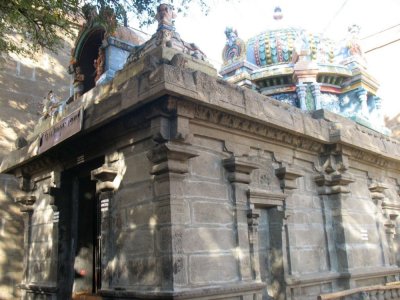
Chidambareshwar for Akash (Ether)
The Chidambareshwar Shrine represents Akash (ether). The architecture of
the Chidambareshwar shrine appears older than that of the others and it
must have been built in the 9th century. Whereas, the other three
Shrines appear to have been built in the 10th century A.D.
"The very thought of Tiruvannamalai will bring salvation. The
Sthalapuranam says that one can attain salvation by being born in
Tiruvarur, by meeting with death in Varanasi (Kasi), by worshipping at
Chidambaram and by mere thinking of Tiruvannamalai. So we find in
Tiruvannamalai the easiest way to salvation.
Jambukeshwar Shrine
Jambukeshwar for Appu (Water)
The Jambukeshwar Shrine represents of the five elements-Appu (Water).
Ekambareshwar Shrine

Ekambareshwar for Prithvi (Earth)
The five elements of the Universe are earth, water, fire, air and ether
and the Sastras call them the Pancha Boothams. These five elements are
represented by five sacred shrines or the Pancha Bootha Sthalams of
which Tiruvannamalai is one.

Arunachaleswarar for Theyu (Fire)
Of the six Athara Kshetrams, Tiruvannamalai is said to be the
Manipooraga Kshetram. It is also one of the Saivite Shrines sung by the
great saints Appar, Sundarar, Sambandar and Manikkavacakar.
|