Mahakumbhabhishekam is held either to formally
consecrate a new Temple or reconsecrate an old one, and generally occurs
at twelve-year intervals or specifically following renovation,
extensive cleaning or renewal.
Kumbhabhishekam is a Hindu Temple ritual that is believed to homogenize,
synergize and unite the mystic powers of the deity. Kumbha means the
Head and denotes the Shikhara or Crown of the Temple (usually in the
Gopuram) and Abhishekam is ritual bathing, (hence the term Kumbha +
Abhishekam).
During this elaborate event, homams conducted according to the agamas,
are performed by priests in the Yagasala outside the Temple over the
preceding days. These homams infuse divinity and spiritual power into
kalasas (sanctified pots) filled with consecrated water.
Divine Power is transferred back to the deities by performing an
abhishekam (salutary bathing) to the Vigrahas and Vimanas (pinnacles) on
the roof with the sanctified holy waters from the kalasas accompanied
by Vedic chanting and special rites. On that day at the designated
auspicious time, when the Kumbha is bathed with the charged and
sanctified holy waters contained in the sacrificial pots, consecrated
and sanctified pranic powers trickle down a silver wire and enter the
Deity installed inside the Sanctum Sanctorum of the Temple.
| |
After the consecration of the Vimanas on top of the Temple, worship is
then specifically performed inside the Sanctum Sanctorum in which
further pranic powers are transferred to the Deities
In spite of its illustrious history and position as one of the foremost
Temples at Arunachala, the Adi Annamalai Temple was sadly neglected in
the 20th Century. The last time Adi Annamalai Temple was renovated was
during the years 1903-1918 when work was financed by a group of Chettiar
devotees. A subsequent Kumbabhiskeham was celebrated in 1967; but the
puja was neither proper nor performed in the correct way.
Since
that time no substantial renovation or maintenance work occurred at the
Adiannamalai Temple until extensive rebuilding work was undertaken at
Adi Annamalai Temple starting on February 7th, 1994. The renovation took
over two years to complete, after which a Mahakumbhabhishekam was
performed at Adi Annamalai February 9, 1996. Due to the increasing costs
of performing such elaborate worships, instead of the usual twelve year
gap, sixteen years has elapsed since the 1996 function at Adi Annamalai
to this recently completed Mahakumbhabhishekam on July 15, 2012.
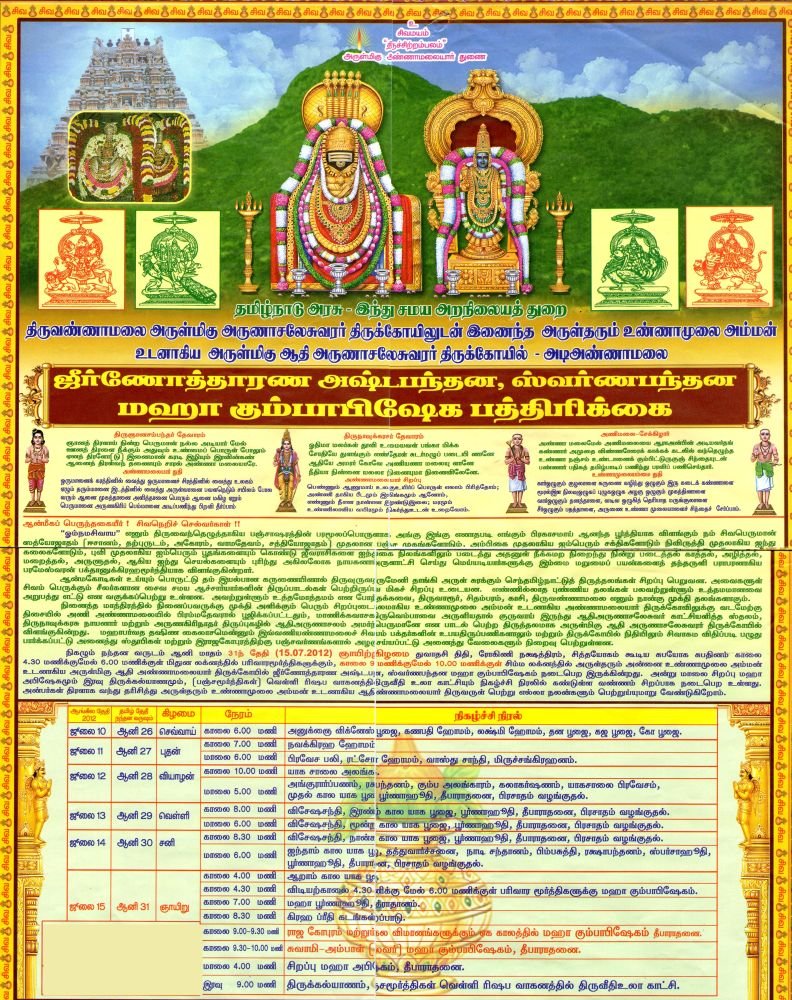
Adiannamalai Mahakumbhabhishekam

Tiruvannamalai Arulmigu Arunachaleswarar Temple with Arulmigu Unnamalai
Amman Udayanarg Arulmigu Adi Arunachaleswarar Tirukoil - Adiannamalai
Kumbhabhishekam.
| Programme
|
July 10, 2012
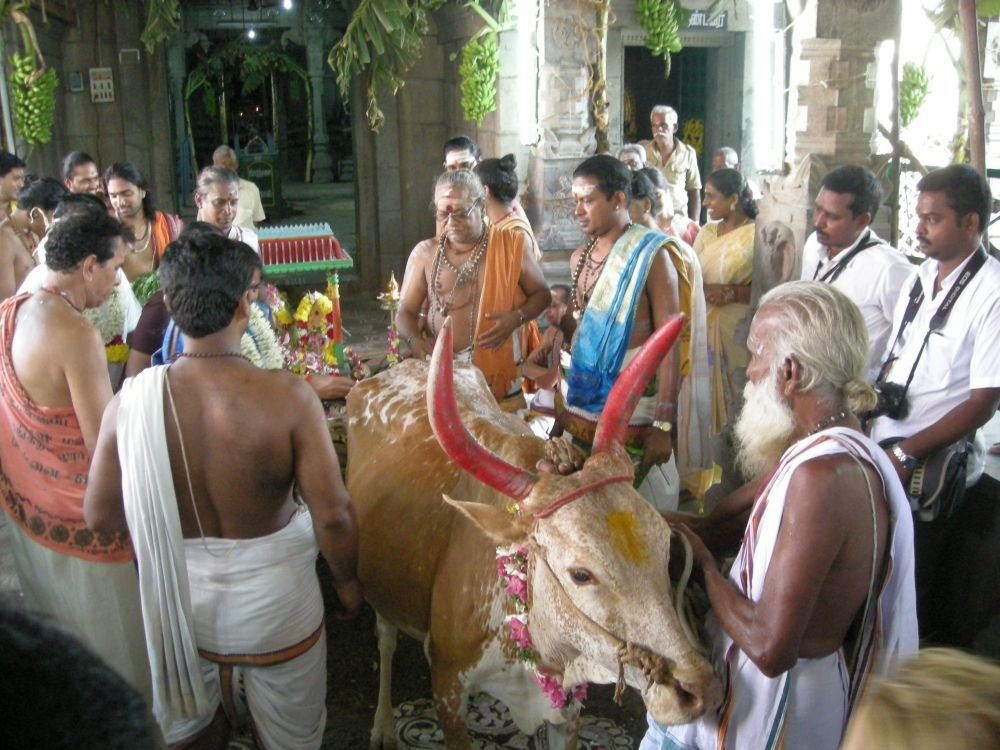
6.00 a.m. Vigneshwarara Puja, Ganapati Homam, Lakshmi Homam, Dana Puja, Gaja Puja, Go Puja
|
July 11, 2012
7.00 a.m. Navagraha Homam
6.00 p.m. Rakshokana Homam, Vastu Shanti, Mytrchunga Homam
|
July 12, 2012
10.00 a.m. Yaga Salai Alankaram
5.00 p.m. Ankurararpanam, Rashabhandham, Kumbha Alankaram, Yaga Salai Pravasam, 1st Kala Yaga Puja, Deeparathani Prasad
|
July 13, 2012
8.00 a.m. 2nd Kala Yaga Puja, Deeparathani Prasad
6.00 p.m. 3rd Kala Yaga Puja, Deeparathani Prasad |
July 14, 2012
8.30 a.m. 4th Kala Yaga Puja, Deeparathani Prasad
6.00 p.m. 5th Kala Yaga Puja, Thavatha Archani, Nadi Shantam Rasha Bhandanam Deeparathani Prasad |
July 15, 2012
4.00 a.m. 6th Kala Yaga Puja
4.30 a.m. Paravaramurti Mahakumbhabhishekam
7.00 a.m. Mahaporna Arti
8.30 a.m. Grahapretti Kadangal
9.00 a.m. Rajagopuram and other Vimanas Mahakumbhabhishekam, Deeparathani
9.30 a.m. Swami, Ambal Mahakumbhabhishekam (Grabagraha)
4.00 p.m. Special Mahabhishekam, Deeparathani
9.00 p.m. Tirukalyanam, Panchamurti Velli Rishabam Vahanam Tiruvethiula
|
|
|
|
|