Festivals
Ganesha Chaturthi
| |
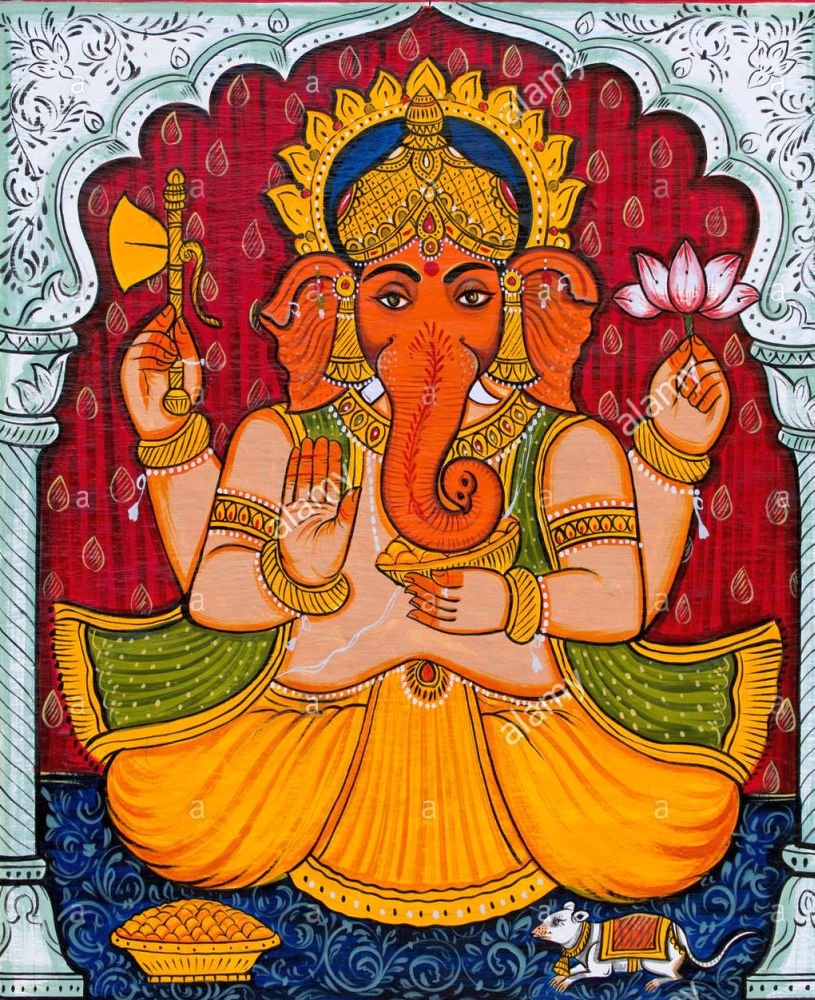
Mushikavaahana modaka hastha,
Chaamara karna vilambitha sutra,
Vaamana rupa maheshwara putra,
Vighna vinaayaka paada namasthe
"SALUTATIONS to Lord Ganesha who is Brahman Himself, who is the Supreme
Lord, who is the energy of Lord Siva, who is the source of all bliss,
and who is the bestower of all virtuous qualities and success in all
undertakings."
Ganesha Chaturthi is a day on which Lord Ganesha makes his presence
known on earth for all his devotees; the day is also termed Vinayaka
Chaturthi. It is observed in the calendar month of Bhadrapada, starting
on the Shukla Chaturthi (fourth day of the waxing moon) which comes
sometime between 20th of August and 15th of September. An important part
of the festival is the immersion of the Ganesha statue into tanks,
wells and ponds.
Immersion Lord Ganesha - Tamari Nagar Tank: Tiruvannamalai
Ganesha or Ganapati is an extremely popular God. One of his many names
is Vigneshwara, the destroyer of obstacles. He is often worshipped for
success in undertakings and for the gift of greater intelligence.
Ganesha is the God of education, knowledge, wisdom, literature and the
fine arts.
The festival of Ganesha Chaturthi is celebrated throughout India. It is
believed that the observance of this Festival was started by the Maratha
ruler Chatrapati Shivaji Maharaja, to promote culture and nationalism
and was later revived by the freedom fighter Lokmanya Tilak to defy the
British who had banned public assemblies.
According to Hindu Mythology, once Lord Siva was out hunting with his
Ganas (attendants). Parvati, Siva's consort, was alone and desired to
take a bath. But since there were no attendants to guard the entrance of
the house, Parvati created a young Ganesha from mud and asked him not
to let anyone inside. Soon, Lord Siva returned and found an arrogant lad
stopping him from entering his house. In a fit of fury, Lord Siva cut
off Ganesha's head. When Parvati came to know about the fate of Ganesha,
she became so overwhelmed with grief that her husband (Lord Siva) asked
one of his Ganas to bring the head of the first animal he saw sleeping
with its head towards north. The Gana returned with an elephant's head
and Siva placed it on Ganesha's body and restored his life.
One version of a legend relating to the source of Ganesha's elephant
head goes that at the behest of the Gods, who needed a deity able to
remove obstacles from their path of action, Siva himself was born from
Parvati's womb, in the form of Gajanana.
According to the Linga-Purana, the child Ganesha was created by Siva's
mind in order to triumph over the enemies of the Gods. Looking at the
child, Parvati took him on her lap and made the vow that an undertaking
would not be successful unless Ganesha was first worshipped. Siva
declared the child to be Ganapati, Lord of the Ganas (celestial hosts).
In the Varaha-Purana, Ganesha is depicted as a young man originating
from the glittering forehead of Siva and absorbed in deep meditation. As
Parvati was disappointed that the boy was born without her
intervention, She wished that his head be that of an elephant. However,
when she saw the elephant-headed child, she immediately loved him, and
declared that any human or divine undertaking, would not be successful
unless Ganesha be first worshipped.
Another Puranic legend tells that Parvati longed for a child and
informed Siva about her desire. In response, the Lord decreed Parvati
observe a year long penance. Thereupon, Sage Sanatkumara submitted
Parvati to various tests in order to ascertain the force of her will.
Eventually a glorious child was born and the Gods and nine Planets
(Navagrahas) went to Mount Kailash to admire him. One of the Planets,
Shani (Saturn) would not raise his eyes to look at the child. Parvati
requested him to view and admire the baby. When Shani raised his eyes
and looked at the child, the baby's head instantaneously separated from
the body.
In response Vishnu went on his vahana Garuda to search for a new head to
replace the lost one. On the banks of Pushpabhadra River, he met a herd
of sleeping elephants. Choosing a resting animal, whose head was turned
northwards, he cut if off and brought it back. According to a version
of this legend, the elephant was actually a Gandharva who desired to
obtain liberation from earthly life. On Vishnu's return, the elephant
head was attached onto the child and Vishnu gave him eight names:
Vighneshvara, Ganesha, Heramba, Gajanana, Lambodara, Ekadanta,
Soorpakarna and Vinayaka.
The Ganesha Chaturthi festival ends with Visarjan or immersion of the
idol in water. Normally the immersion ceremony takes place on Ananta
Chaturdasi day. However as this Festival is not codified, the date of
the immersion ceremony is arbitrary with no strict rules and depends
upon the wishes of the person performing the Visarjan. Ananta Chaturdasi
is believed to be the day when Lord Vishnu appeared in the form of
Anantapadmanabha, the Ananta Sayana form of Lord Vishnu in which he is
reclining on Ananta.
Anantapadmanabha, the Ananta Sayana form of Lord Vishnu
Swami Shivananda Recommends:
"On Ganesha Chaturthi, meditate on the stories connected with Lord
Ganesha early in the morning, during the Brahmamuhurta period. Then,
after taking a bath, go to the temple and do the prayers of Lord
Ganesha. Offer Him some coconut and sweet pudding. Pray with faith and
devotion that He may remove all the obstacles that you experience on the
spiritual path. Worship Him at home, too. Have an image of Lord Ganesha
in your house. Feel His Presence in it.
Don't forget DO NOT LOOK AT THE MOON on this day; remember that it
behaved unbecomingly towards the Lord. This really means avoid the
company of all those who have no faith in God, and who deride God, your
Guru or your religion - from this very day. Take fresh spiritual resolves
and pray to Lord Ganesha for inner spiritual strength to attain success
in all your undertakings."
Story about not looking at the moon
There is a legend associated with Ganesha Chaturthi, from the Skanda
Puranam. Lord Ganesha was once invited for a feast in Chandraloka (the
Moon's abode). Ganesha being fond of sweets, ate laddus till his stomach
bloated, so much so that as he got up to walk after the meal, he
could not balance himself because of his huge stomach and he slipped and
fell. His stomach burst and all the laddus came rolling out. Seeing
this, the Moon was highly amused and burst out laughing. Ganesha got
angry and cursed the Moon that it would vanish from the Universe.
Because of the Moon's disappearance, the whole world began to wane. The
gods asked Lord Siva to get Ganesha to revoke his curse. The Moon also
apologised for his misbehaviour. Finally, Ganesha modified his curse
saying that the Moon would be invisible only on one day of the month and
would be partially seen on Ganesha Chaturthi. He also added that anyone
who looked at the moon on Ganesha Chaturthi would face a false charge.
This is the reason why, even today, it is considered inauspicious to
look at the moon on Ganesha Chathurthi.
The Festival ends with the immersion of the idol on Ananta Chaturdasi Day.
On that day, statues of the God are taken through the streets in
procession accompanied with dancing, singing and fanfare and then
immersed in a water body (river, sea, lake or water tank). This
symbolises a ritual departure of the Lord upon his journey towards His
abode in Kailash - at which time he takes along the misfortunes of his
devotees.
However one decides to celebrate the Ganesha festival, try to avoid the
pollution and environmental damage caused by Plaster of Paris idols and
chemical paints upon immersion into tanks, wells and water bodies. For
help in understanding the environmental impact of this Festival and what
we can do to help, visit

Eco friendly statues for sale, Tiruvannamalai
To view a pictorial representation of the Ganesha Chaturthi Festival at Tiruvannamalai (Arunachala) go to this link.
|
|
|
|