
Old Deccan Days
Mary Frere was born in Gloucestershire, England on 11 August 1845.
In 1862 her father was appointed the Governor of Bombay. Frere
travelled with her father during his tours, during which she wrote a
popular book of tales of Indian folklore ('Old Deccan Days of Hindoo
Fairy Legends; Current in Southern India). Her only female companion was
a local ayah named Anna Liberata de Souza who was a Christian
descendant of the Lingaet caste from the Mahratta country. What started
as an idle conversation between Frere and Anna Liberata evolved into a
thorough recording and study of Indian culture. German orientologist Max
Mueller reviewed Frere's collection and wrote that her rendition of
Sanskrit originals read like a direct translation of ancient Sanskrit.
The below is part of Mary Frere's fascinating narrative of travelling
through the Southern Mahratta Country with the Bombay Governor's (her
father) entourage.
|
|
Mary Frere's Narrative
"In the cold weather of 1865-6, my father, whom I accompanied, made a
three months' tour through the Southern Mahratta Country (in the Bombay
Presidency) of which he was then Governor.
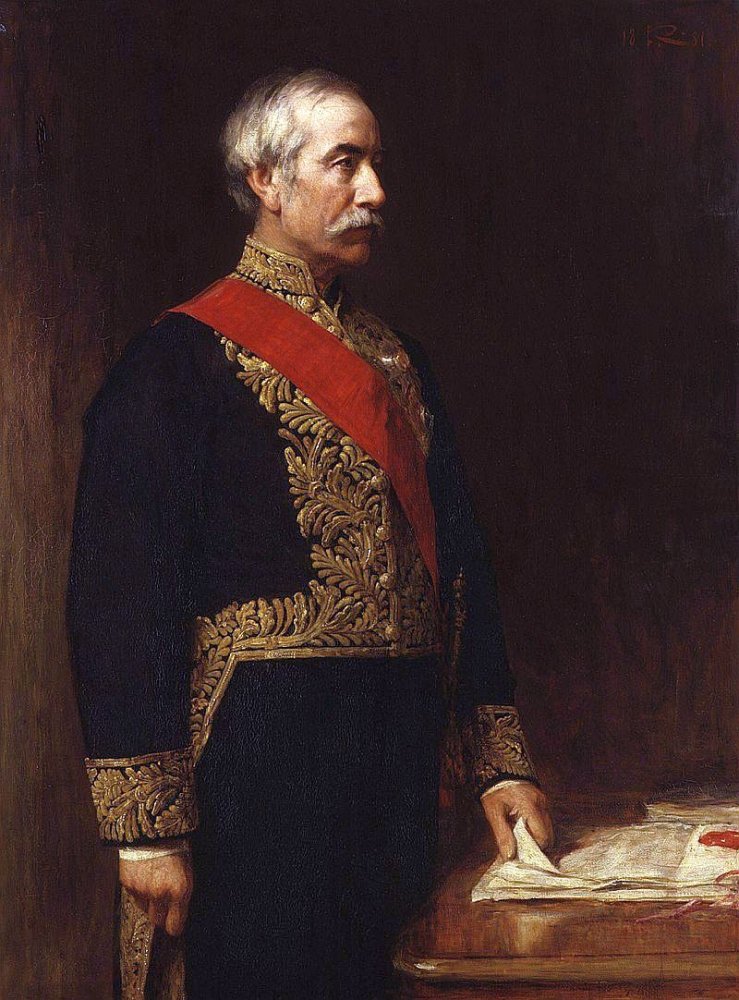
Sir Henry Bartle Frere
Our party was composed of my father and his Staff, to whom were usually
added two or three friends, and the Officers Civil and Military, who
were commanding in the Districts through which he was passing. Our mode
of progress consisted in riding or driving about twenty-five miles a
day, from one of our Camps to the next. We usually halted a day or two
at each Camp, which admitted of a double march being taken by the Camp
we had left behind us, and of its being ready pitched on our arrival,
two days' march in advance of where we had left it. The double Camps,
with the elephant, camel, and mule drivers, grooms, tent-pitchers,
cooks, and other servants, numbered, with the addition of the Governor's
Body-Guard, about six hundred souls. My mother being at the time absent
in England, I chanced to be the only lady of the party. Anna Liberata
de Souza, my native ayah, went with me.
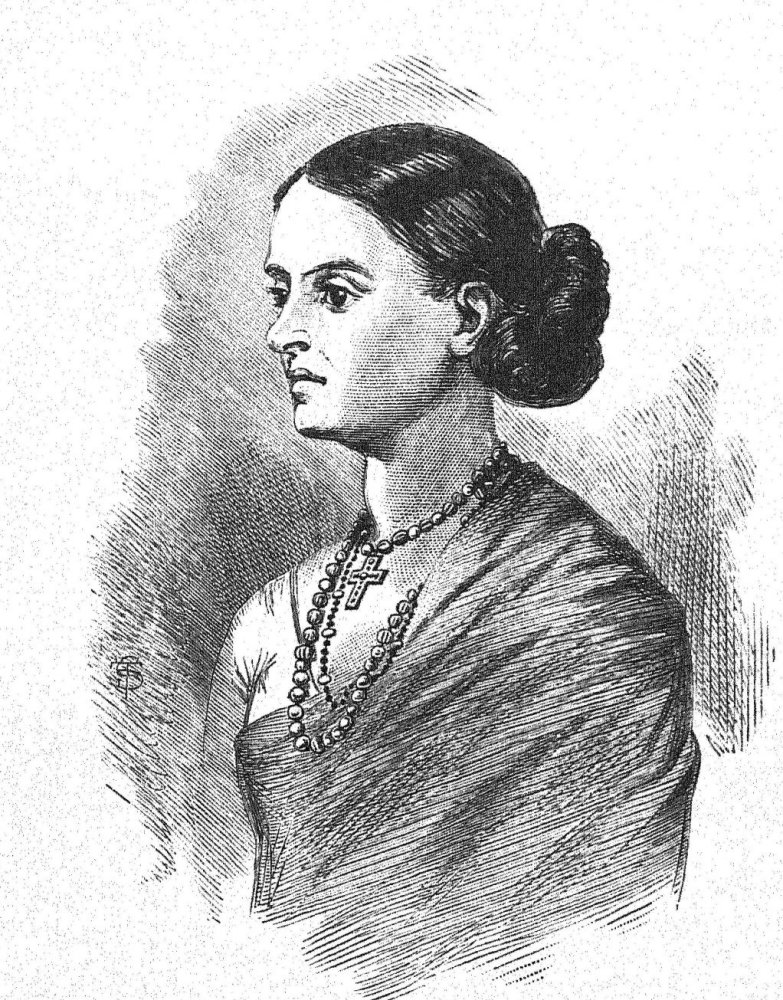
Anna Liberata de Souza
Our route from Poona, whence we started, lay through the district of
Satara, with its fort-crowned hill (where the Mahratta Chief Sivajee's
sword 'Bowanee,' given to him by Bowanee, the Goddess of Vengeance, is
still shown), Kurar, with its Buddhist caves; the Native State of
Kolapore; where, accompanied by Mrs. Wilder, the wife of an American
missionary, I visited the Aka Sahib, and the Ranee in the Palace;
Belgaum, with its beautiful fort and ruined Jain temples, and Dharwar,
near the scene of the battle of Ram Drooganad, and where we saw the
Nawab's cheetas hunting antelope on the level plains.
From Dharwar we crossed the river Krishna, a matter of some
difficulty - the elephants, horses, camels, mules, and bullocks swimming,
the camp equipage being conveyed on rafts supported on jars or inflated
skins, and my father and I, with two of his Staff, crossing in a
circular coracle of wicker-work.

Crossing a river on inflated skins

Small Circular Coracle
From the further bank of the Krishna we rode across interminable plains
of black-soiled, cotton-growing country to the ruined Mahometan capital
of Beejapore, the vast dome of whose great mosque (thirteen feet larger
in diameter than that of St. Paul's), is to be seen standing our clearly
against the sky hours before the city itself is reached. Of
Beejapore - with its Motee Musjid (Pearl Mosque); its Soap-Stone Mosque;
its big eleven ton brass gun, cast by a Turk in the sixteenth century,
in which a grown-up person can sit upright; its wonderful Library (of
which all that remained had been rescued from destruction by my father
some twenty years before); its shrine, where are shown the three hairs
of Mahomet's beard, and its numberless local traditions and legends of
all kinds - this is not the place to tell.

Gigantic Brass Canons
From Beejapore we crossed the Bheema river, and went to Sholapore, whence we returned to Poona by railway.
Some record of the country we traversed is to be found in the Duke of
Wellington's Despatches, but much of its manifold interests and wild
romantic history, has never yet been said or sung. The glory of its
works of art, the grandeur of its scenery, the living interest of the
faith and fortunes of its people - whose races represent all forms of
Oriental barbarism and civilisation, from the Bedhur whose sole
sustenance is parched millet-seed, to the wealthy Mahometan and Hindoo
aristocracy and merchants of the great towns."
|
|
|
|



