
Great Festival - Brahmostavam Calendar
Although God is common to all, many experience obstacles in attaining
diksha. As God is debted to bless everyone without partiality - if there
is a chance of attaining diksha only for a few, then what is the state
of others? What is the way for them to be blessed? The answer for this
question lies in the observance of Festivals. Grand Festivals
(Brahmostavams) such as Karthigai Deepam are essential for attaining
Shiva diksha in Saivism.
Brahmotsavam (the Great Festival) is a grand program extending over ten
days. During this period, every morning and evening the Gods of
Arunachaleswarar Temple are taken out seated on huge vehicles and
carried through the town. Even to the mere sightseer such a Festival is a
grand occasion.
Brahmostavam at Temples is God's presentation of Shambavi diksha to all
His devotees. According to the Shiva Purana there are three types of
initiation: Shambhavi initiation, Shakti initiation and Mantri
initiation. When a devotee gets knowledge and eternal love of God by the
grace of His sacred glance, touch or talk this is known as Shambhavi
Initiation.
|
|
"As the knowledge eye of Shambavi -- be bold of sanctified action," says
the ideals of Saivism. This transmission of Shambavi diksha (blessed
vision by glance of looking) is communicated through Grand Festivals
such as Karthigai Deepam by presenting darshan in the form of God's
representation in murtis during pujas and processions.
God manifests Himself in eight forms - Ashtamurthams, which is the five
elements; earth, water, fire, air and ether plus the sun, moon and soul.
The sacred texts extol God as Rudragni Sivajothi and Paramjudar and
just as fire destroys impurity, God destroys the darkness of ignorance
and egoism in man and blesses him with the light of wisdom.
The Karthigai Festival (which is celebrated in the November-December
Tamil month of Karthigai) begins on Uttradam day with the hoisting of
the flag.
Flag Hoisting
The commencement of the utsavam or festival is
marked by a ceremony called the Dhwajarohanam or the hoisting of the
flag. Dwajasthambam literally means "flag pole." Comparing the Temple
structure to the human body; the main sanctum is the head, Mahamandapam,
the central portion is the body and the Rajagopuram represent the feet.
At Arunachaleswarar Temple the flag post is located outside the Shiva
Sannidhi and is made of wood with an overlay of brass and a gold
coating.
A cloth flag is hoisted during Temple Festivals (Brahmostavam) according
to the rules of Agama. The flag tree is representative of Lord Shiva,
the flag tree cloth marks Shakti, the flag marking represents the soul
and the thread of the flag marks grace.
Dhwajarohanam is a public act of sankalpa (action made to impress an
idea on the mind) which indicates a vow undertaken (in this case) by the
people of the town to celebrate Brahmostavam. Hence no-one present
within the town limits on the occasion of the Dhwajarohanam is expected
to leave the town or do any other thing such as marriage etc., until the
Festival is over. The close of the Festival is marked by the
Dhwajavarohanam or the lowering of the flag.
Between the raising and lowering of the flag, Arunachaleswarar Temple is
host to two kinds of activity during the day. Each morning and evening
the five deities; Siva, Sakthi, Subrahmanya, Ganapati and Chandikesvara
go around the perimeter streets of the Temple. Before leaving the
Temple, the Gods are worshipped in the mandapam hall where a homam is
performed twice a day, and thereupon the Gods receive on their foreheads
a black spot made of ash (vibhutti) mixed with ghee. On the seventh day
the same deities, each on a wooden radham, are led around the Temple
perimeter streets in a day long procession.
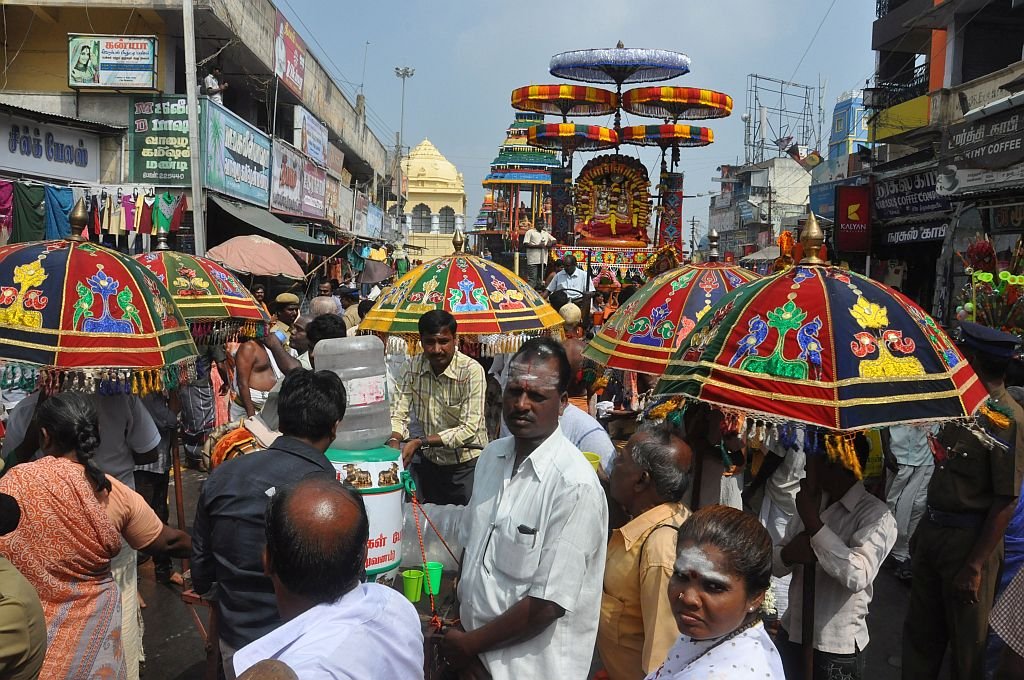
During the Karthigai Deepam Festival the Gods of Arunachaleswarar Temple
are taken out seated on differently built Temple vehicles (vaghanams)
like Rishaba (Bull), Elephant, Cow (Kamadhenu - a mythical animal),
palanquins, chariots or Radhams (Thers). In the below calendar of the
2013 Karthigai Deepam Festival are a few photographs of the different
types of vaghanams used during the 10 days.
First Day:
Morning: Panchamoorthies, the five deities. Silver Chariot
Evening: Panchamoorthies, Mooshigan, Peacock, Nandi, Sinna Rishba Vimanams
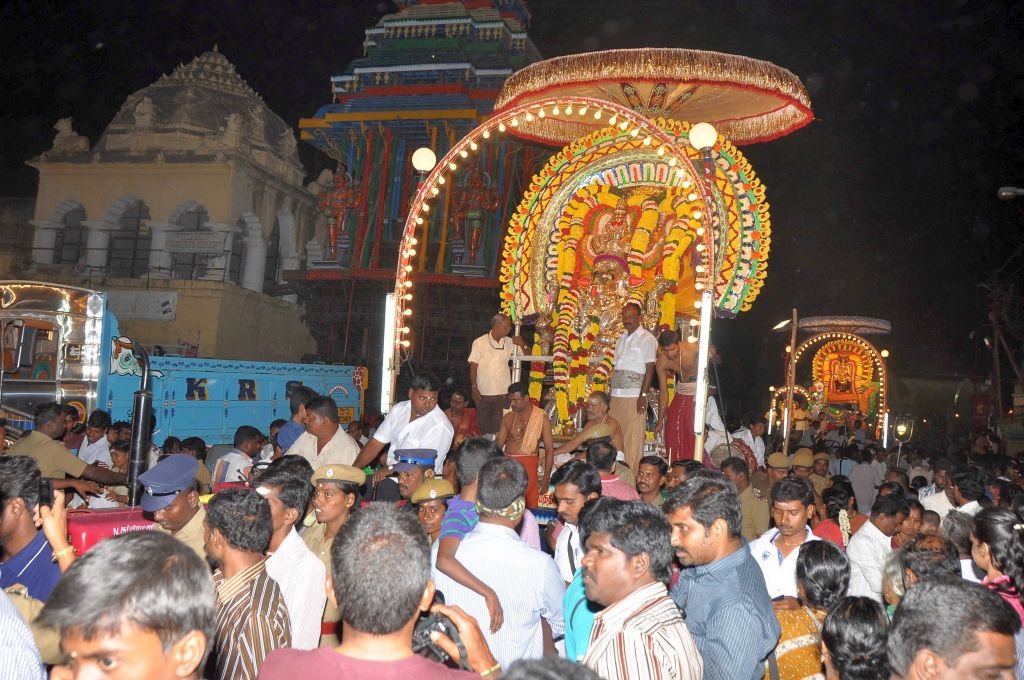
Athikara Nandhi
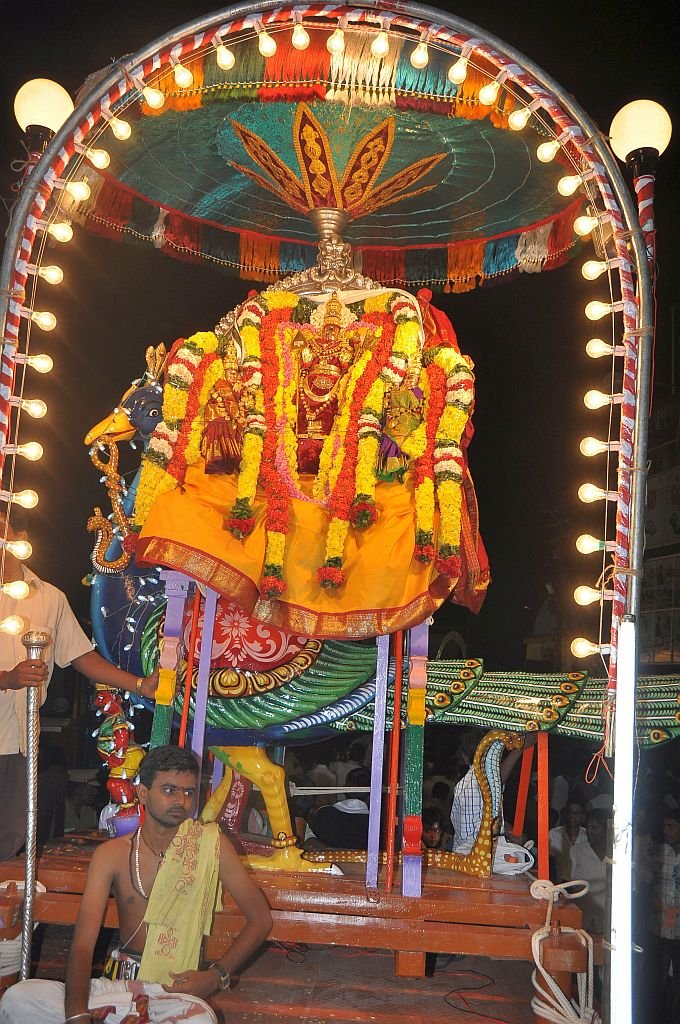
Peacock
Second Day:
Morning: Sri Vinayagar, Sri Chandrasekara, Suriya Prahba Vimana
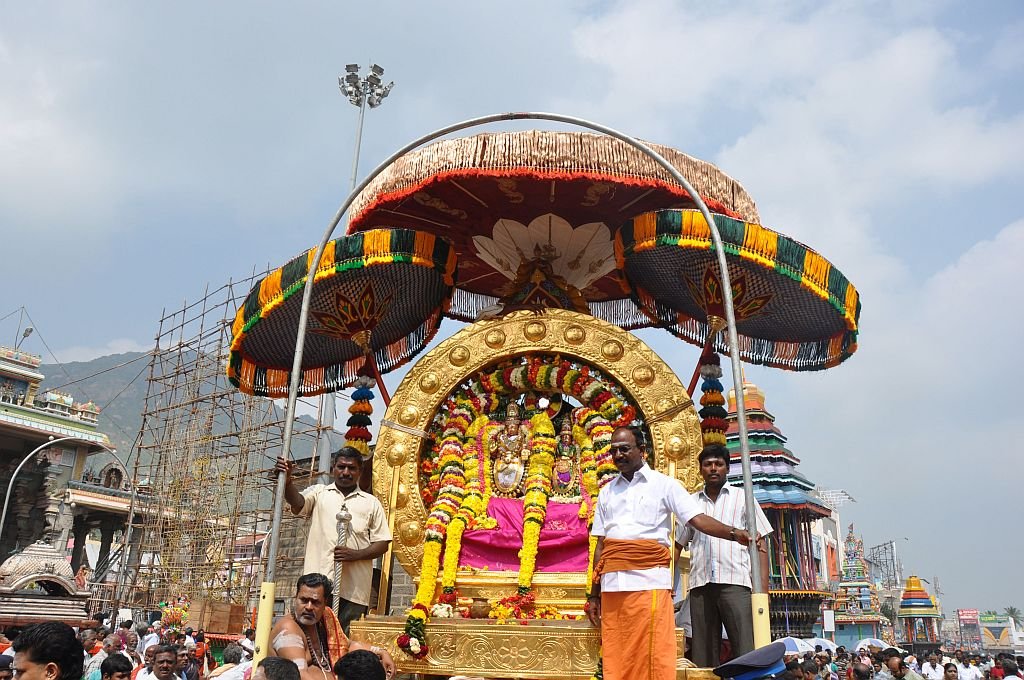
Suriya Prahba
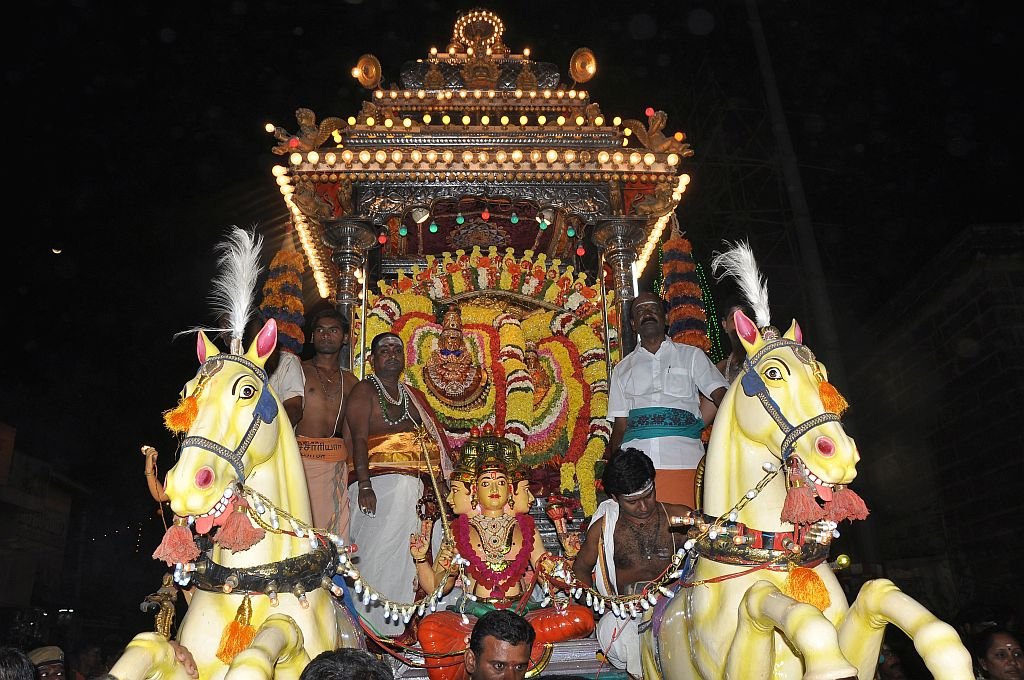
Indira Silver Vimana
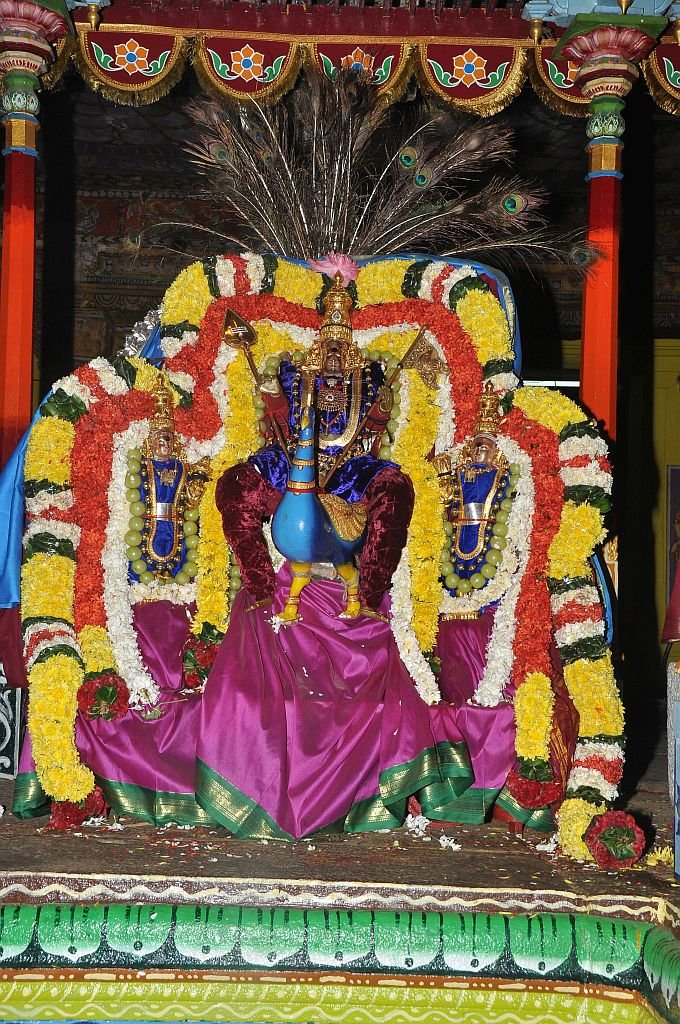
Subrahmanya on peacock
Third Day:
Morning: Sri Vinayagar, Sri Chandrasekara
Evening: Panchamoorthies, Lion Vahanam, Silver Swan
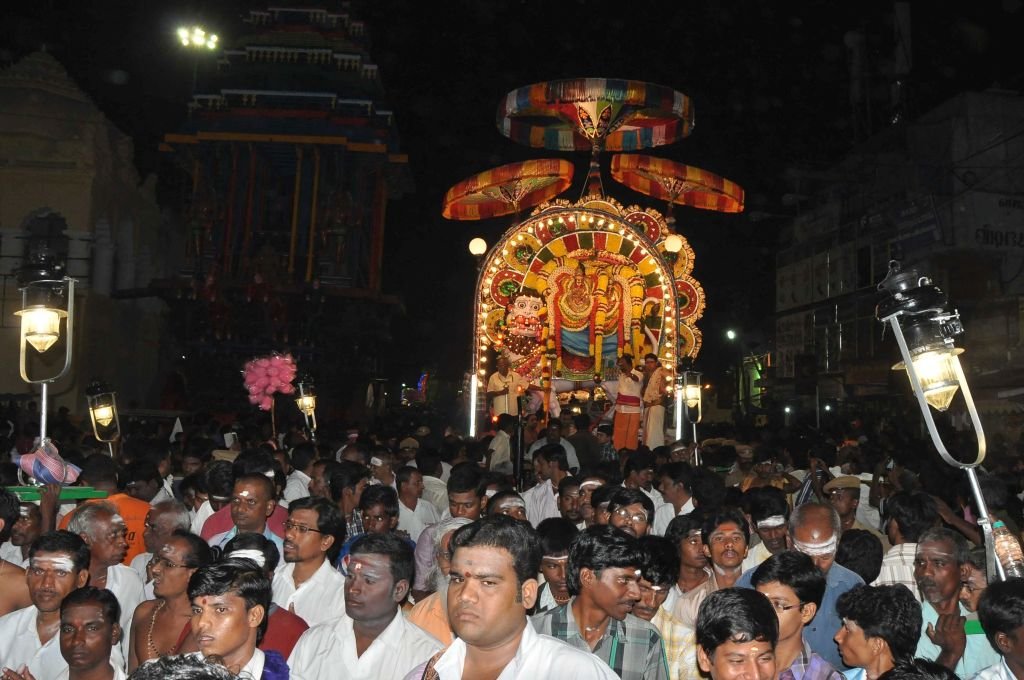
Lion Vaghanam
Fourth Day:
Morning: 1008 Sankha Abishekam, Sri Vinayagar, Sri Chandrasekara, Cobra Vahanam
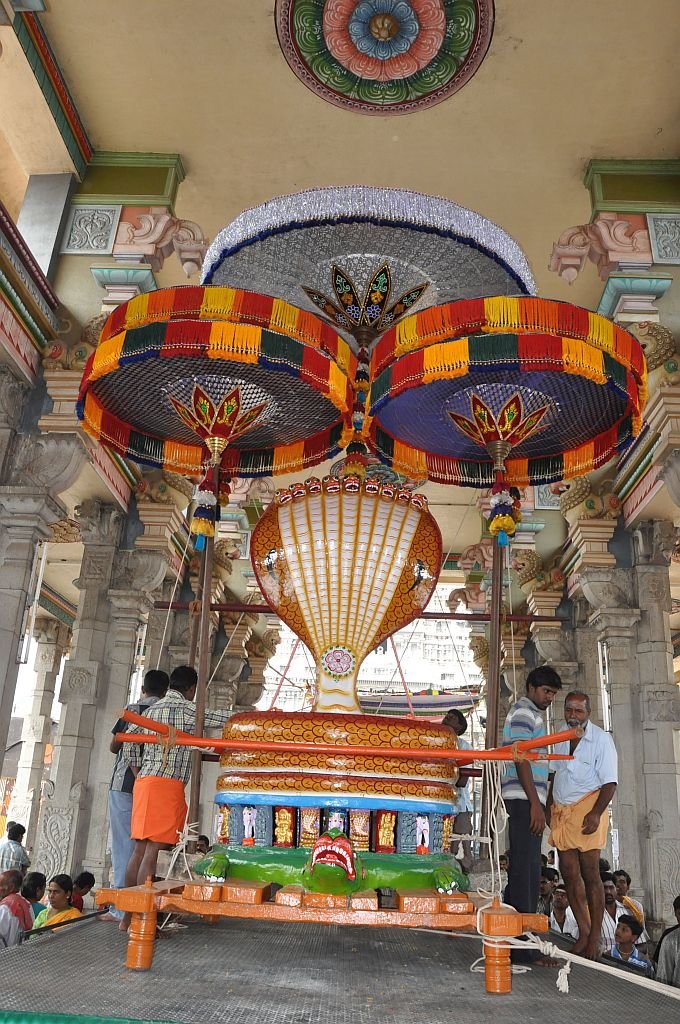
Cobra Vahanam before decoration
Cobra Vahanam after decoration and 1008 sankhas
Evening: Panchamoorthies, Silver Kalpataru (wish-fulfilling tree), Kamadhenu (wish-fulfilling cow), Ruby and Silver Vahanams
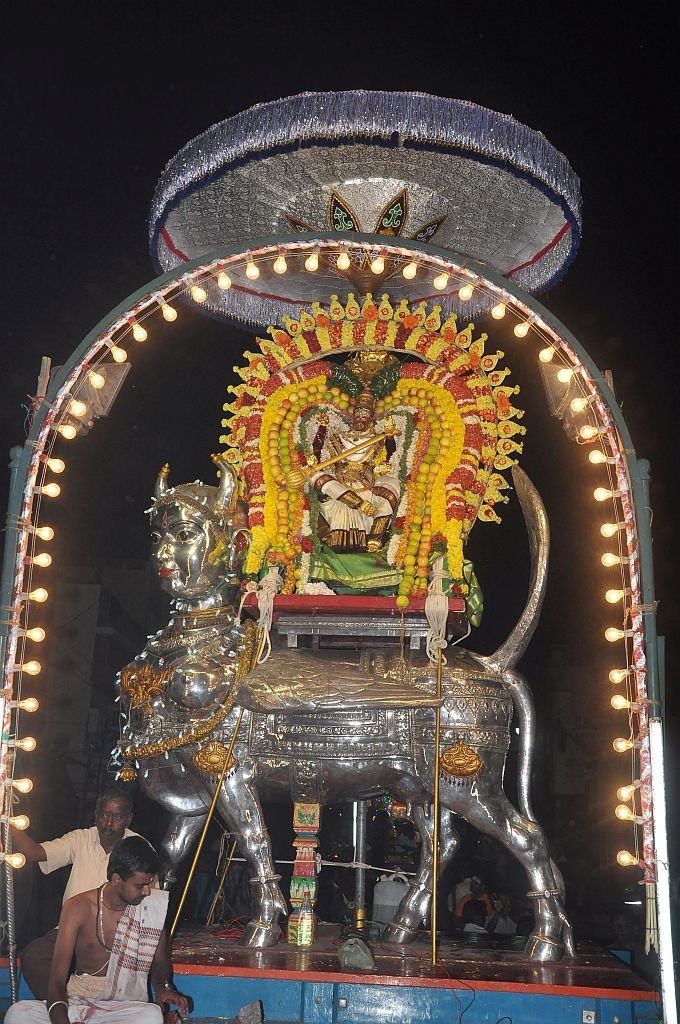
Kamadhenu
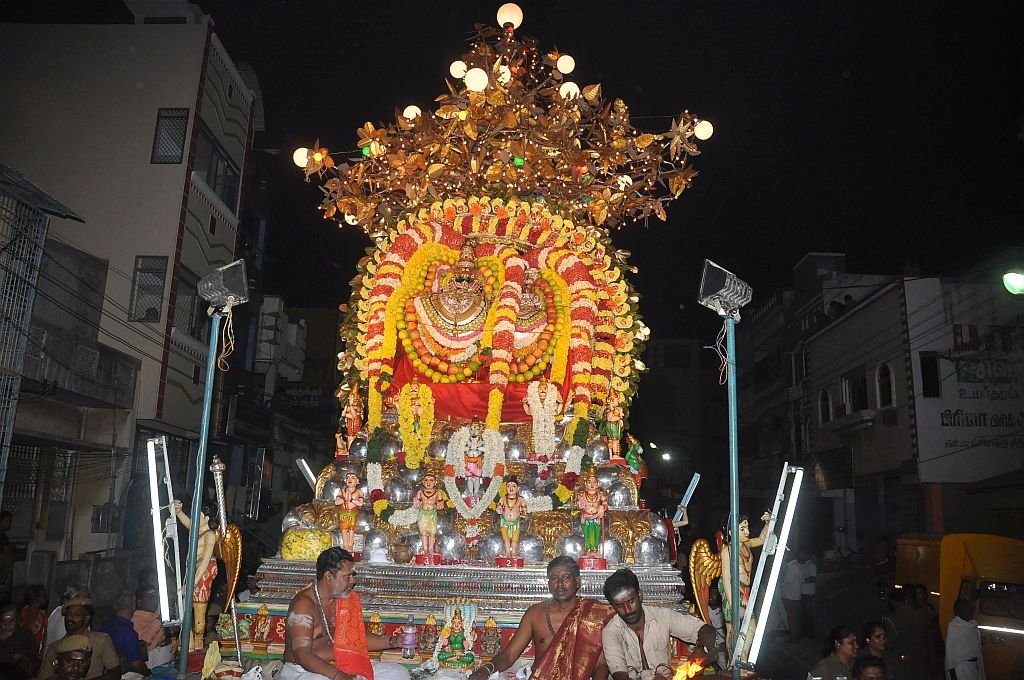
Wish-Fulfilling Tree
Fifth Day:
Morning: Sri Vinayagar, Sri Chandrasekara, Glass Rishaba, Silver Elephants
Evening: Panchamoorthies, Silver Mooshigan (rat), Silver Peacock, Large Silver Bull
Sixth Day:
Morning: Sixty-Three Nayanars (saints), Sri Vinayagar, Sri Chandrasekara, Mooshigan (rat)
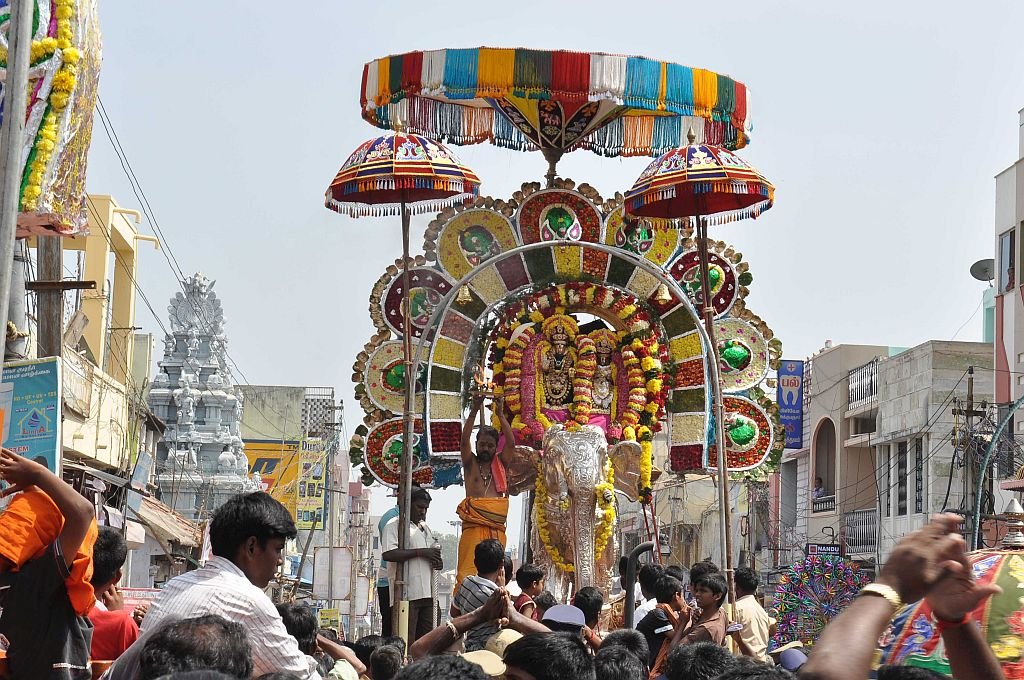
Silver Elephant
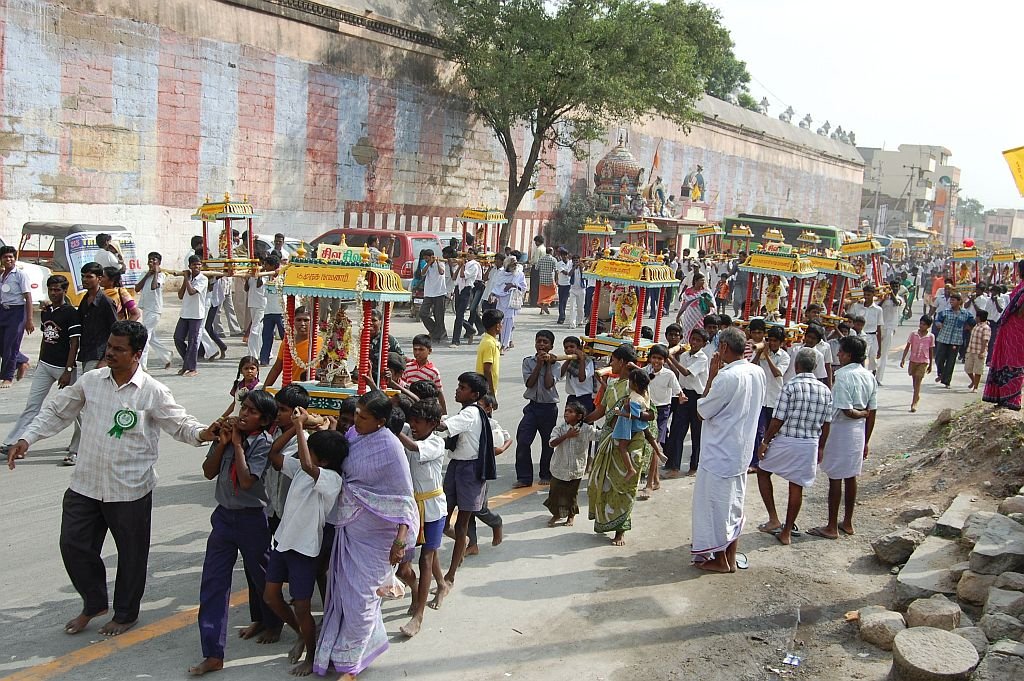
63 Nayanars
Evening: Panchamoorthies, Indra Vimanam, Silver Car
Seventh Day:
Full Day: Maharadham and Thers (chariots) for other Gods
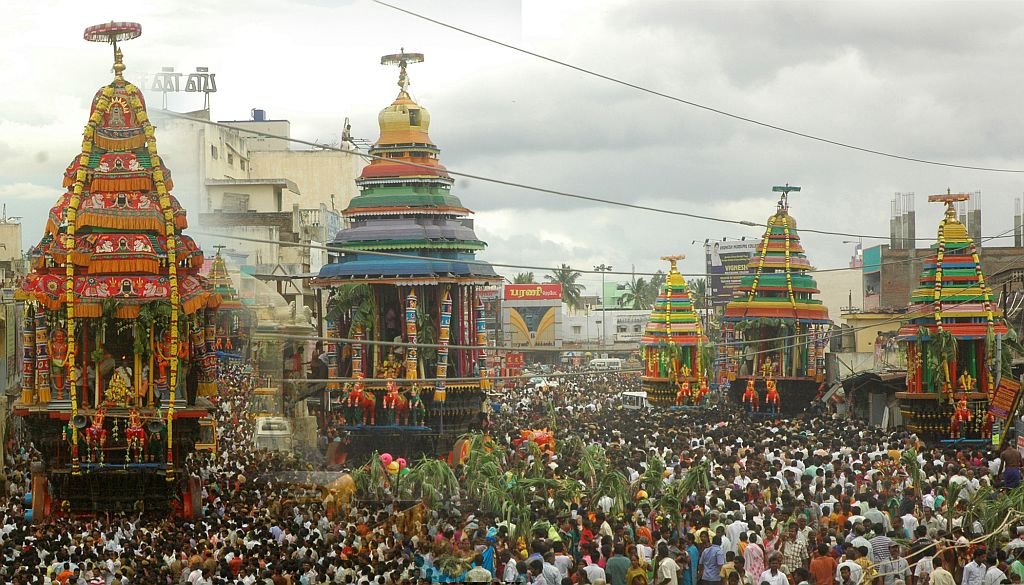
Radhams
Eighth Day:
Morning: Sri Vinayagar, Sri Chandrasekara, Silver Chariot
Evening: Panchamoorties, Horse Vimanana, Pichandavar in Golden Meru
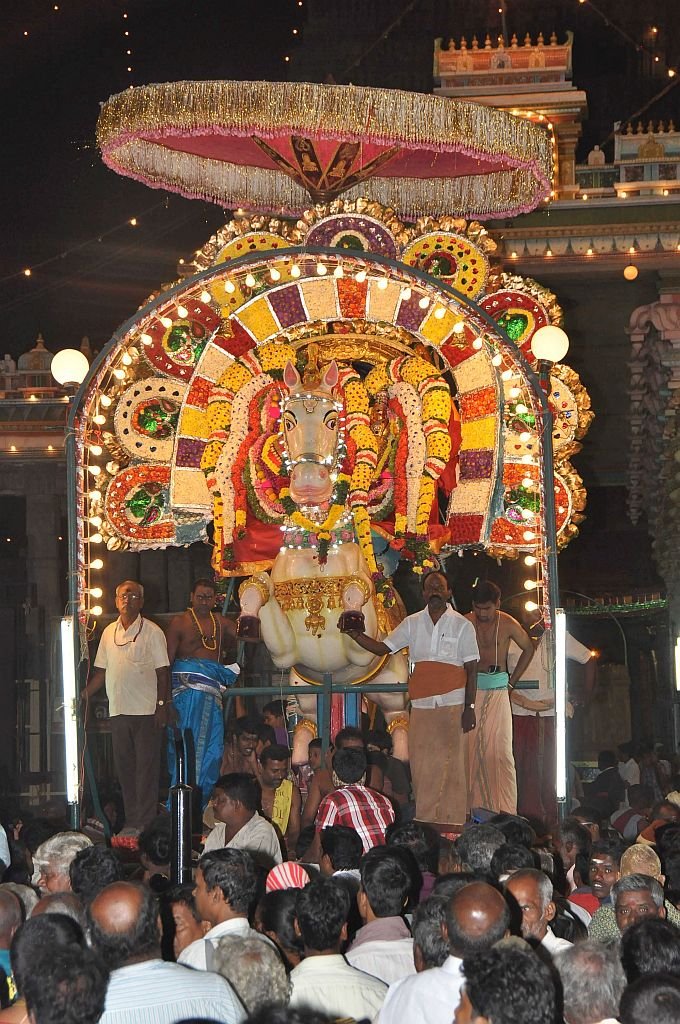
Horse Vimana
Ninth Day:
Morning: Sri Vinayagar, Sri Chandrasekara, Glass Vimanam
Evening: Panchamoorthies, Kailasa Vahanam, Kamadhenu, Ravana Vaghanam
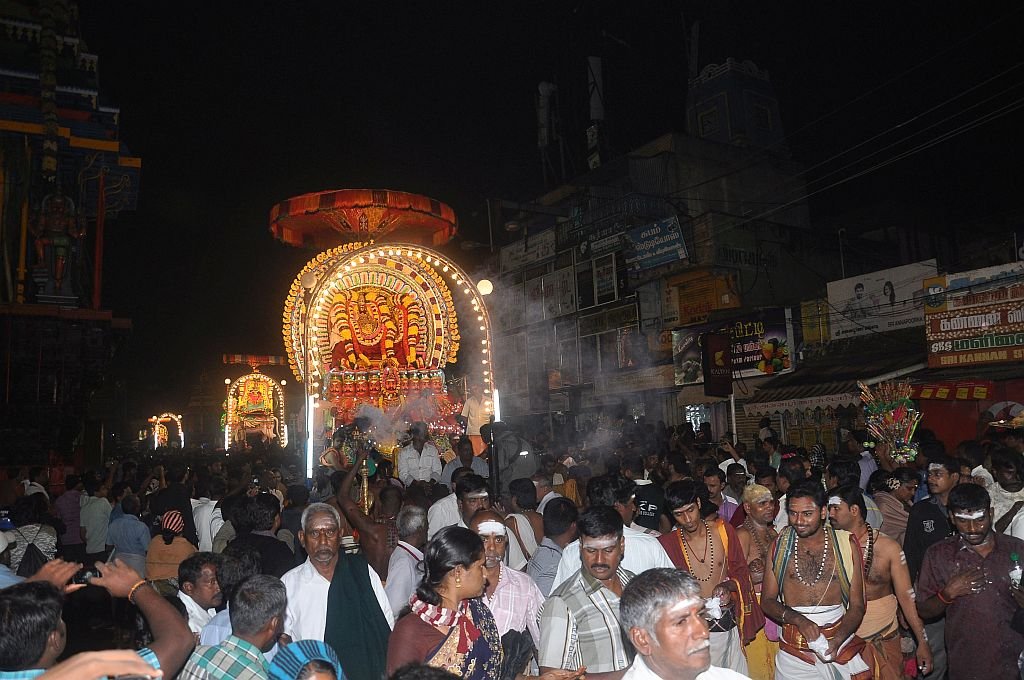
Ravana Vaghanam
Tenth Day:
Morning: Bharani Deepam
Evening: Panchamoorthies on Golden Vimananas. Mahadeepam
Brahmotsavam is intended to teach us the way to
divine self-realisation. The last of the celebratory observances during
Karthigai Festival is Thirthotsavam which literally means "water
festival". Four days are allocated at the end of Deepam to celebrate the
water festival at Ayyankulam Tank in front of Arunagirinathar Temple
(the third oldest Shiva Temple at Arunachala). The water festival is
representative of the sadhaka's plunge into the higher realms of
consciousness - and typifies an entering into samadhi... an end of
religious aspiration.
The Theepal for the Gods are floating structure made up of drums and
timber and decorated with lights, flowers, religious paintings and
silken buntings. Lights are installed around the perimeter of the tank
and focus lights placed at strategic points. When the murtis of the Gods
come to Ayyakulam Tank they are placed lovingly on a float and
then the float pushes off and completes an allocated number of turns
upon the Temple Tank. Devotees sit on the steps of the tank to take
darshan of the God on the Theepal. Thereafter the deity of that day is
taken in procession around the four Mada Streets (perimeter streets)
surrounding Arunachaleswarar Temple.
Day One Theepal:
Sri Chandrasekaran
Procession: Panchamoorthies in Golden Rishaba Vimanam
Day Two Theepal:
Sri Parasakthi
Procession: Sri Arunachaleswarar, Sri Unnamulaiamman, Sri Chandikeswarar
Day Three Theepal:
Sri Subrahmanya
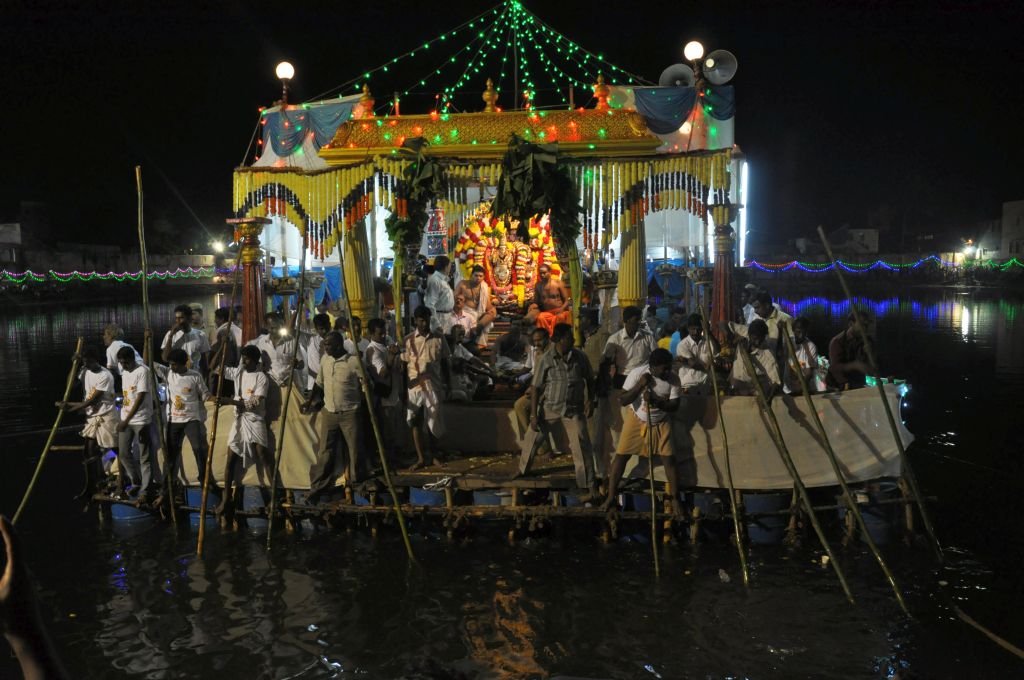
Lord Subrahmanya on Float
Sri Chandikeswara
Procession: Sri Chandikeswarar, Utasavam Rishaba, Silver Nandi Vahanam
|
|
|
|



